Get Full Government Meeting Transcripts, Videos, & Alerts Forever!
Get email alerts on the Juvenile Justice topic
No spam. Unsubscribe anytime.
Idaho juvenile corrections director urges funding for radios, substance-use treatment amid rising mental-health needs
Summary
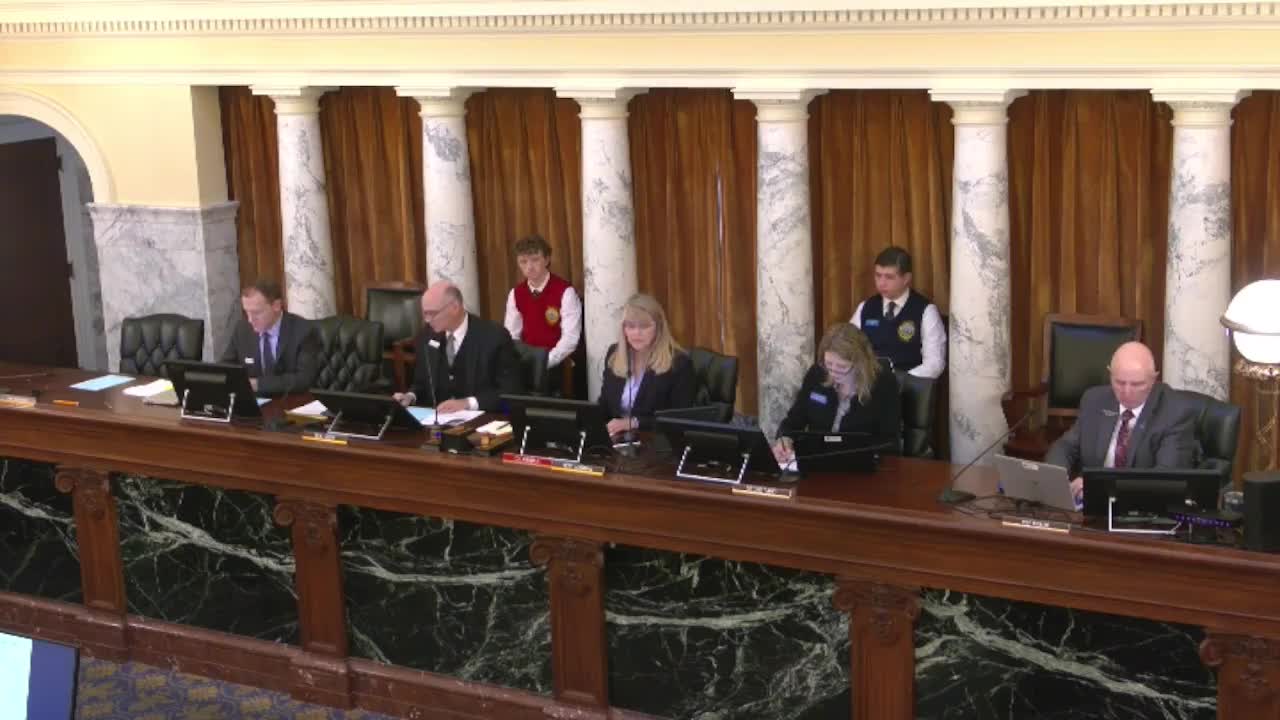
At a Feb. 18 Joint Finance-Appropriations Committee hearing, Idaho Department of Juvenile Corrections officials requested one-time and ongoing budget increases for radios and substance-use residential treatment after officials described rising costs and worsening mental-health indicators among youth in custody.
The Idaho Department of Juvenile Corrections told the Joint Finance-Appropriations Committee on Feb. 18 that it is seeking both one-time and ongoing funding to upgrade safety equipment and to cover higher costs for residential substance-use treatment as the agency reports more severe mental-health needs among the youth it serves.
"I am concerned about just the level of mental health we're seeing in the youth with our facilities," Director Ashley Dowell told committee members, citing increases in self-harm and suicidal ideation among youth in custody. Dowell is director of the Idaho Department of Juvenile Corrections.
The department's budget presentation, delivered by Noah Peterson, a legislative budget analyst, listed several requests for fiscal year 2026: a $380,000 one-time radio system upgrade from the Juvenile Corrections Endowment Income Fund to add "man down" functionality and programming across three state juvenile correction centers; a $300,000 ongoing general-fund request to cover increased costs for a residential substance-use disorder (SUD) treatment program; $145,100 in replacement items from dedicated funds; a $232,500 IT replacement request recommended by the Office of Information Technology Services; and a net-zero $350,000 program transfer related to youth assessment centers.
Peterson told the committee the cost per day for the residential SUD program doubled from about $198 in 2021 to $399 in August 2021, and the average length of stay rose from 31 days to 67 days over the same period. "Both of those increases have changed the cost of the program from $1,260,000 in fiscal year 2021 to $2,700,000 in fiscal year 2024," he said.
Committee members pressed agency leaders for more data. Representative Tanner asked for population trends over time; Director Dowell said the department hit an all-time low census of 137 youth in custody in May 2024 and had grown to 176 at the time of the hearing, a roughly 19% increase from the low. Peterson said he could supply additional population data to the committee.
Lawmakers also questioned which revenue sources covered specific programs. Peterson said the department receives money from several funds, including a Juvenile Corrections Fund (revenues from a $20 training academy fee and certain assessed fees), a cigarette and tobacco tax fund (statutorily set tax rates in Idaho Code with some funds distributed to counties for juvenile probation services), a miscellaneous revenue fund, and the Juvenile Corrections Endowment Income Fund (monies distributed for maintenance of the three state juvenile correction centers).
Several members asked about the residential treatment providers' decision-making: Representative Tanner and the cochair asked whether the department or providers review placement lengths. Director Dowell replied the placement decisions are made by community treatment providers using placement criteria (American Society for Addiction Medicine, ASAM) and that the department does not currently have licensing or utilization-management capabilities to replicate that review.
The director described other priorities in the budget context: implementation of a human-trafficking screening law (implemented by January 2025), educator career-ladder funding for teachers in correctional facilities, and efforts to divert youth from custody through youth crisis centers and county partners. Dowell said the department is participating in a diversion subcommittee of the Idaho Behavioral Health Council to explore a possible minimum age policy for detention and custody.
The hearing produced no formal committee votes; the department's requests were presented for legislative consideration. Committee members asked staff to provide follow-up data, including population counts, use and outcomes of youth crisis centers, detailed cost breakdowns for residential treatment, and itemized lists for requested replacement and IT items.
The department concluded by thanking the committee for its time and for past support.