
State Department of Education budget hearing spotlights career-ready grants, ARPA transitions and staff requests
Get AI-powered insights, summaries, and transcripts
Sign Up Free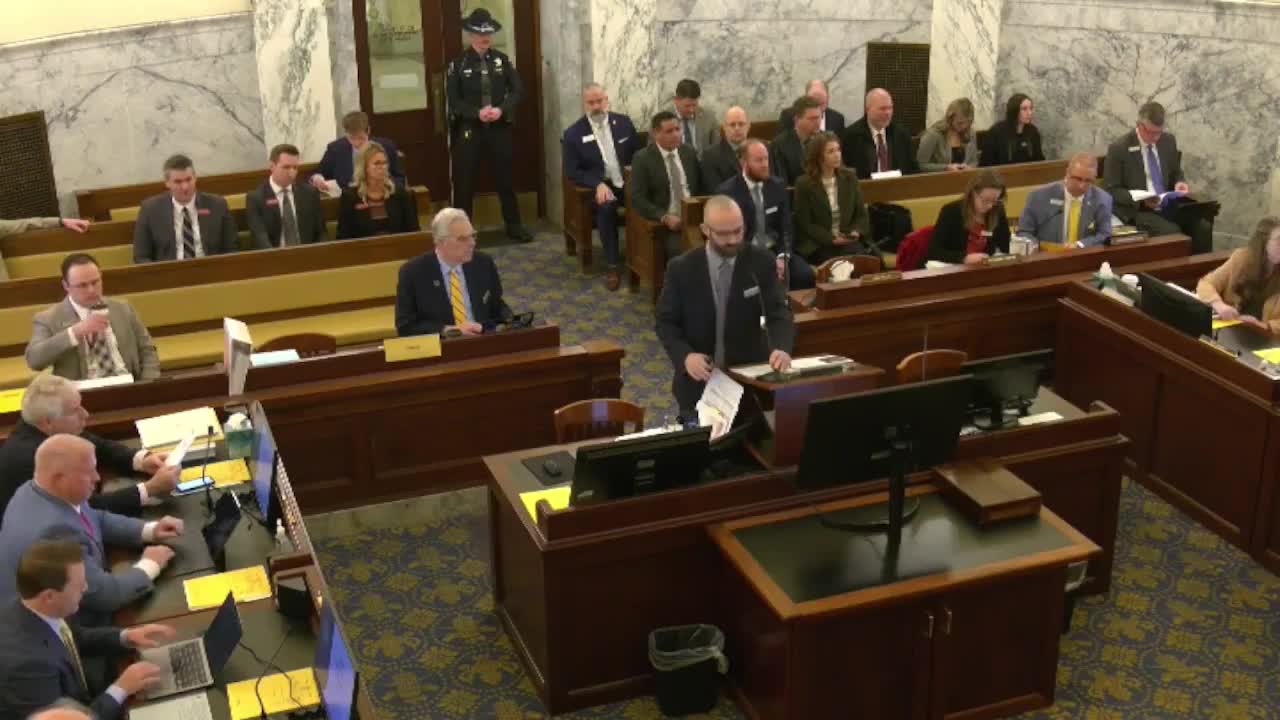
Summary
At a Joint Finance Preparation Committee hearing, Legislative Services and the State Department of Education detailed the department's budget, fund balances and requests including career-ready program obligations, ARPA/ESSER spending patterns and vacancy and staffing changes.
The Joint Finance Preparation Committee on a budget hearing heard a multi-part presentation on the State Department of Education budget, funding flows and staffing needs, with Legislative Services analyst Jared Tetro and State Superintendent Debbie Critchfield outlining current balances, federal grant activity and several ongoing and one-time spending requests.
The department’s budget presentation covered personnel totals, dedicated funds, federal and ARPA grants and several enhancements the department has requested for 2026. Jared Tetro, Deputy Division Manager, Budget and Policy Analysis Division, Legislative Services Office, told the committee the Department of Education is organized into two program areas with 126.5 authorized full-time equivalent positions for the current year and that, as of the budget submission, 9.5 positions were vacant. He also said the department’s personnel costs have averaged about $13.5 million and the average personnel spend rate is roughly 83.4% of budgeted personnel authority.
The nut of the department’s fiscal picture, Tetro said, is several large, dedicated and federal funding streams that create year-to-year variance in actual spending. He highlighted that COVID-era funding (ARPA and CARES) and a recent surge of career-technical funds affected multi-year expenditure patterns. "The Department of Education was appropriated all ARPA and CARES money related to non public schools," Tetro said, adding that those dollars were disbursed when private schools requested reimbursement.
Why this matters: committee members pressed for clarity because the timing of appropriations, carryforward obligations and the balance of funds determine whether the department must request state funds to meet federal reporting or program requirements.
Key details provided in the hearing
- Career-ready student program: Tetro and Superintendent Critchfield described large appropriations in recent years and a multi-step obligating process. Critchfield said the legislature has appropriated $65 million over the last two budget cycles for the Career Ready Students program; the Department received $138 million in requests across 152 grant applications, and 72 grants representing about $62.7 million have been obligated by the program’s review council. Critchfield said $16 million has been reimbursed to date and that reimbursements require documentation and often relate to capital projects that take time to incur costs.
- Federal/ARPA/ESSER timing effects: Tetro explained that multi-year federal awards and COVID-related appropriations cause unusually low percentages of some line-item spending in certain years because funds are obligated but not yet drawn down. Committee members asked for reports on where ESSER and other federal dollars had been used and whether one-time federal spending has created ongoing obligations for districts.
- Driver training and other dedicated funds: Tetro pointed out a growth in the driver-training fund balance (noting $3.8 million free balance in 2022 and an estimated $7.4 million in 2026 on the materials shown to the committee). The hearing discussed a requested increase in the drivers education reimbursement rate (pending legislation) from $150 to $300 per student to offset district costs.
- Personnel and structure changes: Tetro noted that earlier JFAC actions moved IT staff and broadband program funding from the Department of Education to the State Board of Education; he said those transfers affect base personnel costs and the department’s current-year comparatives. The department requested multiple ongoing personnel enhancements for 2026 spanning special education dispute resolution, charter-school special education support and an additional Indian education coordinator.
- Other enhancements and grants: The department described a mix of ongoing and one-time enhancements including $3 million from the Idaho Millennium Fund for youth substance-use prevention, mental-health-related federal grants, private school supports, a Child Nutrition Technology grant ($746,300 across four years) and farm-to-school ARPA funding. The department also requested one-time funding to update the performance report card required by Title I and the Every Student Succeeds Act if federal funds are not available.
Selected direct quotes
- Jared Tetro, Legislative Services Office: "The Department of Education was appropriated all ARPA and CARES money related to non public schools. This was well over $25,000,000."
- Debbie Critchfield, State Superintendent: "72 of the grants have been awarded, representing $62,700,000 that has been obligated. And in an effort to be very, very careful and provide the oversight with these dollars, we don't just send the money out immediately so that it gets commingled with other funds."
Committee follow-ups requested
Committee members asked for more granular reporting on: which private and nonpublic schools received COVID/ARPA reimbursements and how much; a project-level listing of obligated career-ready grants and the status of those projects; and a breakdown of how the charter-authorizer fund dollars are collected and spent.
Ending
Legislative Services and department staff told the committee they will provide follow-up reports on ARPA/ESSER usage, career-ready project statuses and a breakdown of charter-authorizer fund receipts and disbursements. The Department emphasized that many of the large recent appropriations are obligated to specific projects or contracts and therefore do not appear as free fund balances until districts request reimbursements.