
Oregon subcommittee holds public hearing on MHRA budget; agencies ask for $625,000 to replace licensing system
Get AI-powered insights, summaries, and transcripts
Sign Up Free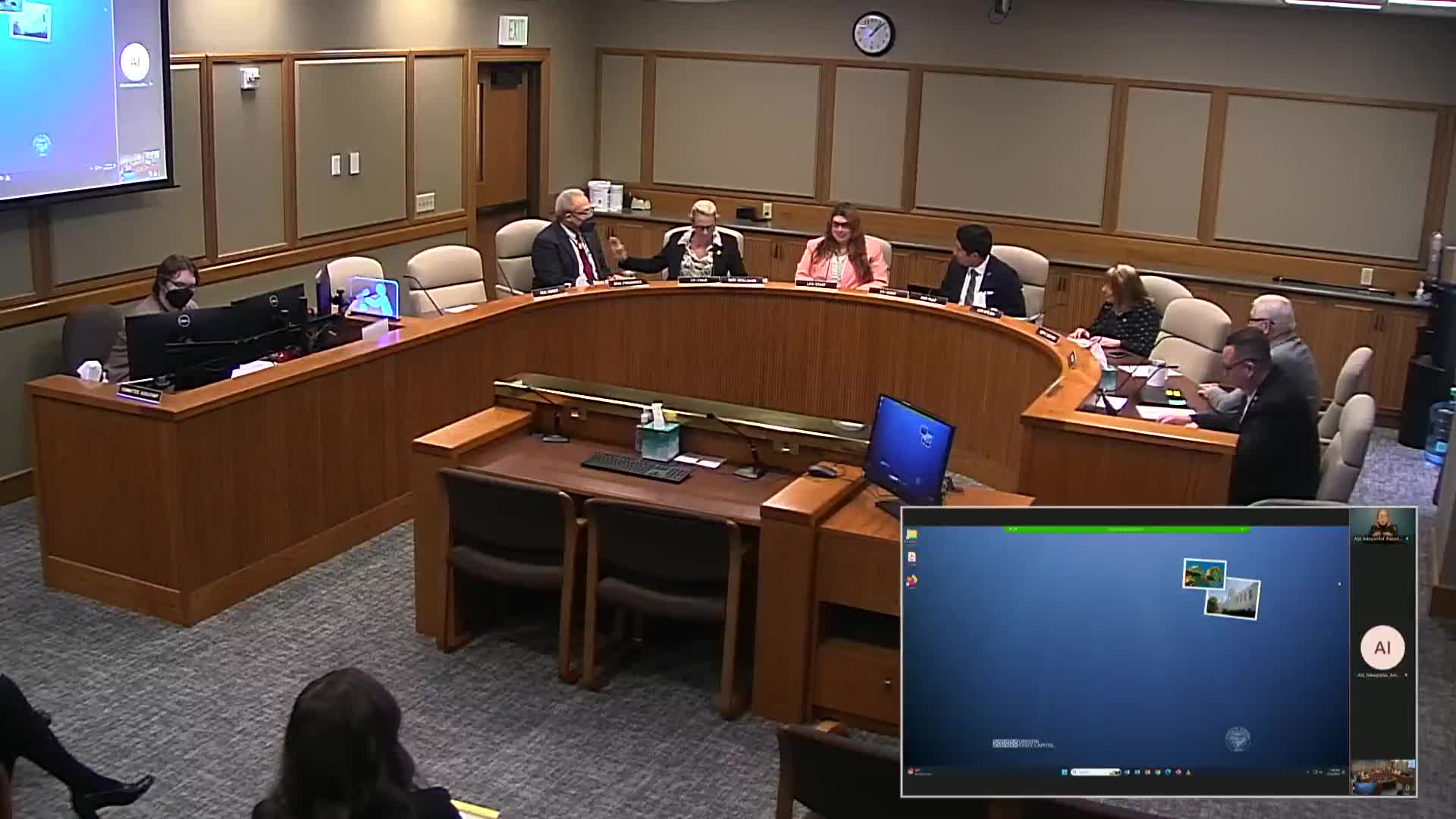
Summary
The Education Subcommittee heard presentations on Senate Bill 5532, the governor's budget for the Mental Health Regulatory Agency, including requests for a one-time $625,000 general fund allocation for a new licensing system and two permanent compliance and licensing positions.
The Oregon Legislative Education Subcommittee opened a public hearing Wednesday, Feb. 19, on Senate Bill 5532, the governor's budget request for the Mental Health Regulatory Agency (MHRA), hearing agency staff describe rising licensing volume, increased complaint investigations and requests for one-time and ongoing funding to replace a problematic licensing vendor and add staff.
The hearing matters because MHRA regulates psychologists and licensed professional counselors and therapists who provide mental health services across Oregon; agency leaders told the subcommittee that continued growth in licensees and investigations is straining current staffing and technology, and that the governor's recommended packages aim to preserve consumer protection and improve customer service.
Kendra Beck of the Department of Administrative Services (DAS) Chief Financial Office gave the committee an overview of the governor's recommended budget, saying the request would fund two additional permanent positions and the reclassification of two existing positions to address workload. "The governor's recommended budget includes 2 additional positions and the reclassification of 2 existing positions to address the increased workload," Beck said.
Todd Yunkin, executive director of the Mental Health Regulatory Agency, and Lorice Stashek, MHRA policy advisor, described the agency's role and recent trends. MHRA oversees two boards: the Board of Licensed Professional Counselors and Therapists and the Oregon Board of Psychology. Stashek told the committee the boards protect the public by setting education and examination standards, issuing and renewing licenses, and investigating complaints. "The boards protect the public by setting in accordance with statutes standards for education, training and examination," she said.
Agency presenters said licensee numbers have grown substantially: MHRA reported 12,658 individuals regulated across the two boards at the end of 2024, an increase of 2,099 practitioners (about 20 percent) since the last report to the committee. MHRA staff said the number of investigations also rose, with the agency recording its highest count to date in 2024. Yunkin said investigations have been increasing faster than licensee growth and described a broad mix of complaints from jurisdictional or procedural issues to complex cases alleging public harm.
A central element of the budget presentation was a request for a one-time general fund allocation of $625,000 (package 550) to migrate MHRA's licensing work to a new vendor. Agency staff said the current vendor and system, implemented in 2020'21, has not met needs and was identified as a risk by enterprise information services. "The vendor issues have significantly impacted MHRA staff and licensees," Beck said. MHRA told the committee it plans an enterprise-level approach in coordination with the Oregon State Chief Information Officer to pursue an off-the-shelf solution with a proven track record rather than an in-house build.
MHRA also described a personnel request (package 551) for one permanent investigator and one compliance specialist, plus reclassification of two licensing positions. Yunkin said the investigator position had been filled in a limited-duration capacity and that expanding permanent staffing aims to reduce investigation backlogs and improve customer service. The agency said its proposed 2025-27 budget would be split mostly between personal services (about 58 percent) and services and supplies (about 42 percent), and that the $625,000 one-time general fund is the only general-fund item in the proposal.
The agency noted other fiscal drivers and risks, including professional services for contested cases and attorney general costs for enforcement. MHRA described a package tied to Senate Bill 789 (package 100) that would give the Board of Psychology authority to assess disciplinary costs, adding an estimated $17,753 in other funds revenue; presenters said that change would align the board with other health-related boards and help contain compliance costs.
Lawmakers asked about training and workforce distribution, diversity and cultural competency, and vendor procurement. Senator Frederick asked about geographic and ethnic recruitment of providers; Yunkin and Stashek said boards do not directly recruit providers but have pursued a diversity study (per House Bill 5006) and rule and process reviews to remove unnecessary barriers to licensure. Stashek said four hours of cultural competency continuing education are required within the boards' 40-hour, two-year continuing-education requirement.
Representative Juncker, who said his brother is a professional counselor, complimented recent customer-service improvements. "My brother's a professional counselor... he was very happy about [the fee reductions] and said the agency has done a lot better job in the last year with customer service," Juncker said.
The subcommittee recorded no public testimony in the hearing and closed the hearing later in the session. The presentation and questions were limited to discussion and information-gathering; no final votes or committee dispositions of SB 5532 occurred during the meeting.
Looking ahead, MHRA staff said they need the one-time funds before conducting detailed procurement of a new licensing vendor and that they plan to coordinate implementation with the state CIO for an enterprise solution. The agency warned that a 10 percent across-the-board reduction scenario would reduce training, travel and legal access and could force closures or settlements of cases in ways that might harm public protection.
The subcommittee did not take formal action on SB 5532 during the Feb. 19 hearing; members asked staff to follow up on staffing, procurement and diversity work as the budget process continues.