Get Full Government Meeting Transcripts, Videos, & Alerts Forever!
Get email alerts on the Education Cell Phones topic
No spam. Unsubscribe anytime.
Committee backs bill requiring districts to adopt distraction‑free phone policies
Summary
A committee advanced Senate Bill 1032, which would require school districts to adopt a districtwide distraction‑free learning policy; sponsors framed the change as local control that preserves exemptions for medical and special‑needs cases and schools that have already adopted similar policies said they saw improved engagement.
A House committee voted to send Senate Bill 1032 to the House floor with a “do pass" recommendation after sponsors and school-district officials described local policies to remove phones from classrooms and cited improved student focus and classroom engagement.
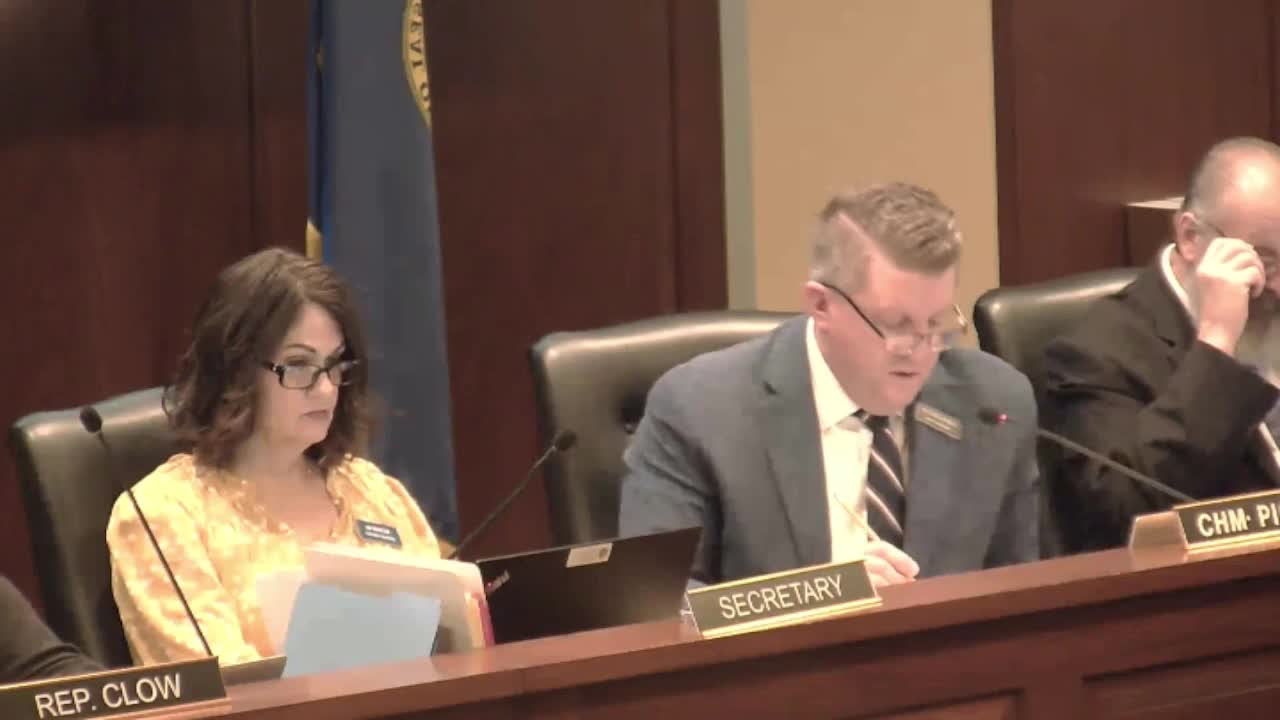
Senate Bill 1032, introduced on behalf of Senator Burnett and explained in committee by Representative James Petzke, would require each school district to adopt a “distraction-free learning” policy by the end of the calendar year and leave implementation details to locally elected school boards. Petzke said the measure allows districts to make exceptions for special-needs students and medical necessities and credited recent local efforts for the bill’s momentum: "It was honestly shocking to see they were excited, with the results that they're getting from having these phones out of their hands," he said of classroom visits.
District officials who testified described how local rules were adopted and the results they reported. Eva Cramer, public-relations director for the Twin Falls School District, said Twin Falls implemented a districtwide policy that includes smartwatches, earbuds and phones and allows devices in backpacks if fully silenced so they can be accessed in emergencies; Cramer said the district used community input and reported positive student feedback. Cliff Rice, director of secondary instruction for West Ada School District, described implementation at his district and cited measurable compliance: "We continue to be in that 80% of our students actually have their cell phones in that vault, which we will take as a win any day." Two West Ada high-school students described classroom and social benefits, saying the policy increased in-person connections and reduced distractions.
Committee members asked how the bill would interact with districts’ existing variations and with devices such as smartwatches. Representative Petzke said the bill intentionally leaves details to local boards because district size and needs vary. Representative Thais and others praised the bill as a way to build consensus on a recognized classroom problem. Representative Church expressed support but noted the bill adds policy expectations at the same time the Legislature considers other changes affecting public schools.
Representative Mendyff moved that the committee send Senate Bill 1032 to the floor with a due-pass recommendation. The committee approved the motion by voice vote and the bill was advanced.
What’s next: The bill will be reported to the full House for further consideration; if enacted, districts would be required to adopt distraction-free policies but would retain local control over exceptions and implementation.