Get Full Government Meeting Transcripts, Videos, & Alerts Forever!
Get email alerts on the Education Enrollment Disciplinary Records topic
No spam. Unsubscribe anytime.
House committee advances bill letting school boards consider convictions, chronic truancy when denying enrollment
Summary
A House committee voted to send House Bill 236 to the House floor with a “do pass" recommendation after sponsors said the bill consolidates and clarifies existing code that lets school boards consider convictions, adjudications and habitual truancy when deciding student enrollment.
A House committee voted to send House Bill 236 to the House floor with a “do pass" recommendation after sponsors said the bill consolidates and clarifies existing code that lets school boards consider convictions, adjudications and habitual truancy when deciding student enrollment.
Representative Sean Dygert, sponsor and a former educator, told the committee the bill “does allow students that disenroll in lieu of discipline” to be recorded so receiving schools can consider that history when deciding whether to enroll the student. He said the measure does not change due-process protections and does not require disclosure of court records: “They shall disclose,” Dygert said, describing the bill’s language on reporting convictions and adjudications.
The bill drew vocal public opposition from family advocates and social-service providers who said it could have a disparate impact on students with disabilities, foster youth and students with unmet behavioral-health needs. Britney Shipley, a social worker and parent from Hailey, said she “strongly oppose[d] HB236,” arguing that inconsistent attendance driven by medical needs should not be punished and warning the bill’s “vague language invites discrimination.” Aida Samantha “Sam” Moore of Elevate Empire, a social-justice consulting agency and a former foster youth, also opposed the bill and urged lawmakers to invest in restorative practices and behavioral-health supports instead of exclusion.
Quinn Perry, deputy director of the Idaho School Boards Association, testified in support and said the bill does not change federal protections under Section 504 or the Individuals with Disabilities Education Act (IDEA). “Denying a child their ability to attend a public school is something that is not taken lightly,” Perry said, adding that boards often continue due-process proceedings so problems are not shifted between districts.
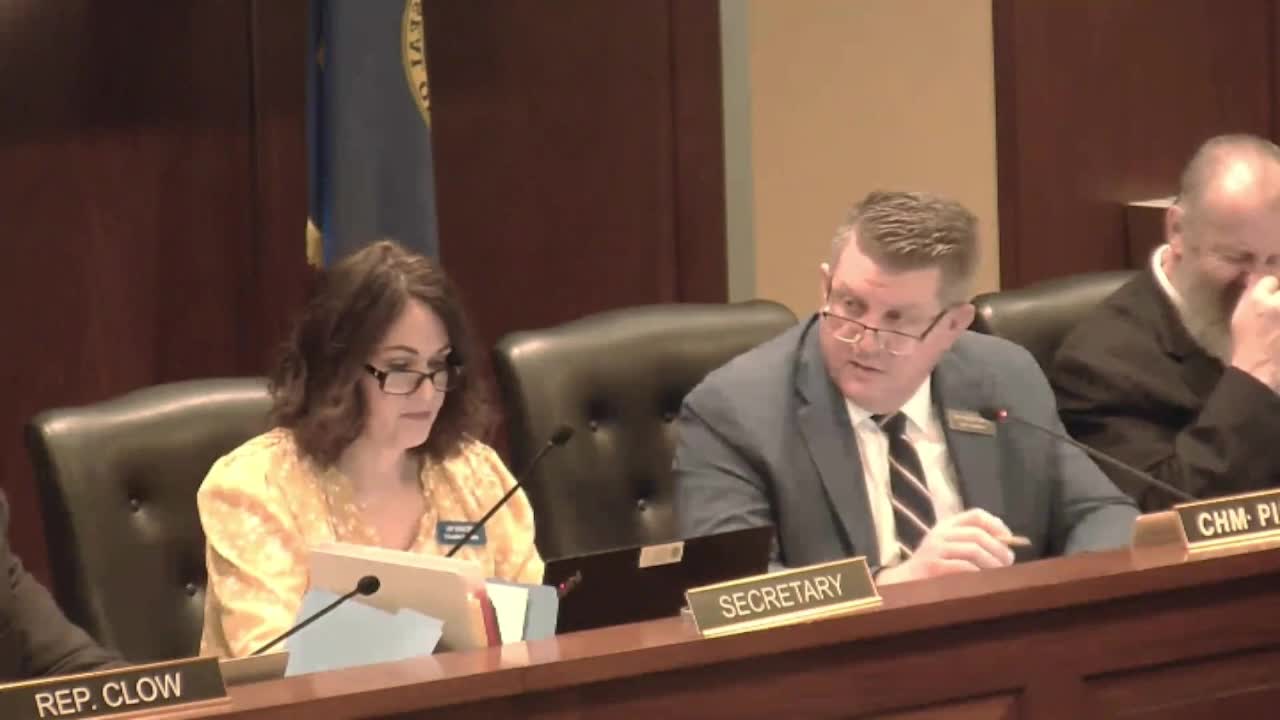
Committee members pressed sponsors and witnesses on several procedural issues and legal limits. Representative Clow and others asked how the bill treats students with undiagnosed disabilities or those covered by IEPs or 504 plans; Dygert and other legislators said federal law and existing state code governing special-education protections remain in force and that school boards would still need to demonstrate behavior was not caused by an underlying disability before excluding a student for disciplinary reasons. Representative Wisniewski asked what “adjudication” means in juvenile cases; Dygert answered that juvenile courts commonly use “adjudication” where adult courts use “conviction,” and the bill uses that term to capture juvenile outcomes.
Representative Harris read a list of serious crimes enumerated in the bill to underscore supporters’ view that the measure targets students with convictions or adjudications for the most serious offenses. Other members expressed concern that habitually truant language already exists in statute and asked how it would be applied; sponsors said the bill largely reorganizes and clarifies existing provisions and adds explicit authority to record withdrawals “in lieu of discipline.” Representative Church, who said he teaches at a school of last resort, urged the committee to remember that students excluded under the measure still “have to go somewhere” and called for additional options and supports.
After public testimony and questioning, Representative Hawkins moved to send House Bill 236 to the floor with a due-pass recommendation. The committee approved the motion by voice vote and the bill was advanced.
The bill text referenced in committee includes a due-process sequence for parents and guardians (described in the hearing as “page 2, line 7 through line 30”) and a list of offenses the sponsor said are intended to be disclosed to school boards. Committee discussion repeatedly emphasized that the bill does not authorize review of sealed court records and that expunged records would not be reportable under the sponsor’s reading.
What’s next: The committee record shows HB236 will be reported to the full House for further consideration; the committee did not adopt amendments on the floor of the hearing. If the bill advances, further floor debate could clarify application to students covered by IEPs or 504 plans and whether additional funding or placements for affected students will be provided.