Get Full Government Meeting Transcripts, Videos, & Alerts Forever!
Get email alerts on the Education Attendance topic
No spam. Unsubscribe anytime.
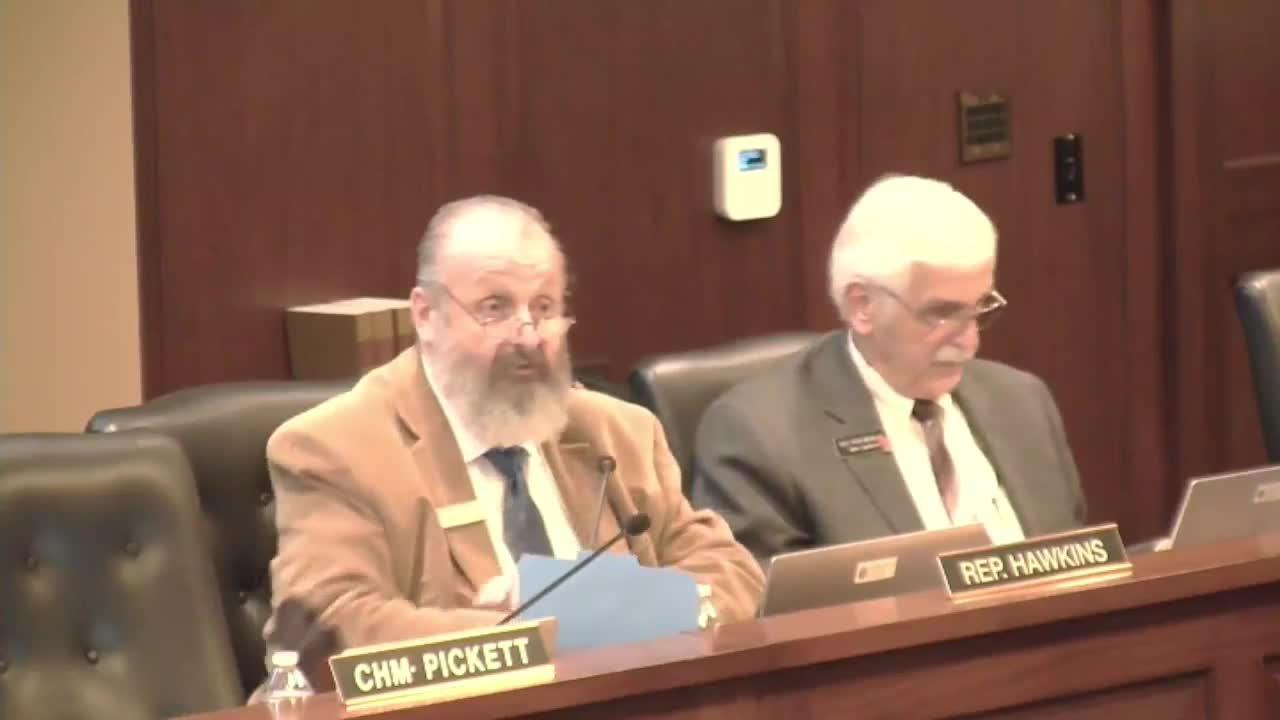
Committee introduces RS 32392 to tighten language allowing school boards to deny enrollment of dangerous students
Summary
Representative Sean Dyger introduced RS 32392 to clarify when school boards can deny enrollment for students whose conduct the board deems dangerous, including new language to capture students disenrolled by parents during ongoing expulsion proceedings and those with specified juvenile adjudications.
Rep. Sean Dyger (District 23) introduced RS 32392 to the House Education Committee, saying the resolution tightens statutory language to help school boards identify "dangerous individuals" seeking enrollment and to close a perceived gap when parents withdraw students during an expulsion process.
Dyger described the bill—s drafting changes: the language moves from paragraph format to a list, replaces the term "incorrigible" with a standard giving the school board judgment over a student—s conduct, and adds a new subparagraph to address students who are pulled from school by their parents while an expulsion or discipline process is underway. "The idea is to catch students in the process of going through the expulsion process but then their parents pull them out of school before that expulsion process is completed," Dyger said.
He also noted a new provision—letter F in the draft—that would allow denial of enrollment where a student has a conviction or adjudication under "section 25 to 5A," language the sponsor characterized as referring to the most serious felony offenses and intended to capture adjudications in juvenile court.
Committee members asked procedural and legal questions. Rep. Clow asked how juvenile adjudication information would be discovered given that juvenile records are generally closed; Dyger replied that the bill—s language requires disclosure that a conviction or adjudication occurred but does not create a mechanism to obtain closed court files: "It is not a way to gain access to any court records that juveniles or cases might have," he said.
Dyger also pointed out that the draft preserves due process, noting a section that allows students to pursue a hearing with the school board.
A motion to introduce RS 32392 was made and the committee approved the introduction by voice vote.