Get Full Government Meeting Transcripts, Videos, & Alerts Forever!
Get email alerts on the Public Health topic
No spam. Unsubscribe anytime.
Committee reviews bill to bar government vaccine mandates, seeks narrower language
Summary
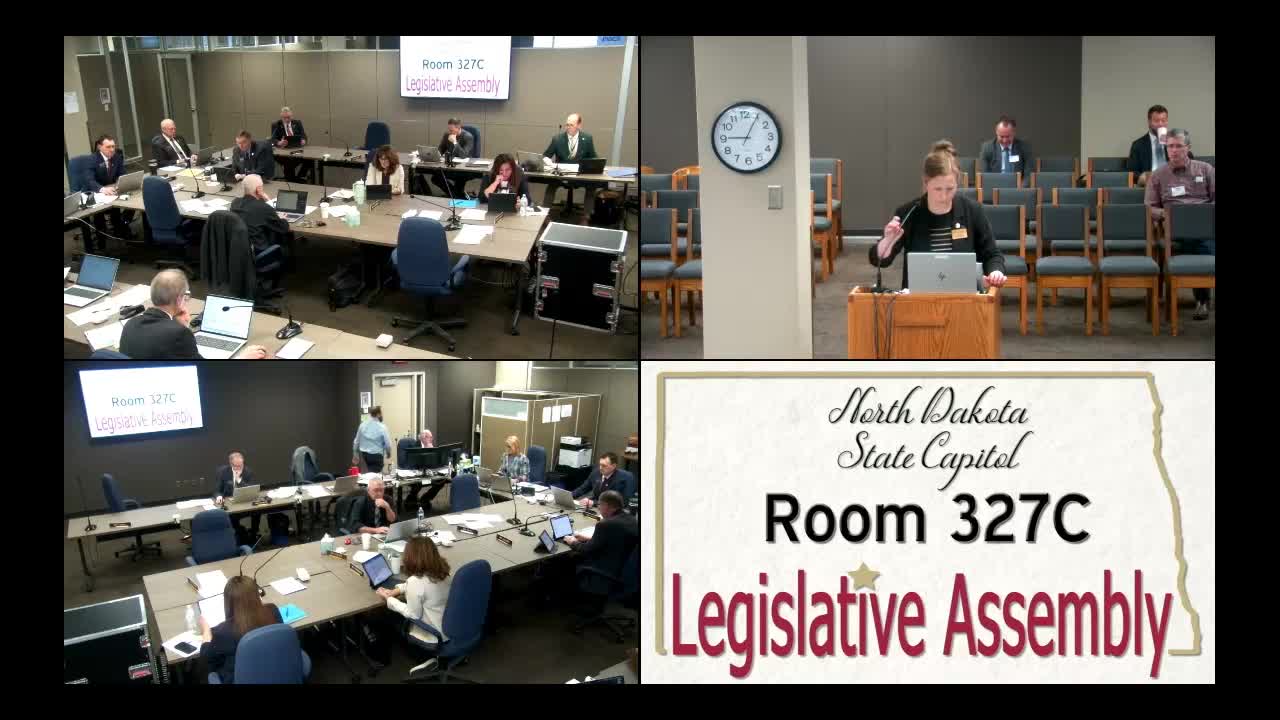
The Industry, Business and Labor Committee heard from Allison Hicks, general counsel for the Public Health Division of the Department of Health and Human Services, on a memorandum comparing pre- and post-COVID statutory authority for the state health officer as lawmakers discussed Bill 1454, sponsored by Representative Donna Henderson.
The Industry, Business and Labor Committee heard from Allison Hicks, general counsel for the Public Health Division of the Department of Health and Human Services, on a memorandum comparing pre- and post-COVID statutory authority for the state health officer as lawmakers discussed Bill 1454, sponsored by Representative Donna Henderson.
Hicks told the committee she drafted the memorandum for Representative Shower and that it compares an April 2021 version of the statute with more recent changes. "The majority of the state health officer's authority is located in century code 23-01-05 related to orders," Hicks said, and she noted recent legislative changes that narrowed and then altered those powers, citing changes codified in statutes and several bills attached as exhibits to her memo.
The memo, Hicks said, shows that post-pandemic legislation limited the state health officer's ability to issue broad statewide written orders and added geographic limits and other constraints. She also called attention to other statutes adopted since 2021, including the provision commonly cited as 23-12-20 and later amendments that address vaccination-status requirements and emergency-use-authorizations.
Representative Donna Henderson, the bill sponsor, told the committee her intent is to "clarify that someone should not be mandated to take a product like [a vaccine]," and she offered an amendment drafted by legislative council to narrow the bill's original definition. Henderson said she was willing to remove the phrase "medical products" from the bill and focus the language on vaccines and similar products, noting concern about government entities requiring disclosure of vaccination status.
Committee members focused on where the bill might unintentionally interfere with existing law or needed public-health exceptions. Representative Koppelman and others asked whether statutory provisions already in place'notably the statutes cited by Hicks'adequately prevent broad government mandates. Koppelman expressed concern that universities and other institutions had interpreted authorities more broadly during the pandemic and said he favored clarifying language that preserves individual choice without disrupting necessary public-health responses.
Hicks told the committee that some institutions (for example, K-12 public schools) must follow state vaccination policy and cannot create new exemption categories, while the university system has different authorities and has sometimes taken broader measures. Hicks recommended a careful drafting approach because broad definitions (for example, "medical product") could capture a wide range of clinical activities beyond vaccines.
Representatives pressed on specific exemptions that members want preserved, including court-ordered care, treatment for people unable to consent, Department of Corrections settings and federal requirements that apply in specific facilities. Representative Ruby and Representative Casper both urged language that would preserve emergency or life-saving interventions and avoid creating unintended limits on responses such as naloxone administration or care for incapacitated patients.
No formal committee vote was recorded on Bill 1454. The committee directed Representative Henderson and Allison Hicks to work together on narrower language that removes or redefines broad terms and to add targeted exceptions (for example, for emergency, court-ordered, or federally required actions). Representative Koppelman, Representative Schauer and others volunteered to participate in drafting. The sponsor said she will circulate the amendment and agreed to meet with staff after floor session to finalize language.
The discussion also produced a drafting suggestion from Representative Casper to add the word "prevent" to the bill's description of vaccines and similar products (for example, "to prevent or manage disease"). Representative Henderson accepted that suggestion for further drafting.
Committee members noted timing constraints: a committee member observed the bill must be out of the committee by the day's deadline to remain eligible for floor action. The sponsor and members agreed to reconvene after floor session to bring revised language back to committee.
Why it matters: The bill seeks to clarify individual consent for vaccines and related items and to limit broad emergency powers previously exercised during the COVID-19 pandemic. Changes could affect how public-health agencies, institutions of higher education and other government entities structure immunization activities, record-keeping and disclosure requirements.
Next steps: Sponsor Henderson will work with Allison Hicks and committee members on a narrowed amendment replacing the broad "medical product" definition with language focused on vaccines or similar preventive products and adding explicit public-health and institutional exceptions. The committee paused consideration and planned to resume after floor session.