Get Full Government Meeting Transcripts, Videos, & Alerts Forever!
Get email alerts on the Wastewater topic
No spam. Unsubscribe anytime.
Appropriations committee hears bill to create $50 million wastewater grant program
Summary
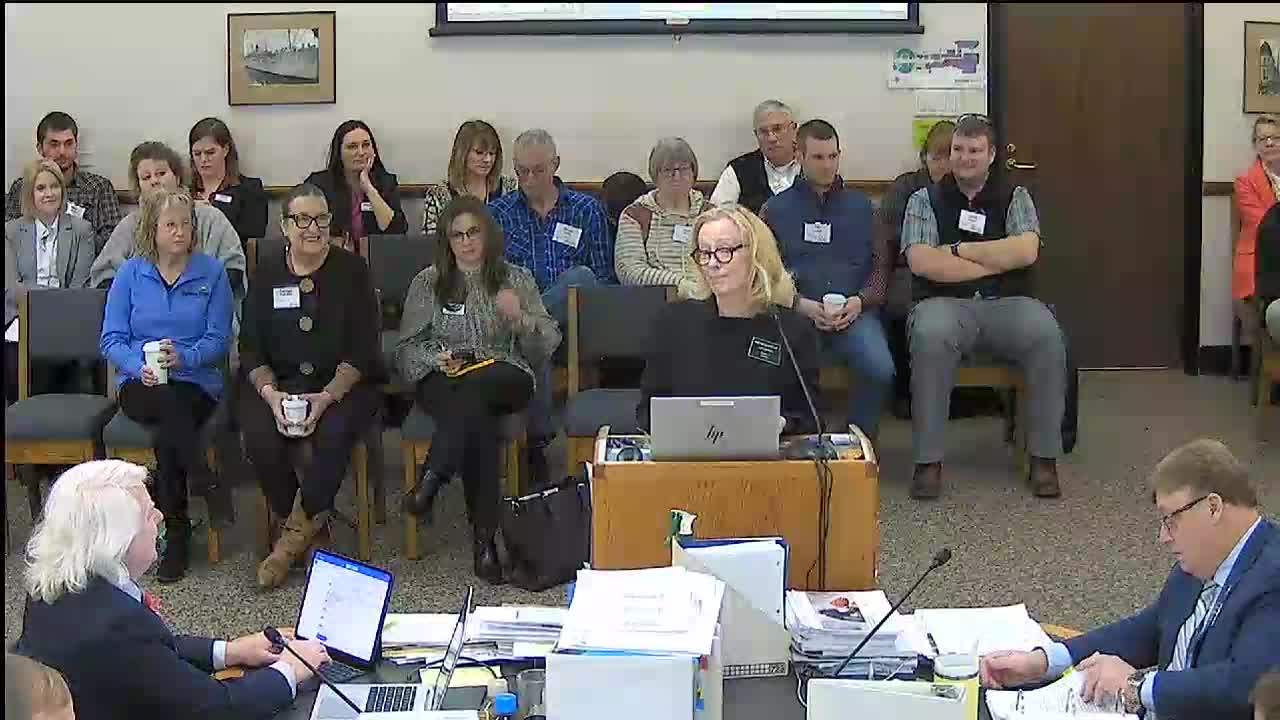
Representative Liz Conmey told the House Appropriations Committee that House Bill 15 77 would create a $50 million wastewater infrastructure grant program administered by the Department of Environmental Quality, with 60/40 grant-match structure, project caps and special set-asides for very small cities.
Representative Liz Conmey, presenting HB 15 77 to the full Appropriations Committee in Bismarck, said the bill would create a wastewater infrastructure grant program administered by the North Dakota Department of Environmental Quality and “appropriate 50,000,000 from the State Investments and Improvement Fund or SIF.”
The bill would cap grants at 12,500,000 per project and provide an “equal allocation for cities under 5,000 residents,” and use a 60 percent state / 40 percent local cost-share to reduce reliance on property taxes and special assessments, Conmey said.
David Brushhein, Division Director of Municipal Facilities at the Department of Environmental Quality, told the committee the state’s Clean Water State Revolving Loan Fund (CWSRF) currently distributes federal funds as low‑interest loans and a limited amount of grants. “Currently with the bipartisan infrastructure law there’s $7,000,000 per year in grama funds that are available through the Clean Water SRF program,” he said, adding that the federal boost is time‑limited and is expected to drop in 2027 to about $400,000 annually.
Committee members and agency witnesses said needs statewide are far larger than the bill’s appropriation. Brushhein and other witnesses described a 2025 project priority list that included roughly 257 wastewater projects with total construction cost near $1.4 billion; many small communities remain on such lists for years because they cannot afford required local matches.
Committee members asked technical and policy questions: Representative Nelson and others sought clarity on how current CWSRF grant/loan forgiveness works and whether other federal grants (Army Corps, USDA Rural Development, Community Development Block Grant) would be counted toward the local match. Brushhein said program rules and administrative decisions would determine how outside funds interact with a state grant, and that the DEQ had not finalized those operational details.
Diane Ayment of the Public Finance Authority described how both the Clean Water and Drinking Water SRF programs use ranking criteria to allocate the small pool of grant or forgivable funds to the highest‑priority projects. She confirmed the clean water program historically had less grant forgiveness than the drinking water program and that North Dakota’s share of federal grant dollars has been reduced in years when congressional earmarks reallocated SRF funds.
Supporters framed the bill as a targeted, immediate infusion to reduce pressure on small systems and ratepayers; several committee members cautioned that $50 million is only a partial response to multi‑hundred‑million needs and asked for more detail on administration, prioritization and how the program would coordinate with existing federal and state grant sources.
No committee vote on HB 15 77 was recorded in the transcript segment provided.