Get Full Government Meeting Transcripts, Videos, & Alerts Forever!
Get email alerts on the Childcare Teacher Recruitment topic
No spam. Unsubscribe anytime.
WonderSchool tells committee its pre‑screening platform can cut childcare hiring time
Summary
Representatives from WonderSchool told the Georgia House Small Business Committee that a pre‑screened teacher pool, university partnerships and a matching algorithm can shorten hiring from months to days; the company said it operates in 10 states and offers both provider‑paid and state‑contract models.
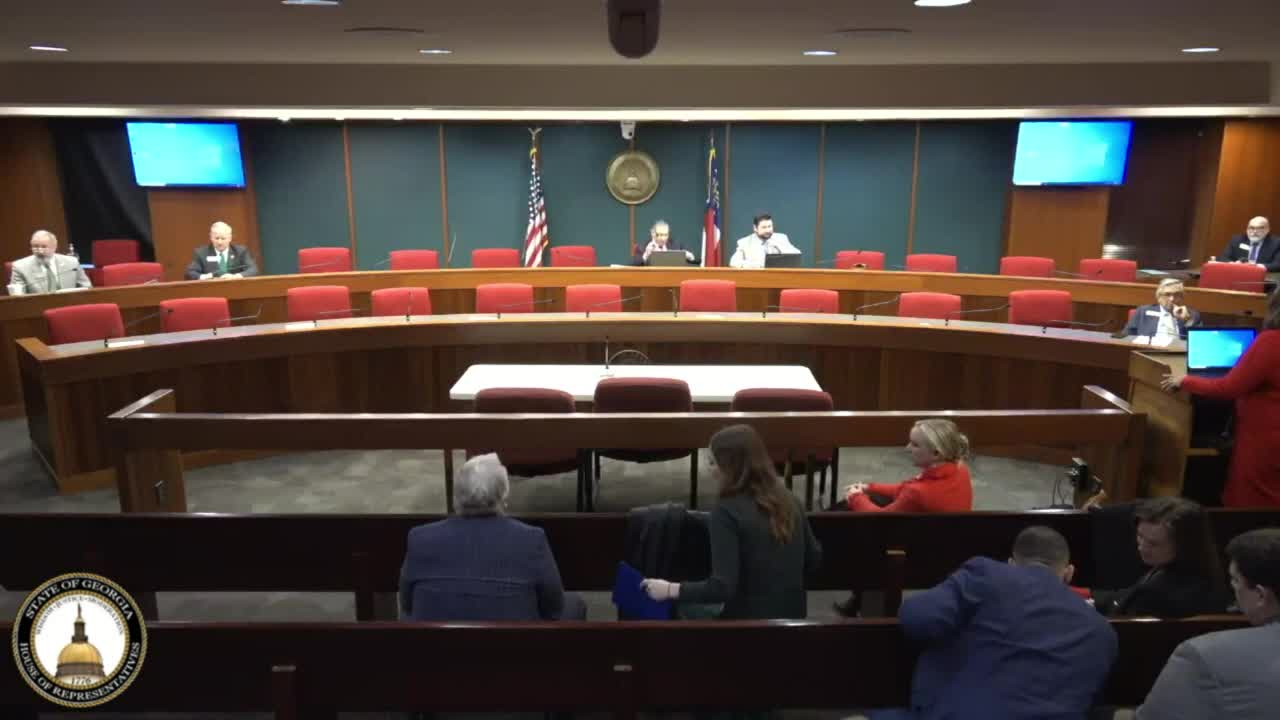
At a meeting of the Georgia House Small Business Committee, WonderSchool representatives described a teacher‑recruitment platform they said can reduce the time it takes childcare providers to hire qualified staff.
WonderSchool representatives said the company matches pre‑screened candidates with childcare centers, maintains a searchable pool of applicants and offers features such as substitute ‘sub pools’ for in‑home providers. Ellen Reynolds, a lobbyist representing WonderSchool, said the company aims to help providers open and sustain small childcare businesses so more families can return to work.
“The childcare industry is a foundational piece of that,” Reynolds said, describing the firm as “an innovative startup that is working on… platforms to help bring together the needs of the early childhood education community.” Tay Marie Adams, a member of WonderSchool’s State Partnership Team, told the committee the company helps with provider onboarding, subsidy management, employer concierge services and teacher recruitment.
Adams said WonderSchool conducts targeted outreach and university partnerships, pre‑screens candidates to meet each state’s licensing requirements, and uses an algorithm to match prospective teachers to employers by ZIP code and fit. “We have been able to reduce hiring time by up to 80%,” she said, and the company has “almost 100,000 teachers on our platform,” according to her presentation.
WonderSchool described two payment models: individual childcare providers pay for the service, or a state or other government partner contracts with the company and covers costs as part of workforce initiatives. Adams said the platform’s vetting reflects “whatever the state requirements are” and that the company does not recruit current childcare employees away from existing centers.
Committee members pressed for details. Representative Washburn said he has a daycare operator in Middle Georgia who is “almost ready to just walk away because she can’t find people.” He asked how WonderSchool is paid; Adams described the two models and noted states sometimes contract for the services as part of workforce programs. Representative Rivera asked what requirements the platform applies; Adams said the company vets candidates to meet the state’s specific licensing and training requirements and that Georgia Pre‑K lead teachers must meet higher credentialing (a bachelor’s degree), while many childcare positions require background checks and periodic training such as CPR and first aid.
Neither WonderSchool nor committee members identified any formal procurement, contract number or pending state request for proposals during the presentation. Adams said the company works in 10 states and with some local governments and cities, and noted that states use different parts of WonderSchool’s suite of services depending on need.
The presentation concluded with committee members thanking the witnesses; no formal motions, votes or committee directions were recorded in the transcript.