Get Full Government Meeting Transcripts, Videos, & Alerts Forever!
Get email alerts on the Pbm Rebate Pass Through topic
No spam. Unsubscribe anytime.
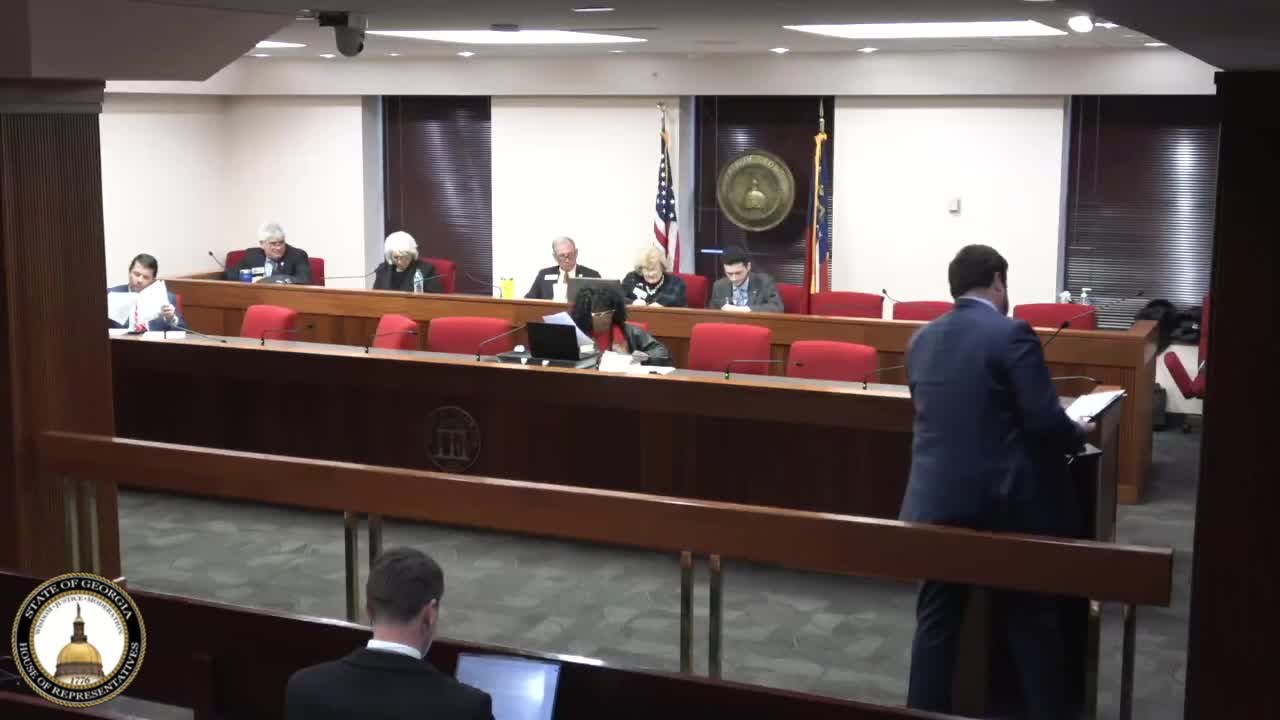
Committee hears split testimony on HB 100 requiring point‑of‑sale drug rebate pass‑throughs
Summary
Representative Douglas presented House Bill 100 to require PBMs and insurers to pass negotiated prescription‑drug rebates to consumers at the point of sale; supporters said it would lower out‑of‑pocket costs and opponents warned of higher premiums and implementation challenges.
Representative Douglas presented House Bill 100 to the Insurance Subcommittee on Life and Health, saying the measure would require pharmacy benefit managers (PBMs) and insurers to pass negotiated rebates and discounts to consumers at the point of sale — the sponsor and supporters asked that a large share of negotiated savings be delivered directly when patients pay for prescriptions.
Collier Williams of the National MS Society testified in support, saying high prescription costs lead patients to alter or stop disease‑modifying therapies (DMTs). "This is a major advancement ... to lower these out of pocket expenses," Williams told the committee, urging lawmakers to require PBMs and insurers to pass at least 80 percent of negotiated rebates and discounts to consumers at the pharmacy counter.
Representatives of the commercial insurance industry and PBMs pushed back. Jesse Wetherington, president of the Georgia Association of Health Plans, said the proposal would reallocate negotiated rebates away from the insurance pool and impose costs on small businesses that buy coverage. "What this does is it really subsidizes those people at the expense of everybody else in that pool," Wetherington said, describing point‑of‑sale pass‑throughs as a move that raises premiums for the broader insured population and noting many plans already offer point‑of‑sale rebate options.
A representative from PCMA, the trade association for PBMs, likewise opposed the proposal. Industry witnesses told the committee that rebates are often adjudicated in arrears and can be difficult to calculate at the pharmacy counter, and they said exempting some plans — including certain employer or state plans — is common in versions discussed.
Supporters said the change would lower out‑of‑pocket costs for patients who rely on expensive brand drugs; Collier Williams cited a National MS Society survey in which 40 percent of people taking DMTs altered or stopped medication because of cost, and said more than half of respondents worry about affording their treatment going forward. Opponents said brand drugs can cost seven to eight times more than generics, and argued that only a minority of plan members use brand medications in a given year, so shifting rebates to point of sale would raise premiums for others.
Committee members asked about exemptions and whether the state health plan or Medicaid would be affected; witnesses noted that proposed language and substitutes could remove or add such plans. Representative Douglas said he intended to narrow the bill in some sections, and discussion continued over implementation and whether a fiscal note was required. The committee did not take a vote; the item was presented as a hearing only.