Get Full Government Meeting Transcripts, Videos, & Alerts Forever!
Get email alerts on the Workers Compensation Testing topic
No spam. Unsubscribe anytime.
Commerce and Human Resources committee holds bill limiting recordings during psychological testing in workers' comp
Summary
The House Commerce and Human Resources Committee voted to hold House Bill 115 after hearing competing testimony about whether third‑party observation or recording of standardized psychological and neuropsychological testing in workers' compensation independent medical exams threatens test validity or is needed for due process.
BOISE — Members of the House Commerce and Human Resources Committee voted 11‑4 to hold House Bill 115 after more than two hours of testimony and debate over whether attorneys or recording devices should be allowed to observe standardized psychological and neuropsychological testing used in workers' compensation independent medical examinations (IMEs).
The bill’s sponsor, Representative Ben Furman, introduced the proposal as a narrow amendment to Idaho Code section 72‑4‑33 to prohibit third‑party observation and audio/video recording during the standardized testing portion of psychological and neuropsychological IMEs while preserving other transparency mechanisms.
Proponents said third‑party observation and recordings materially alter test reliability and validity. Dr. Joseph Black, a clinical and neuropsychological examiner who spoke in favor, told the committee the presence of observers or recording devices affects examinees’ performance and therefore the validity of the results. “If you impact the reliability of the findings, you automatically lower the validity,” Black said. He compared contaminating an exam to contaminating a blood draw: “Why on earth would we contaminate a blood draw at the time of collection knowing you're introducing contaminants and then try to make any sense of what the data means.”
Opponents, including plaintiff attorneys and claimant advocates, said recordings and observers are necessary to protect claimants’ due process rights and allow counsel to verify that examiners followed standardized procedures. Kurt Holzer of the Idaho Trial Lawyers Association told members: “The only way you know whether that's a valid subjective evaluation is if it's recorded.” Attorney Evan Mortimer argued the protections exist to ensure transparency: “What are they trying to hide? Right. Transparency is a good thing.”
Representatives of employers, carriers and third‑party administrators offered a practical rationale for the bill. Mark Peterson, who identified himself as representing Idaho employers and carriers and as the State Insurance Fund’s chief legal officer, said the change responds to recent, isolated requests by claimant counsel to record or attend testing that, in his view, allow attorneys to block testing by insisting on attendance or recording. “If you have a claimant's counsel who doesn't want neurological testing… they can simply insist on recording or observing the testing portion of this exam,” Peterson said.
Other witnesses described existing remedies that can be used after an exam. Dr. Black and other providers said raw test data and test records can be shared under protective and ethical rules with other providers for independent review; Dr. Black estimated the cost of such an independent review at roughly one‑third to 40 percent of the cost of a full IME. He also cited a range of published research he said shows third‑party observation or recording can change examinee performance; opposing witnesses cited other studies finding no effect.
Committee members debated the balance between protecting the integrity of standardized testing and ensuring claimants’ access to a transparent, reviewable record. Several lawmakers said they were persuaded the bill should be narrowed or studied further; Representative Taylor moved to table the bill and an amended substitute motion to hold in committee passed 11‑4.
Votes at a glance
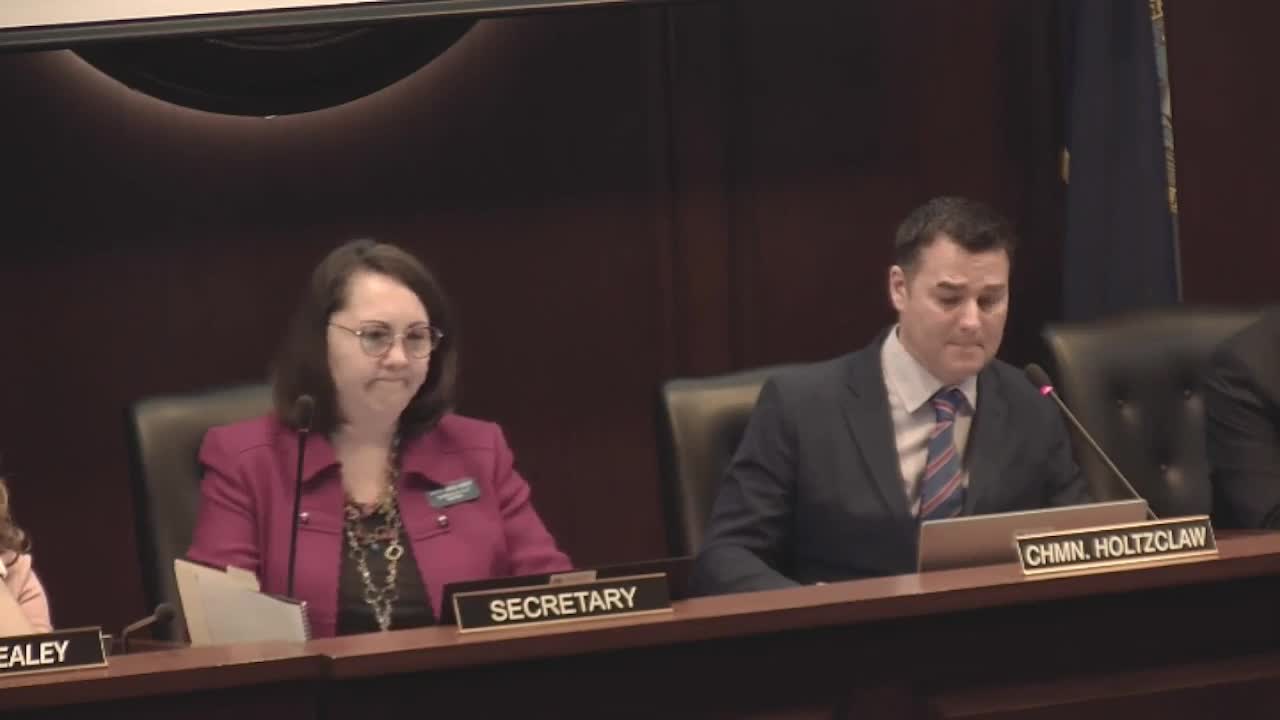
- Motion: Hold House Bill 115 in committee. Outcome: Passed (11 yes, 4 no). Yes: Chairman Holtzclaw; Representative Vishniewski; Representative Weber; Representative McCann; Representative Beissinger; Representative Bruce; Representative Burgoyne; Representative Leavitt; Representative Tanner; Representative Egbert; Representative Achilles. No: Representative Cheatham; Representative Healy; Representative Kaler; Representative Furman.
What the committee heard
- For the bill: Providers and carrier representatives said recordings and third‑party observation undermine standardized test conditions used to generate valid clinical data and raise test‑security concerns (tests can be shared, trained for and “beaten,” they argued). Dr. Black said standardized testing requires a quiet, distraction‑free environment and that “the presence of TPO, third party observation, including recording, actually materially affects the validity of those results.”
- Against the bill: Plaintiff attorneys, the Idaho Trial Lawyers Association and claimant advocates said recordings or observation are often the only practical way to verify whether the examiner followed published administration rules and to preserve a record for depositions or appeals. They also said protective orders and ethical rules can guard sensitive test content.
Next steps
Because the committee voted to hold the bill in committee, HB 115 will not advance to the floor from this meeting. Both proponents and opponents signaled they could return with additional data, proposed clarifications to the bill language or proposals for protective orders and protocols to reconcile test security with transparency concerns.