Get Full Government Meeting Transcripts, Videos, & Alerts Forever!
Get email alerts on the Tdt Funds And Policies topic
No spam. Unsubscribe anytime.
Tourist-development fund balance about $30.4M; council reviews reserve policy and seeks clearer application checklist
Summary
Escambia County budget staff reported a TDT cash balance of about $30.4 million and a slight year-over-year decline in collections through January. The Tourist Development Council reviewed a reserve allocation policy and directed staff to work with the clerk to produce a clearer application and reimbursement checklist for grantees.
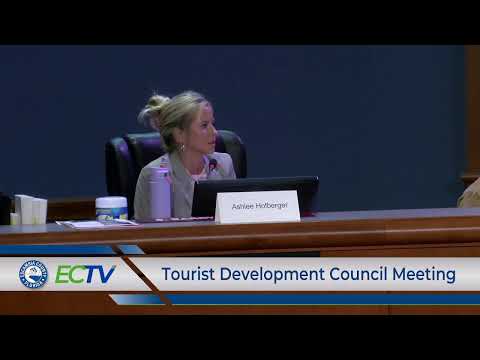
Escambia County budget staff told the Tourist Development Council on Feb. 18 that the tourist-development tax fund has a cash balance of about $30.4 million as of February 2025 and that fiscal‑year 2025 collections through January were down roughly $203,825 compared with the previous year.
Jeremy Paglieligan, senior budget analyst, presented the monthly status and said expenses through Jan. 25 totaled roughly $4,343,500. He also confirmed that interest earned on the TDT fund is recognized and remains in the TDT fund rather than reverting to the general fund.
The council reviewed a TDT restricted-marketing reserve plan, which outlines how recurring fund balances in fund 108 will be allocated: 50% carryover of the recurring balance, 25% to the unified budget operations, 15% to a unified-budget restricted reserve (cap $5,000,000) and 10% to a special-event restricted reserve (cap $2,000,000). Staff noted the plan is intended to build reserves to those caps and pause funding to a reserve once it reaches its cap.
Council members asked clarifying questions about interest income, which budget staff estimated had been “over $1 million” in a prior year and potentially closer to $2 million in another prior year, but staff declined to give a precise projection because market returns vary.
The council also discussed the application and reimbursement process for organizations seeking TDT grants or miscellaneous appropriations. Staff said applicants must provide financial documentation (profit-and-loss statements, tax returns or equivalent) and that the management-and-budget office currently verifies that applicants have the matching funds identified on their request. Staff and the clerk’s office agreed to work together to develop a clearer checklist and a quick-reference guide for applicants that will list required documents and common prohibitions (for example, staff noted public funds may not be used to purchase alcohol).
Members emphasized better upfront verification of matching funds or other financial backing to reduce late-stage problems and speed reimbursements. Council directed management-and-budget staff and an internal contact (Melanie) to lead the work with the clerk’s office on the checklist and application clarifications.
No formal vote was taken on the policy document at the meeting; staff described the item as informational and directed that any needed clarifying edits be followed up before future meetings.