Get Full Government Meeting Transcripts, Videos, & Alerts Forever!
Get email alerts on the Regulatory Reform Sb28 topic
No spam. Unsubscribe anytime.
Senate committee advances ‘red tape rollback’ bill after debate over rulemaking authority
Summary
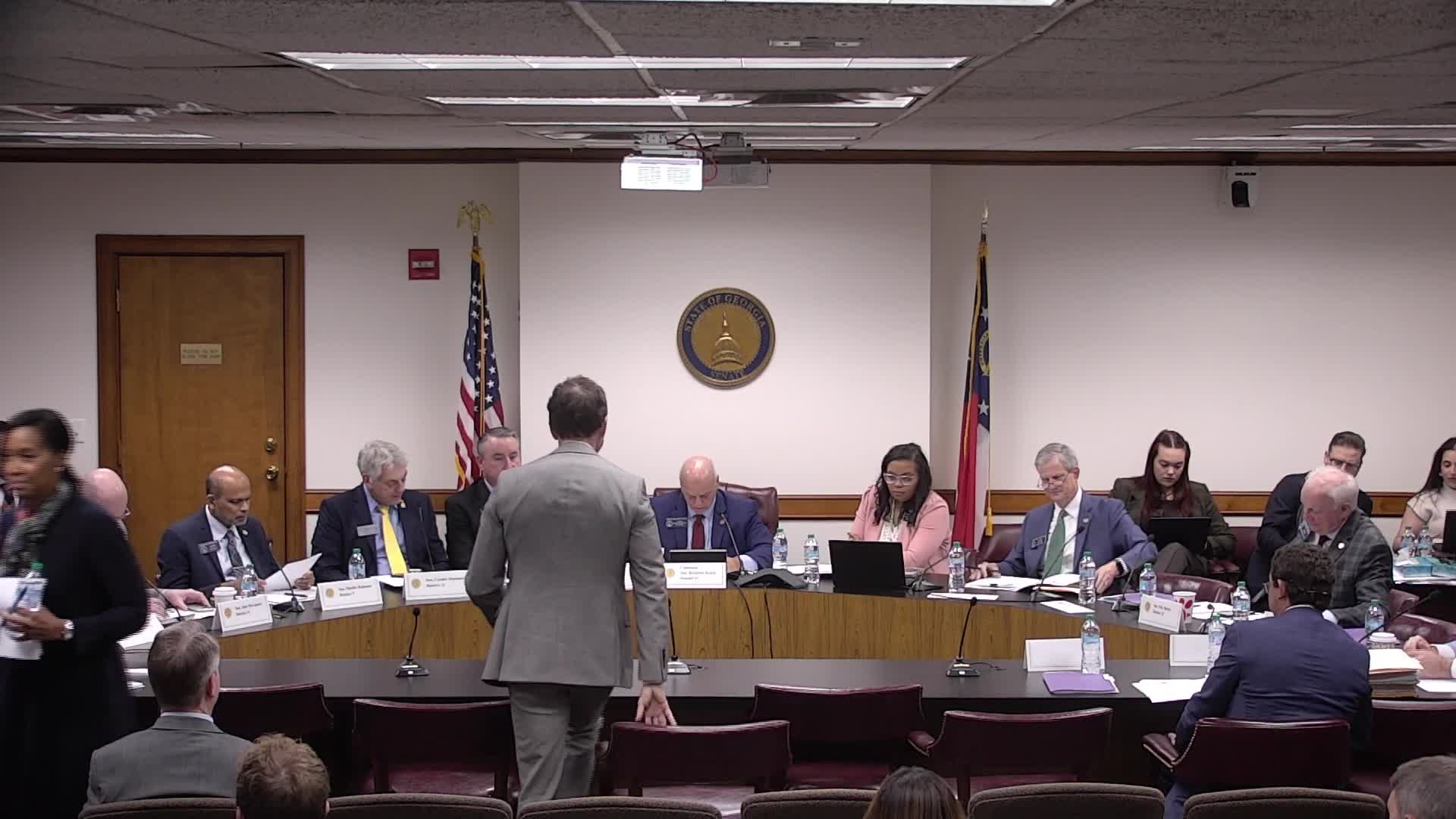
The Georgia Senate Committee on Economic Development and Tourism advanced a substitute to LC550474S — the “Red Tape Rollback” bill — after testimony and debate; the committee approved the motion 7–4.
The Georgia Senate Committee on Economic Development and Tourism on the morning advanced a substitute to LC550474S, commonly called the Red Tape Rollback bill, after more than two hours of debate and public testimony. The committee approved the motion 7–4.
Senator Dolezal, identified in committee as the bill's presenter and a chief deputy whip, told members the measure is largely a carryover of last year's package and mirrors REINS‑style laws enacted in several other states. "I bring before you, the red tape rollback bill of 2025," he said, and described five principal components the substitute would add to current rulemaking procedures.
Key provisions described by the presenter include: - A small‑business impact analysis, which the bill would allow the speaker, the lieutenant governor or committee chairs to request to assess how proposed rules affect businesses identified as "small" under the bill. - An economic impact analysis requirement for proposed rules that agencies reasonably expect will cost more than $1,000,000 over the first five years of implementation; the report must, when possible, estimate the number of affected individuals, businesses and local government units. - A rule stay when a standing committee objects off session: if two‑thirds of a standing committee's voting members object to a rule when the legislature is not in session, the rule would be stayed until the General Assembly reconvenes and the objection adjudicated. - A ratification process for major rules that trigger the economic impact analysis: such a rule would require either a two‑thirds vote of one chamber to take effect or a simple majority of both chambers plus the governor's signature. - A four‑year agency review of existing rules (described as "zero‑based rulemaking") that would require agencies to justify rules in effect; agencies that reduce their rules by 10% in that review would be exempted from the new review requirement.
The substitute would also raise the employee threshold for the bill's small‑business definition from 100 to 300 employees.
Committee members asked about practical effects on agencies and local governments, how emergency rules would be handled, and how the million‑dollar threshold was determined. Senator Dolezal said emergency‑order provisions were preserved under current law and that the $1 million threshold was negotiable; he cited other states' approaches as precedent.
Representatives from outside groups testified in favor. Tony West, state director for Americans for Prosperity‑Georgia, described the measure as a "quadrennial spring cleaning for our regulatory code." Kennedy Atkins of the Georgia Policy Foundation and Stephanie Zanker of the Libre Initiative also urged support, citing relief for small and Latino‑owned businesses.
Vice chairman (unnamed in the transcript) moved to advance the substitute; the motion was seconded by Senator Carden Summers. The committee recorded seven votes in favor and four opposed. The committee did not record individual roll‑call votes in the public transcript.
Supporters described the bill as a tool to reduce paperwork and compliance burdens on small businesses and to increase legislative oversight of rulemaking. Opponents cautioned the measure could broaden legislative control over administrative agencies and might impose additional hurdles for local governments and agencies to implement federally‑mandated changes.
The committee approved the substitute 7–4 and moved on to consider the data privacy bill later in the session.