Get Full Government Meeting Transcripts, Videos, & Alerts Forever!
Get email alerts on the Luma Budget Transition topic
No spam. Unsubscribe anytime.
Controller briefs committee on LUMA transition and funding ask as Business Information Infrastructure Fund expires
Summary
State Controller Brandon Wolf and staff explained the office’s FY2026 request to bring LUMA sustainment on‑budget after the Business Information Infrastructure Fund expires; officials warned that not funding the request would cut LUMA staff and hamper payroll, payments and audit timelines.
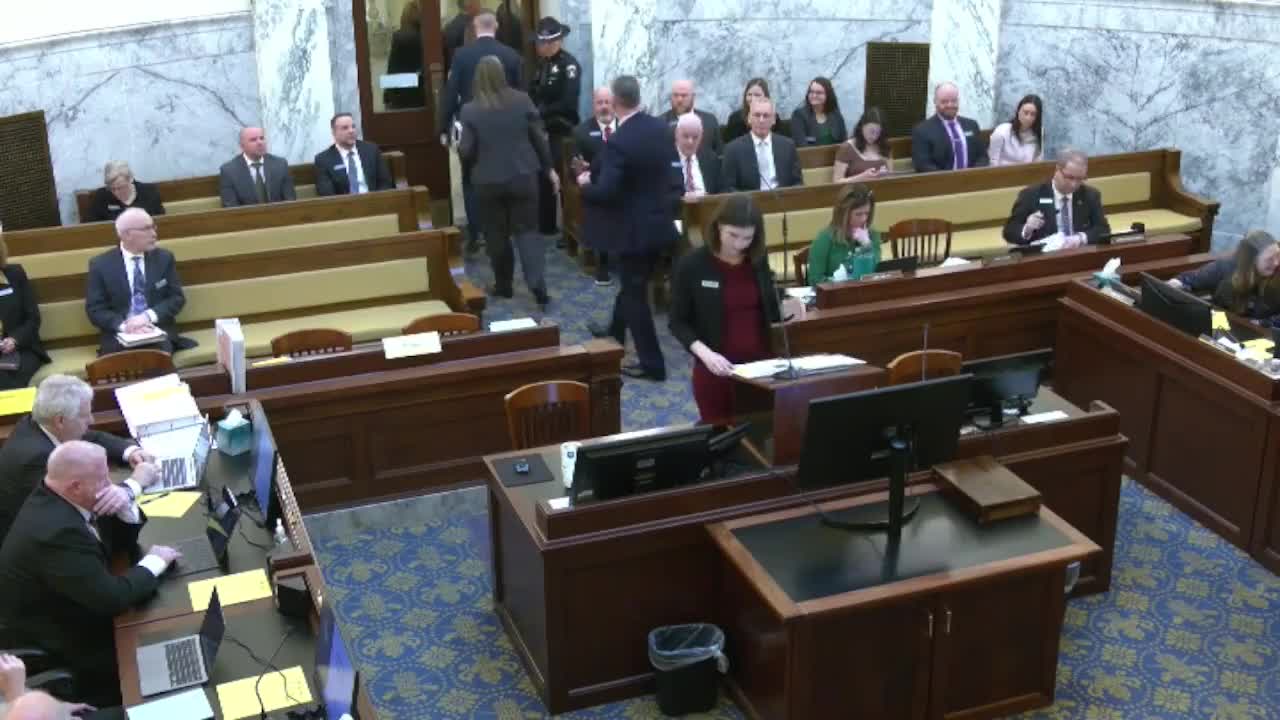
The Joint Finance-Appropriations Committee considered the State Controller’s office budget and the request to bring LUMA (the statewide enterprise resource-management system) sustainment on to budget as the Business Information Infrastructure Fund (BIF) expires.
Frances Lippett, Legislative Services budget analyst, summarized the controller’s request and explained that LUMA development and sustainment has been continuously appropriated from the BIF since 2018. She said the BIF will expire at the end of the current fiscal year and that the controller’s office requested funding to move those costs into the standard appropriation for fiscal year 2026.
Controller Brandon Wolf told the committee that 47 employees currently work on the LUMA project and that the office’s FY2026 request would formally fund 20 positions that have been supported through continuous appropriation but not by a general‑fund appropriation. Wolf said 13 of those positions had previously been authorized but not funded through the regular appropriation process. The controller said the requested package includes seven additional FTEs and other funding to cover infrastructure and shared‑services work for agencies using LUMA.
Wolf warned of operational consequences if the funding transition is not approved. He said the LUMA team “is currently filled” but that, without the appropriation, “we would almost cut the LUMA team in half,” creating risks to timely payroll, vendor payments and production of financial reports. Lawmakers noted that fiscal reporting delays already affected the state’s financial-close timeline; Wolf said the office was about eight weeks behind closing and that the single-audit timetable would be affected if reporting continued to lag.
Committee members asked about LUMA’s origins and whether the state had alternatives; Wolf said the project was meant to replace aging legacy systems that required specialized, hard-to-recruit skills and that some peer states implementing similar systems experienced longer timelines or had not yet gone live. Several legislators asked whether LUMA had achieved the efficiencies anticipated and Wolf said the system is functioning and on the “right path,” but stressed the importance of continued staffing and change management to realize intended benefits.
Specific controller requests described by Lippett included about $15.2 million overall to bring LUMA costs on budget for FY2026, including personnel and infrastructure funding. The package described seven additional FTP and $2,159,900 in personnel costs in one component; $800,000 requested for LUMA infrastructure and overhead in the computer service center; two financial specialists to support smaller agencies; reallocation of leadership allocations from the continuously appropriated fund to the general fund; and a $5.5 million request of dedicated fund appropriation for the computer service center tied to infrastructure charges billed to enterprise business operations.
No final appropriation was made in the hearing; controller staff answered technical questions and agreed to supply follow-up detail as requested by the committee.