Get Full Government Meeting Transcripts, Videos, & Alerts Forever!
Get email alerts on the Permanent Building Fund topic
No spam. Unsubscribe anytime.
Permanent Building Fund hearing: $1.9 billion in active public‑works projects, committee hears project timelines and cost pressures
Summary
Committee members reviewed the Permanent Building Fund and public-works project pipeline, heard recommended FY2026 capital requests, and discussed deferred maintenance, project timelines, and construction cost pressures affecting whether projects should proceed now or be delayed.
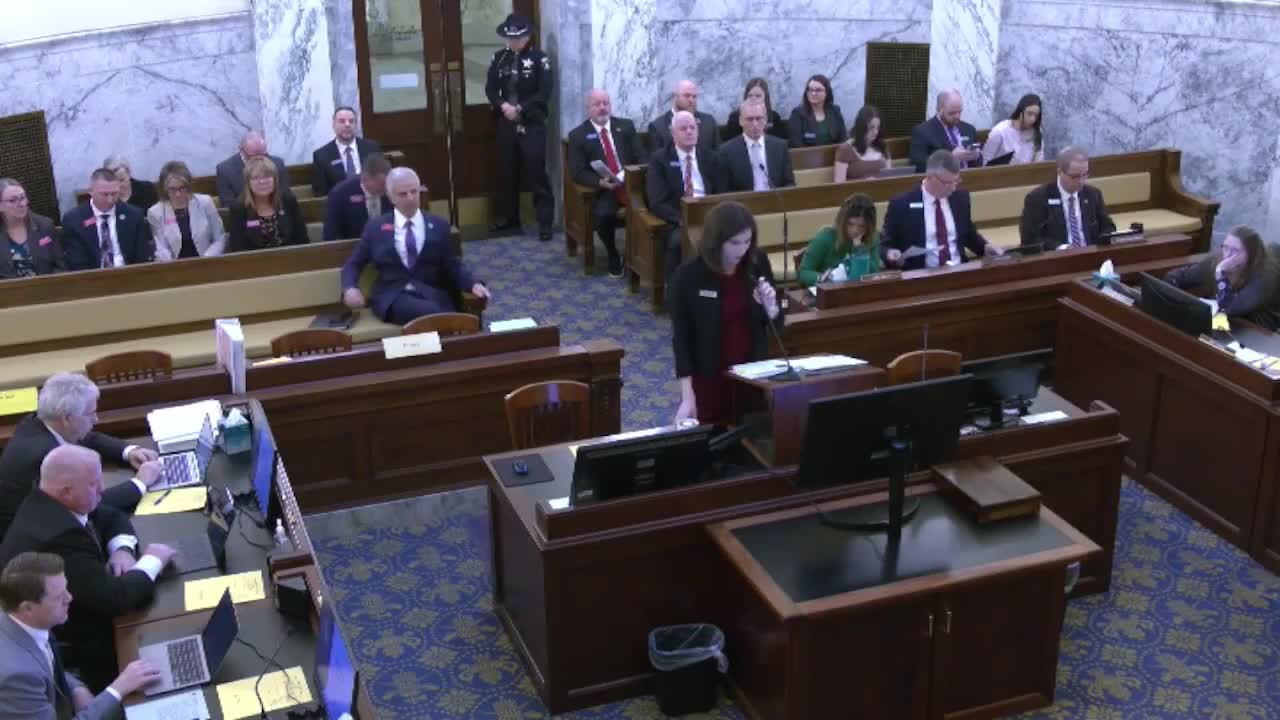
The Joint Finance-Appropriations Committee reviewed the Permanent Building Fund budget and the Division of Public Works’ project portfolio, hearing from Frances Lippett, budget and policy analyst with Legislative Services, and Dale Reynolds, administrator of the Division of Public Works.
Lippett said the Permanent Building Fund accounts for multi‑year capital projects and that appropriations are structured so unexpended balances become continuously appropriated under Idaho Code. She listed the fund’s statutory revenue sources used for capital projects: a $10 fee on each income-tax filing, specified transfers from sales and cigarette taxes, a portion of beer and lottery revenue, interest earnings and transfers from the budget stabilization fund. Lippett said the state recently invested about $1.1 billion of general-fund money into capital projects and deferred maintenance, increasing the fund’s interest earnings.
Lippett told the committee the total value of active public-works projects is roughly $1.9 billion, with $1.4 billion of that in capital projects and about 42% of funding committed. The legislature’s FY2024 appropriation initially funded roughly $125.5 million in capital projects and $59.7 million in maintenance projects; FY2025 appropriations funded additional capital and maintenance projects.
The Division of Public Works asked the committee to consider the fiscal year 2026 request totaling $122,861,900. The presentation listed six recommended capital requests: a $6.5 million Ponderosa office expansion to add restroom and shower facilities and improved security; $5,560,000 to connect utilities for a future Idaho National Guard readiness center in Bonneville County; a $5,525,000 request tied to the Idaho State Police Lewiston District 2 facility after purchase attempts failed; $2.5 million to expand labs at Boise State’s Micron Center for Materials Research; $14,000,000 toward an Idaho State University life-science complex (total estimated project cost $127.77 million, to be funded by a combination of permanent building fund dollars, agency funds and bonding); and $8,000,000 for a joint military science and veterans assistance center at the University of Idaho.
Committee members asked about project timelines and deferred maintenance. Lippett suggested typical projects take about two to four years from appropriation to completion. Administrator Reynolds said timelines vary by delivery method but gave the example of a prison project expected to take about two and a half years after construction begins. Both officials said labor shortages and material cost escalation are complicating project planning; Reynolds said some projects underway are under contract and cannot be delayed while others could be paused if cost escalation makes construction imprudent.
Senators and representatives also asked about accountability and project execution. Co‑chair Herrmann cited recent budget language requiring reporting and a four‑year “shovel in the ground” standard for repurposing funds; Lippett agreed to provide a list of projects that have not advanced within that timeline. Lippett and Reynolds also pointed committee members to a capital‑budget report on SharePoint that lists project status, authorizations, commitments and remaining balances.
No formal action was taken in the hearing. Committee members asked administrators to provide requested follow-up materials—including a project-status list tied to the four‑year reporting rule and additional detail on deferred maintenance projects—before final appropriation decisions.