Get Full Government Meeting Transcripts, Videos, & Alerts Forever!
Get email alerts on the Juvenile Corrections Budget topic
No spam. Unsubscribe anytime.
Idaho Juvenile Corrections seeks $380,000 radio upgrade and $300,000 to cover rising residential treatment costs
Summary
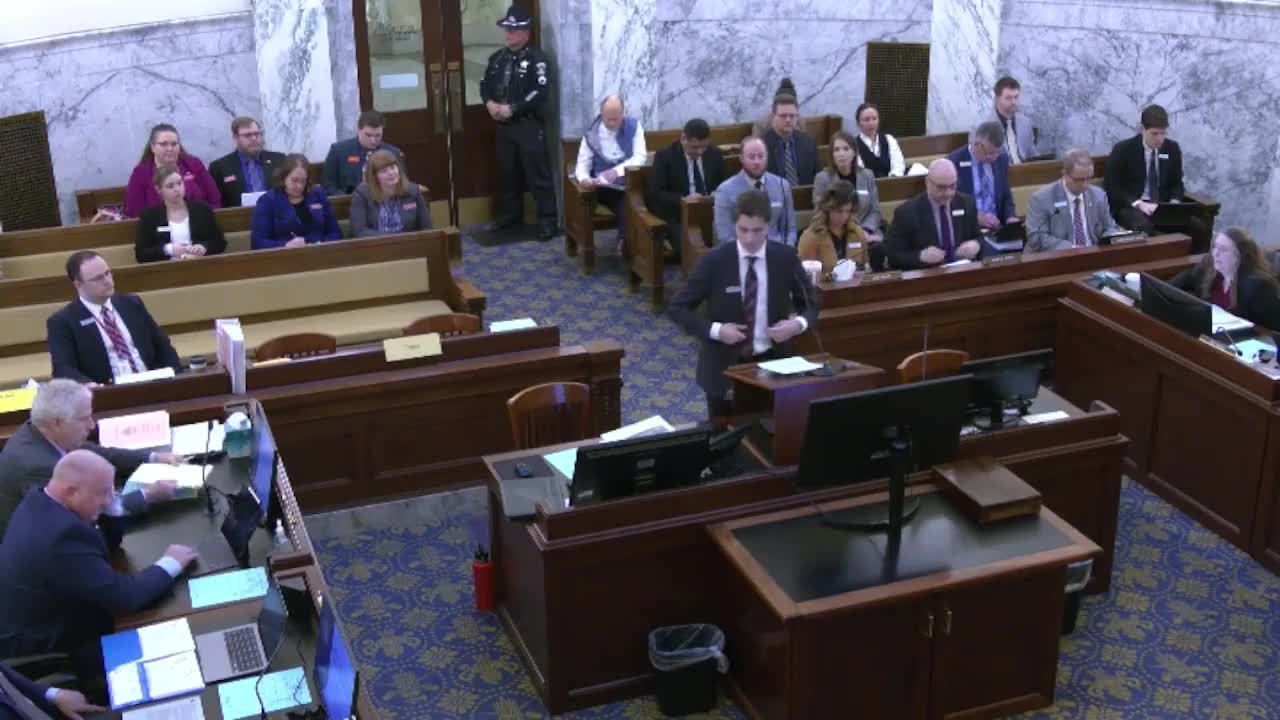
The Idaho Department of Juvenile Corrections asked the Joint Finance‑Appropriations Committee on Feb. 18 for funding to modernize safety equipment and to cover increased costs for residential substance‑use treatment.
The Idaho Department of Juvenile Corrections asked the Joint Finance‑Appropriations Committee on Feb. 18 for funding to modernize safety equipment and to cover increased costs for residential substance‑use treatment.
Budget analyst Noah Peterson told the committee the department is requesting a $380,000 one‑time radio replacement from the Juvenile Corrections Endowment Income Fund to replace and program radios across the Lewiston, Nampa and St. Anthony facilities with a “man down” feature to locate staff who need assistance. Peterson also described a $300,000 ongoing general‑fund request to cover higher per‑day costs and longer stays in a residential substance‑use disorder (SUD) treatment program.
The requests are part of a broader budget presentation that included IT replacement items ($232,500 requested following Office of Information Technology Services recommendations), a net‑zero transfer of $350,000 between programs for youth assessment centers, and a proposed net‑0 personnel‑to‑operating shift of $675,100 tied to consolidating IT positions with the Office of Information Technology Services and reducing 7 FTP.
Why it matters: committee members pressed the department for data showing whether higher costs reflect changes in clinical practice, provider pricing, or longer lengths of stay — matters that affect whether the department needs ongoing general fund support or whether the increases are a one‑time reallocation.
Noah Peterson, budget policy analyst with the legislative budget review team, said the residential SUD treatment cost per day rose from about $198 in 2021 to $399 in August 2021, and average length of stay in the program increased from 31 days to 67 days over the same period. "Both of those increases have changed the cost of the program from $1,260,000 in fiscal year 2021 to $2,700,000 in fiscal year 2024," Peterson said, adding that the Department of Health and Welfare had used ARPA funds to partially offset the increase but can no longer do so.
Director Ashley Dowell, who introduced herself as the department director and underscored concerns about youth mental health, confirmed to lawmakers that the department is seeing increased suicidal ideation and self‑harm behaviors among youth in custody. "We are seeing an increase in criminality as well and so want to work on how best to address that and make sure that we are properly policing and treating those kids and getting them the services that they need," Dowell said.
Lawmakers sought more concrete measures of demand. Representative Tanner asked for counts and trend data on the juvenile population and whether the earlier reductions in custody numbers are continuing; Dowell said the department would provide data to the committee. Dowell noted the department’s census reached an all‑time low of 137 youth in custody in May 2024 and was at 176 at the time of the hearing, an increase of about 19 percent from the low point.
Several legislators pressed the department on diversion and crisis‑center impacts. Dowell said she had no immediate statistical count of how many youth the youth crisis centers diverted from custody but offered that, anecdotally, crisis centers have helped divert children under age 10 and older youth by stabilizing them and returning them to family and community settings. She agreed to provide whatever usage and diversion data the committee requests.
On the topic of placement and treatment length, Director Dowell and staff explained that community residential treatment providers make placement and length‑of‑stay decisions under the American Society for Addiction Medicine (ASAM) placement criteria. "Those are community treatment providers," Dowell said when asked whether the department can directly review clinical decisions; she explained the department does not employ the community treatment staff and noted questions about whether the department should pursue utilization‑management functions would require licensing and expertise that the department currently lacks.
Other line items: Peterson described the Juvenile Corrections Fund revenue sources (including a $20 training academy fee and certain breach‑of‑contract fees), the Cigarette and Tobacco Tax Fund allocations to counties for probation services, a miscellaneous revenue fund and the Juvenile Corrections Endowment Income Fund (monies from the Charitable Institutions Earnings Reserve Fund dedicated to maintenance of the three centers).
Committee action and next steps: lawmakers did not take a formal vote during the hearing. Multiple legislators requested follow‑up materials from the department and analysts: population and trend data for youth in custody, utilization/diversion figures for youth crisis centers, and more detail on the residential treatment cost drivers (including what ARPA offset and what remains). Peterson and Director Dowell agreed to provide the requested data to the committee for further review.
The department repeatedly distinguished between discussion items, direction and formal actions: the SUD request is an ongoing budget enhancement request ($300,000) pending legislative action; the radio upgrade is a one‑time equipment request ($380,000) from the Juvenile Corrections Endowment Income Fund; and the requested personnel shifts (loss of 7 FTP and net‑0 transfers) would be administrative changes contingent on legislative approval.
The committee chair closed the IDJC portion of the hearing after members asked the fiscal staff to follow up on the increase in treatment costs and to have the fiscal impact team return with analysis.
Ending note: committee members directed IDJC to supply the requested utilization and population trend data so legislators can weigh whether expense increases reflect changed clinical need, pricing shifts, or temporary funding decisions previously supported with federal ARPA monies.