Get Full Government Meeting Transcripts, Videos, & Alerts Forever!
Get email alerts on the Housing topic
No spam. Unsubscribe anytime.
Developers and builders back extension of SEPA categorical exemptions for housing as committee weighs tribal‑notification concerns (SB 5612)
Summary
SB 56 12 would extend and broaden categorical SEPA exemptions for certain multi‑unit and middle‑housing projects in urban areas through 2028. Builders and developers said the Seattle exemption has accelerated multifamily development; tribal and environmental notification concerns remain under negotiation.
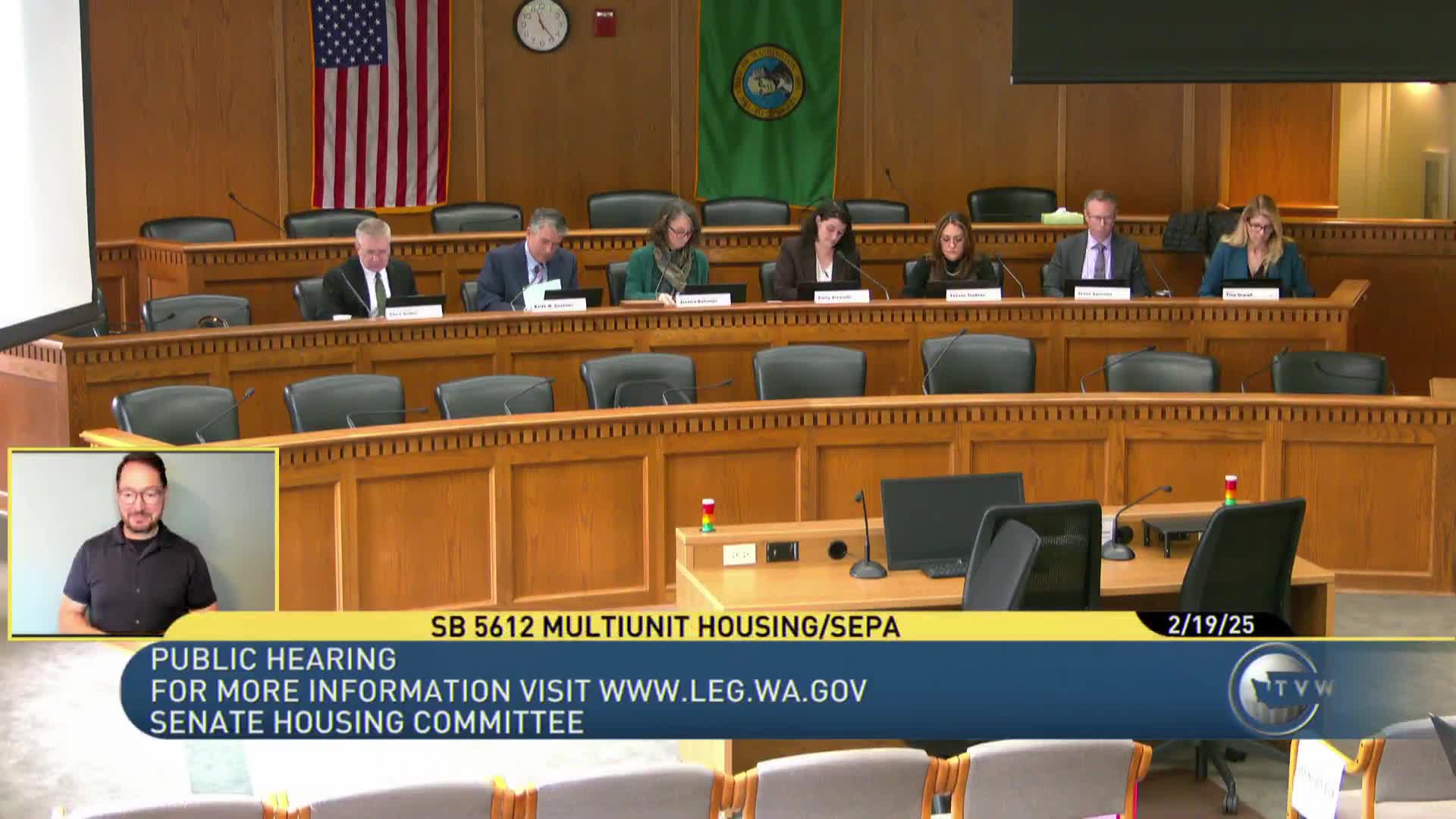
The Senate Housing Committee heard staff briefing and public comment on Senate Bill 56 12, which would expand and extend categorical exemptions from the State Environmental Policy Act (SEPA) for multi‑unit and middle‑housing projects in incorporated areas and urban growth areas (UGAs).
Ben, committee staff, summarized the bill’s intent: modify and extend a 2023 exemption that had applied in Seattle to additional urban jurisdictions through Sept. 30, 2028; adjust unit thresholds in some locations (for example, limiting certain exemptions to projects of two or more units or, in other provisions, four or more units through Sept. 30, 2027); and require jurisdictions to satisfy criteria such as environmental analysis and notice to federally recognized tribes that may be affected by exempted actions. Staff emphasized the bill does not waive or preempt other state or local land‑use regulations.
Sen. Mark Solomon, the sponsor, said Seattle’s 2023 categorical exemption increased permit activity and argued that duplicative SEPA review in highly urbanized areas can unnecessarily delay multifamily housing that already must comply with local development and critical‑area rules. He acknowledged tribal notification concerns and said the bill includes a clause requiring notice to federall y recognized tribes that may be impacted; the sponsor said committee staff were exploring additional language to preserve tribal notice and review mechanisms.
Alex Harrington of NAHOP Washington State (Commercial Real Estate Development Association) testified in support and described the Seattle exemption as “very successful in reducing cost and time barriers to housing construction” and urged extension and expansion in other urban areas to increase housing production and affordability.
Committee staff reported one panel of public witnesses and a larger sign‑in list overall; several pro‑housing groups supported the extension, while tribal and environmental stakeholders expressed concerns about losing notification or review opportunities that SEPA can trigger. The Department of Commerce or tribal representatives did not submit formal testimony during the Feb. 19 hearing, and committee staff said sponsors were working on language to retain tribal notification while still providing the intended permitting streamlining.
No committee vote occurred on SB 56 12 during the Feb. 19 session; sponsors said they were continuing to refine language to ensure tribe notification and critical‑area protections remained compatible with the exemption.