Get Full Government Meeting Transcripts, Videos, & Alerts Forever!
Get email alerts on the Agricultural Fuel Exemptions topic
No spam. Unsubscribe anytime.
Senate bill would remove five-year sunset on agricultural fuel exemption; stakeholders debate remittance program
Summary
Senate Bill 5630 would make permanent an exemption and remittance intent for agricultural fuel purchases under the Washington Climate Commitment Act. Sponsors, conservation groups, fuel distributors and Ecology staff flagged implementation gaps in a Department of Licensing rebate program and disagreed about long-term climate effects.
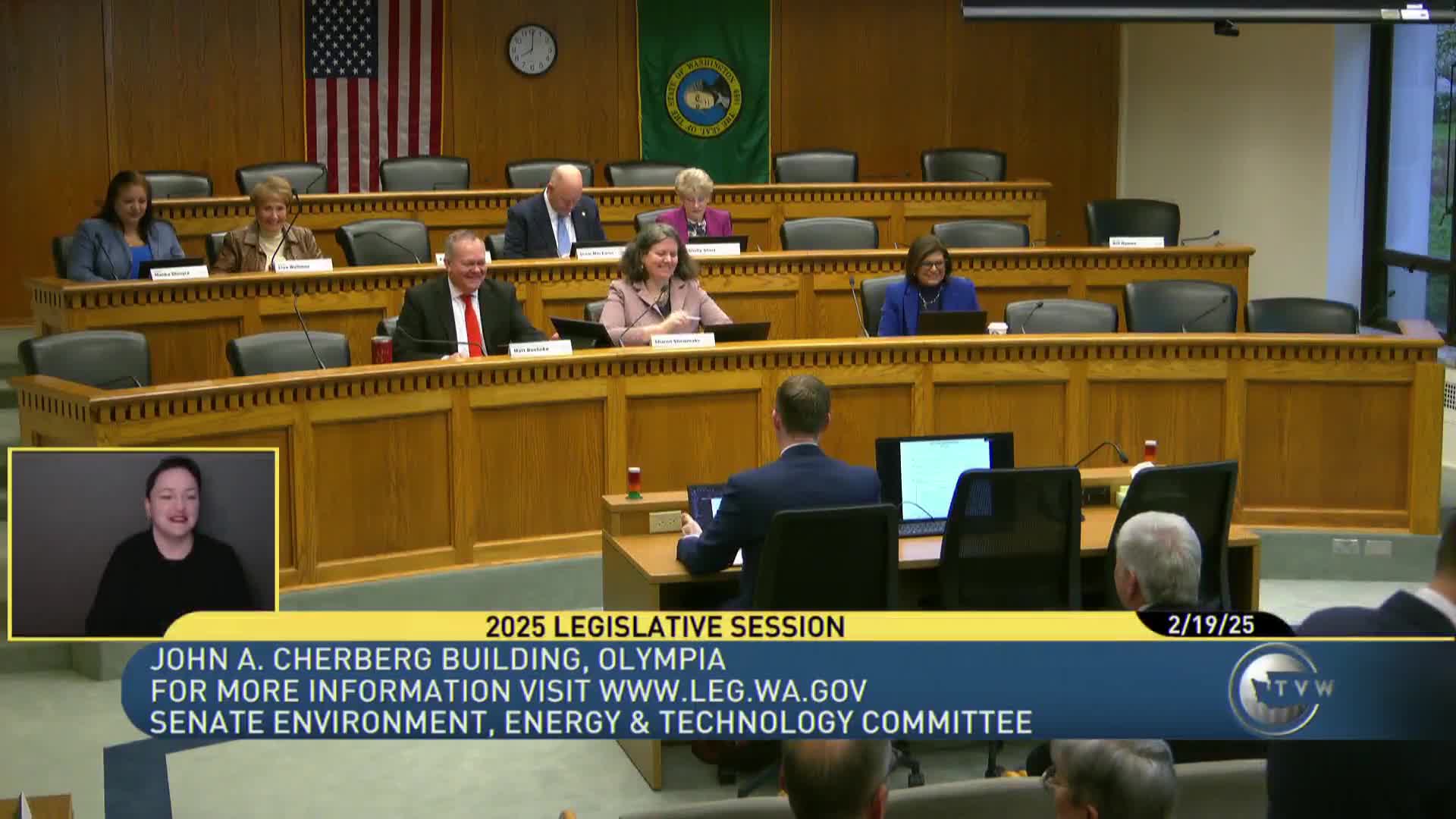
A bill to remove a five-year limit on an expanded exemption for fuels used to transport agricultural products on public highways and to codify legislative intent to provide payments to farm fuel users drew mixed testimony at the Senate Environment, Energy & Technology Committee on Oct. 12.
Senator Perry Dozier, sponsor of Senate Bill 5630 and a farmer from the 16th Legislative District, told the panel the measure is intended to ease input costs for growers. "This is just another way to try to alleviate some of those input costs by extending that," Dozier said, adding that many farms buy bulk diesel in 10,000-gallon increments and that the current tiered refund design limits relief to the first 10,000 gallons.
The bill would remove the statutory five-year sunset on an expanded exemption created to cover fuels used to transport agricultural products, and it states legislative intent that payments be provided to farm fuel users and transporters for fuel exempt under the Washington Climate Commitment Act. Matt Sheppard, committee staff, summarized the proposal and noted a fiscal note had been requested but was not yet available.
Supporters of permanence included representatives of grower and fuel-distributor groups who testified the Department of Licensing (DOL) remittance program has been difficult for some farmers to use and that the current payment caps limited usefulness. Mark Strulley, representing multiple commodity organizations including the Washington Association of Wheat Growers and the Washington Potato and Onion Association, said some farmers would not file because the program capped payments at $4,500 although some had compliance costs far higher. Diana Carlin of the Washington Oil Marketers Association urged simplicity and warned against creating new complexity in the fuel distribution system.
Opponents and cautious stakeholders said making the exemption permanent would remove policy incentives to develop lower-carbon fuels and could reduce revenue for programs that accelerate the clean-energy transition. David Mendoza of The Nature Conservancy and Clifford Traceman of Washington Conservation Action said the original temporary exemption was intended to allow time for development of biofuel supply chains and other alternatives; Traceman called the current remittance program "not working" and urged more stakeholder work. Leah Missick of Climate Solutions testified that the exemption's permanence would be a major change to law and could have climate impacts.
Joel Creswell, the department of Ecology's climate pollution reduction program manager, provided technical input on implementation. Creswell said exempt fuels and the program intended to remedy improperly applied surcharges are complex to administer because Ecology does not regulate fuel suppliers and because suppliers' compliance costs vary with market conditions. He said the DOL remittance program established in the 2023-25 biennium has disbursed roughly $3 million of the $30 million appropriated and that Ecology is working with legislators and stakeholders to explore improvements.
Committee members and witnesses highlighted several practical barriers: some growers worry the remittance payment is too small to be worth providing required documentation; others prefer an exemption at the point of sale rather than a post‑purchase rebate; and fuel supply chain fungibility makes tracking purchaser identity difficult, testimony said.
The committee suspended and later closed the public hearing after receiving the testimony and said staff would continue work with interested parties to resolve implementation issues.
The bill's fiscal note and any amendments were not available at the hearing.
Votes or final action on the bill were not recorded in the committee transcript; the hearing record shows extended stakeholder engagement and technical follow-up requests.