Get Full Government Meeting Transcripts, Videos, & Alerts Forever!
Get email alerts on the Public Records Research Privacy topic
No spam. Unsubscribe anytime.
Committee hears bill to exempt some scholarly research materials from Public Records Act
Summary
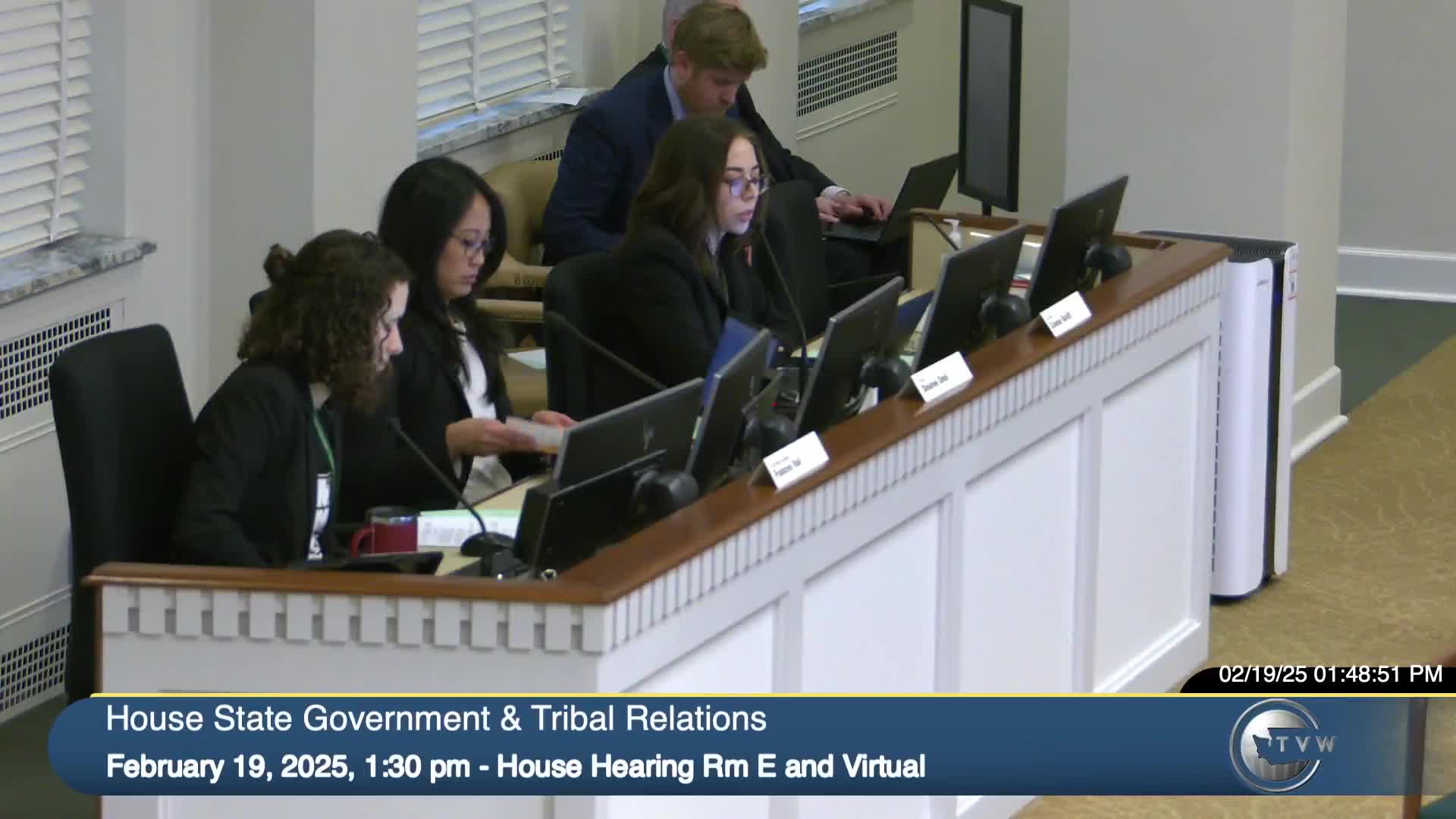
State Government & Tribal Relations Committee Chair Mayna opened a Feb. 19 public hearing on House Bill 19-49, which would exempt certain scholarly and research-based communications from disclosure under the state Public Records Act.
State Government & Tribal Relations Committee Chair Mayna opened a Feb. 19 public hearing on House Bill 19-49, which would exempt certain scholarly and research-based communications from disclosure under the state Public Records Act.
Desiree Omley, OPR staff, summarized the bill for the committee: "House Bill 19 49 exempts certain scholarly and research based communications from disclosure under the Public Records Act." She told members the bill would exempt the identity of a human subject when an informed consent protocol guaranteed confidentiality, materials provided to peer reviewers and reviewers' evaluations when those would reveal the reviewer's identity, and research data, computer code, or draft manuscripts created in the conduct of research until they are disseminated, published, copyrighted or patented.
Representative Jerry Paulette, prime sponsor, said the bill follows two years of work with university faculty and stakeholders. He told the committee research subjects who are promised anonymity can be harmed if confidential research records are later disclosed, and he said the bill is "much narrower than it was proposed" after negotiations with the Coalition for Open Government and media attorneys. Paulette said the Coalition "does not endorse or support the bill, but they have reviewed it and said they do not oppose it at this point."
Jake Vigdor, faculty legislative representative for the University of Washington and the Council of Faculty, testified in support. Describing research that depends on participant confidentiality, he said investigators offered anonymization guarantees to recruited subjects and that those promises are not always respected under current law. "We guarantee your confidentiality," Vigdor said of the assurances researchers give participants, adding that requiring disclosure in response to records requests would reduce participation and undermine studies that inform policy.
Roland Thompson, representing allied Washington newspapers, Washington Newspaper Publishers and the Washington State Association of Broadcasters, raised concerns. He questioned broad definitions of "research" in federal regulations and warned that withholding source materials could prevent the public and reporters from seeing how conclusions were reached. "Withholding information from that particular department of the university, I think, leads to some distrust," Thompson said.
Committee members asked clarifying questions about the bill's scope and how federal rules such as the Common Rule and HIPAA interface with state law. Vigdor said the bill intentionally excludes internal institutional surveys that are not intended to contribute to generalizable knowledge and that the language was narrowed to address concerns raised during drafting.
The committee closed the public hearing on House Bill 19-49 and proceeded to executive session on other bills; no committee vote on HB 19-49 was recorded at this meeting.
Notes: testimony was given in person and remotely; a named online witness, Robert Berridge, was listed but did not appear during the hearing.