Get Full Government Meeting Transcripts, Videos, & Alerts Forever!
Get email alerts on the State Health Budget Vacancies topic
No spam. Unsubscribe anytime.
Healthcare subcommittee spotlights thousands of vacant FTEs across agencies, urges deeper review
Summary
Members of the Healthcare Budget Subcommittee reported widespread vacant full‑time positions across state health agencies, flagged gaps between public records and agency reports, and recommended further investigation before cutting budgets or reverting funds.
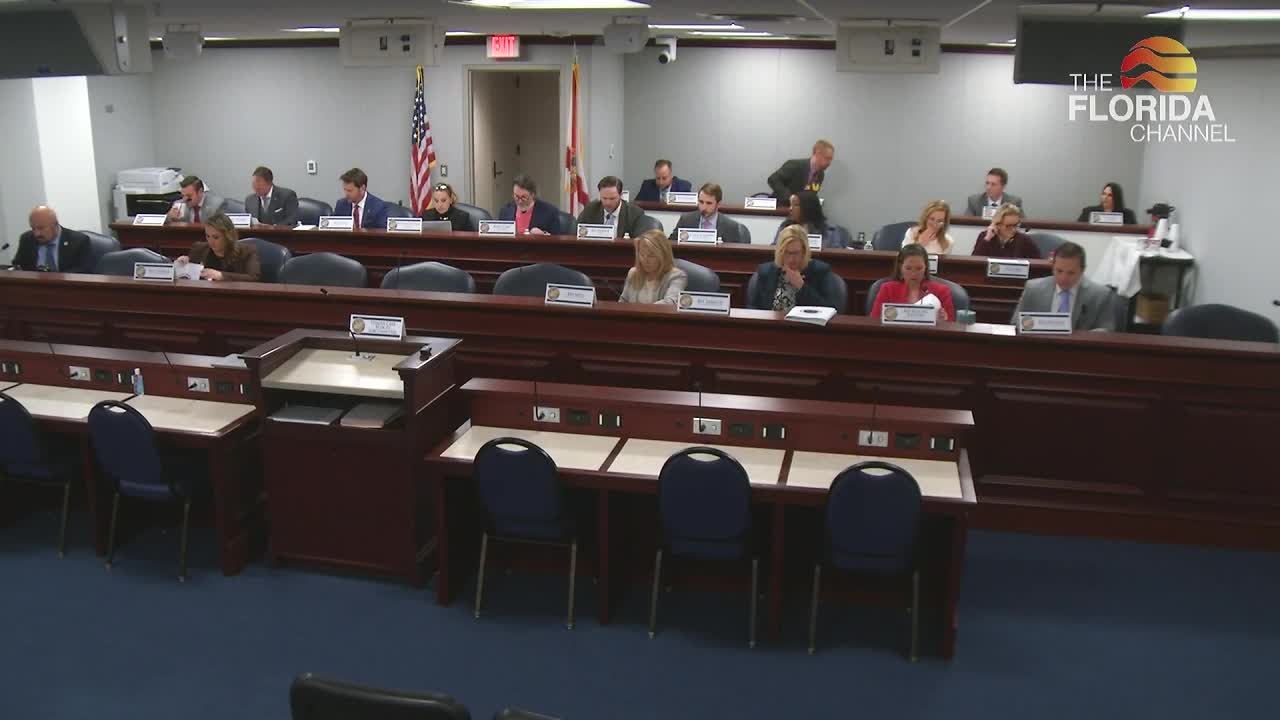
The Healthcare Budget Subcommittee reviewed presentations showing thousands of vacant full‑time equivalent (FTE) positions across multiple health agencies and directed staff to pursue follow‑up information and deeper reviews rather than immediate across‑the‑board cuts.
At the outset, Chair Andrade noted the committee’s assignment for members to review assigned agencies’ budgets, identify efficiency opportunities and vacant FTEs, and propose how any savings might be redirected. “Quorum being present, I wanna welcome everyone to the Healthcare Budget Subcommittee,” Chair Andrade said.
Why it matters: Committee members said vacancies can indicate potential savings but also conceal unmet service needs if positions are critical to direct care. Several presenters warned that simply eliminating vacant FTEs could worsen service gaps, increase reliance on costly contract staff, or require legislative fixes to how agencies hire and pay staff.
Key findings and agency details
ACCA: Representatives who reviewed ACCA reported the agency’s total budget as $34,400,000,000 and 1,574 positions; they identified roughly 100 vacancies and an FTE increase of 7 percent from the prior year. The subgroup compiled a list of potential savings from items in ACCA’s legislative budget request that the presenters summarized as about $2,905,364,772 if every recommended reduction were taken; the subgroup excluded two priorities—“Med Ad waiver elimination” and a proposed reduction in behavior analysis rates—saying those cuts would harm specific populations. Representative Mello (spokesperson for the ACCA review) said the group “did not feel like we needed to cut any services with them,” and removed those priorities from suggested cuts.
APD (Agency for Persons with Disabilities): Representatives Anderson and Tremont reported conflicting vacancy data. Public records reviewed by the subgroup showed about 519 unfilled positions (some vacant as long as 3½ years), with a minimum pay‑grade cost of roughly $18,400,000. Narrowing those to positions vacant at least one year produced 127 positions totaling about $4,500,000. Agency‑reported data provided to the subgroup showed only 15 vacancies totaling just under $4,100,000, a large discrepancy that Representative Anderson said “warrants some further investigation.”
APD waiting list: Representative Anderson reported “there are currently 21,124 individuals on the waiting list for services through APD. A hundred and 74 of them are category 3, which is categorized as folks with intensive needs, and 8,528 in category 7, which are children 21,” and recommended that any identified savings be used to provide services to those categories. Representatives raised concerns that vacancies affecting in‑home and community‑based services could prevent moving people off the wait list even if funds were reallocated.
Department of Children and Families (DCF): Representatives Cassell and Tant said the governor’s Legislative Budget Request (LBR) includes a $15,000,000 savings proposal achieved by cutting 325 vacant positions. Cassell reported that DCF has a staff complement of just over 12,000 positions and that 245 FTEs have been vacant more than 365 days, many at state mental health treatment facilities. Because the agency is using private staff‑augmentation contracts to cover clinical duties, Cassell said the state is effectively funding both vacant positions and higher‑cost contract labor. Tant described two options the subgroup flagged: (1) fund higher pay for FTEs to hire directly, or (2) accept the LBR cut and continue to pay contractor staffing, a short‑term fix that may mask a systemic vacancy problem. Tant also urged continued funding for a new behavioral qualified residential treatment program, noting last year’s appropriation of $5,600,000 for 66 beds and a current two‑year request of $4,200,000 to add 49 beds.
Managing entities audits: Reviewers examined audits for seven regional managing entities and found audit findings in six of seven entities alleging noncompliance with procurement, improper contracting, overbilling and other financial management weaknesses. Representative Chan (Cassell) urged legislative oversight and a report from managing entities on corrective actions and funds recovered.
Elder Affairs: Reviewers identified 86 vacancies (12 lasting more than a year) with an estimated unspent salary pool of roughly $6.8–$7.7 million. Presenters said about 89.1 percent of Elder Affairs’ work is outsourced and suggested consolidating divisions and reviewing managerial layers to reduce overhead. One presenter cautioned that some functions—ombuds and public guardianship—are critical and should not be cut.
Department of Health (DOH): The subgroup reported DOH had approximately 12,800 assigned positions and roughly 2,400 vacancies. Reviewers said DOH faces a pay competitiveness problem: presenters reported a roughly 17.5 percent pay gap for some practitioner categories, a 16.57 percent overall turnover rate and, in some call‑center roles, turnover as high as 300 percent per year. DOH staff explained their budget uses “units of rate” across general revenue and multiple trust funds; reviewers asked for follow‑up detail on where vacancy savings are reverted and where they are retained.
Florida Department of Veterans Affairs (FDVA): Representatives Redondo and Tuck reported about 332 vacancies at FDVA (294 vacant more than 30 days), largely tied to staffing two new veterans nursing homes. Redondo said the department’s total FY ask was about $28,000,000 this year (compared with $124,000,000 last year driven by a single large capital request). He and Representative Tuck recommended moving roughly $12,300,000 in maintenance priority funding to general revenue rather than trust funds to avoid depleting dedicated trust funds.
Committee direction and next steps
Members repeatedly recommended follow‑up rather than immediate cuts. Representative Kent and others pressed agencies for explanations when public‑records counts differ from agency reports; Representative Tremont and others called for a cross‑agency review of hiring practices, pay parity, and budgeting methods (including “units of rate”) to determine whether vacancies indicate savings or service shortfalls.
Several members urged targeted deeper dives: additional committee hearings or staff work to reconcile vacancy counts, obtain detailed FTE lists tied to positions and pay grades, review contract vs. FTE costs at state hospitals and for forensic beds, and require managing entities to report corrective actions and recovered funds.
"I don't think that that bears an overall review along with some of the other committee other committees in this legislature about whether or not we are budgeting correctly," Representative Tant said of DCF vacancies, urging systemic analysis.
Ending: Members closed the session by asking staff to collect outstanding written answers from agencies and to schedule deeper review where counts, audits or service gaps suggested systemic issues. Representative Redondo moved to adjourn and the committee rose.