Get Full Government Meeting Transcripts, Videos, & Alerts Forever!
Get email alerts on the Controlled Substances Regulation topic
No spam. Unsubscribe anytime.
Planning commission discusses three regulatory approaches for retail sales of controlled substances
Summary
Commissioners reviewed three options — CUP with licensing; zoning by-right with buffers; or an ordinance with operational standards — and asked staff to draft ordinance options. County attorney and commissioners debated whether to treat pharmacies differently from vape/dispensary retail and recommended defining allowed uses in the zoning matrix.
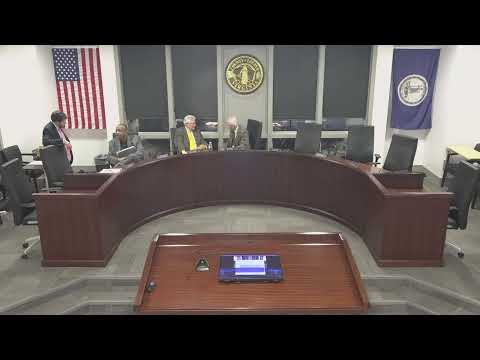
At a February work session the Louisa County Planning Commission discussed how to regulate retail sales of controlled substances in light of potential state changes that could permit recreational cannabis sales. A county staff presenter summarized three regulatory approaches under consideration: (1) require a conditional use permit (CUP) plus state/federal licensing for controlled-substance retailers; (2) allow retail sales by-right in specified commercial/industrial districts while establishing distance buffers (for example, 1,000 feet from childcare centers or schools) to protect children; or (3) adopt a detailed ordinance of operational standards and public-safety requirements governing the use.
Commissioners debated whether pharmacies should be treated the same as vape shops or specialty retailers. Commissioner Dennis Brooks questioned lumping pharmacies and vape shops together; he observed that pharmacies have pharmacists and clinical oversight while vape shops do not. Staff and several commissioners said a working path was to define the uses the county would allow by right (for example, pharmacies and medical centers that dispense prescription-controlled substances) and separately identify retail or specialty shops that would be subject to CUPs or be disallowed. Commissioner Kersey and others urged a definition that would make pharmacies and medical service providers exempt from special restrictions while placing tighter controls or prohibitions on storefronts whose primary business is non‑medical retail sale of newly authorized products.
The county attorney advised the commission to consider existing state law, including Virginia Code 18.2-255.2 on drug‑free zones around certain properties, as part of the legal review and to avoid drafting language that would conflict with state code. Commissioners raised federal licensing issues (DEA registration) as another limiting factor for certain uses. Staff said it could draft ordinance language that combined elements of the three options: a matrix of allowed uses by zoning district, buffers from sensitive uses, required state and federal licensing for covered uses, and operational standards similar to the county’s short‑term rental rules.
Staff asked the commission to identify preferred direction. Commissioners suggested: (a) define a narrow set of by‑right uses (pharmacies, hospitals/medical centers) that would not require additional zoning approvals for dispensing controlled substances; (b) require CUPs or specific standards for other retail models (dispensaries, vape/hemp shops) or disallow them entirely in certain districts; and (c) consider buffer distances from schools and childcare centers. Commissioner Pena supported the CUP approach for site-by-site review because it provides public notice and community input; others preferred a hybrid approach that pairs a use matrix with operational standards.
Next steps: staff said it will draft ordinance options for the commission’s review, identify model language used by other localities, and return with a proposal that can move through the public‑hearing timeline if the commission favors adopting zoning/ordinance changes. Staff estimated the process through planning commission and the board would take at least three to four months if pursued on an expedited schedule.
Why it matters: the county is preparing to respond to state-level policy changes that may permit new retail sales of cannabis or related products; local zoning and licensing decisions will determine where, if at all, such businesses may operate within Louisa County.