Get Full Government Meeting Transcripts, Videos, & Alerts Forever!
Get email alerts on the Senate Session Feb18 Votes topic
No spam. Unsubscribe anytime.
Virginia Senate votes on a broad package of bills; several conference committees requested
Summary
The Senate met Feb. 18, 2025, and approved a slate of bills on public safety, housing, elections and health policy, while rejecting some House substitutes and naming several conference committees to resolve disagreements.
RICHMOND, Va. — The Senate of Virginia on Tuesday moved a large package of House bills toward final action, approving dozens of measures on topics ranging from criminal law to housing and prescription drugs and sending others to conference for further negotiation.
Among the measures the Senate passed were bills on domestic violence and firearms, juvenile interrogation practices, several landlord-tenant reforms and the creation of a Prescription Drug Affordability Board. Lawmakers also refused multiple House substitutes and named senatorial conferees to negotiate with the House of Delegates.
The votes capped a day in which many bills were taken up in block votes, committee substitutes were accepted or rejected, and floor amendments were offered on several measures. Action included both unanimous or near‑unanimous approvals and closely contested roll calls.
Votes at a glance
- HB 18 69 (dating/intimate‑partner definition; juvenile domestic relations jurisdiction): Passed — Ayes 22, Noes 18. The bill (the House cognate to a Senate measure) moves some cases involving intimate‑partner relationships into juvenile domestic relations court and uses a definition aligned with a recent federal standard. (Mover recorded on the floor; conference possible.)
- HB 26 92 (custodial interrogations of minors; deception and replica documents): Passed — Ayes 22, Noes 18. The bill prohibits knowingly making false statements or presenting inauthentic replica documents to children during custodial interrogation; sponsors said the measure protects minors’ due‑process rights, while opponents raised enforcement and public‑safety concerns.
- HB 20 64 (required firearm locking device at sale or transfer; warning label): Passed — Ayes 20, Noes 19. Creates a Class 3 misdemeanor for a licensed seller to deliver a firearm without a locking device and requires a warning about firearm storage and child access (exempting law enforcement and government agencies).
- HB 17 19 (landlord remedies; nonpayment and notice periods): Passed — Ayes 21, Noes 19. The bill increased the mandatory waiting period from five to 14 days before a landlord may pursue certain termination remedies for nonpayment.
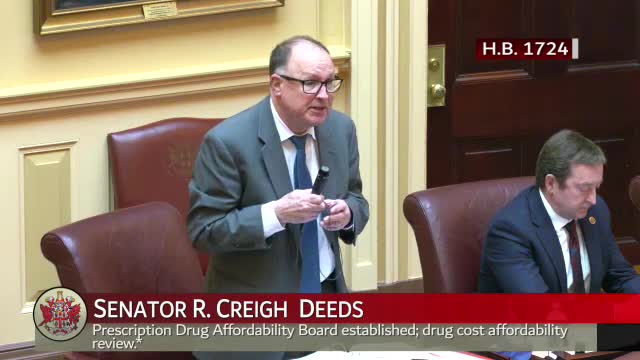
- HB 17 24 (Prescription Drug Affordability Board): Passed after reconsideration — Ayes 26, Noes 14. The measure establishes a board to study drug pricing and conduct affordability reviews; earlier debate included skepticism about previous efforts in other states and questions about fiscal and implementation details.
- HB 24 30 (disclosure of routine fees in rental agreements): Passed — Ayes 22, Noes 18. The bill narrows required fee disclosures to regular, predictable charges rather than listing every potential ancillary fee.
- HB 24 93 (raise minimum age to 21 for participation in Texas Hold’em tournaments and certain fantasy contests): Passed — Ayes 21, Noes 19.
- HB 19 73 (local option to preserve existing affordable housing): Passed — Ayes 21, Noes 19. Gives localities an option to adopt ordinances that allow qualified buyers focused on preservation to receive priority when affordable property comes up for sale.
Committee of conference requests and conferees
The Senate repeatedly insisted on its substitutes and requested committees of conference on a number of bills where the House rejected Senate language. Examples announced on the floor include committees of conference on HB 1601, HB 1743, HB 1969, HB 1970, HB 2308 and other pensions, tax and regulatory measures. Senate conferees were frequently named by committee chairs (finance, general laws, commerce and labor), reflecting the primary jurisdictions for the disputed language.
Why it matters
The bills the Senate considered affect a range of everyday issues — criminal procedure for juveniles, tenant protections and disclosure requirements, consumer protections, and a state review mechanism aimed at addressing prescription drug costs. Several close votes indicate continued division on policy details and will make conferees’ work central to the final outcomes.
What’s next
Many of the measures the Senate approved now return to the House of Delegates or go to conference committees where appointed conferees will negotiate final language. Other measures were sent by the Senate to be carried by for the day to allow staff and committees to reconcile fiscal and drafting differences.