Get Full Government Meeting Transcripts, Videos, & Alerts Forever!
Get email alerts on the Civil Justice topic
No spam. Unsubscribe anytime.
Subcommittee advances bill limiting officers' personal liability in resisting-arrest cases
Summary
The Civil Justice Subcommittee voted 7-1 to send House Bill 1020 to the full Judiciary Committee after members heard legal staff say the bill would bar personal lawsuits for property damage or injury when the alleged victim is convicted of resisting arrest; agencies could still be sued.
The Civil Justice Subcommittee voted to send House Bill 1020 to the full Judiciary Committee after a short debate and clarification from legal counsel.
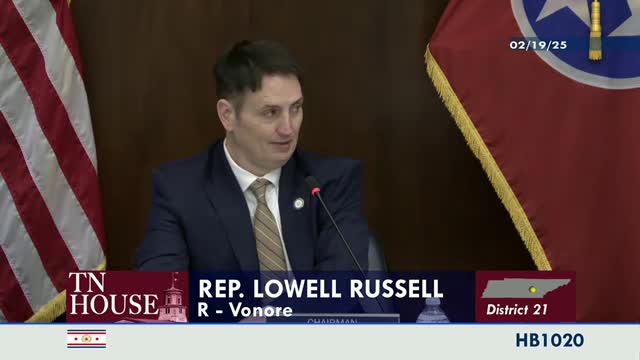
Chairman Russell, sponsor of House Bill 1020, told the panel the measure “protects law enforcement officers from frivolous lawsuits.” He described the proposal as creating immunity from personal civil liability for property damage or personal injury if the person harmed was later convicted of resisting a stop, halt, arrest or search.
The bill would not bar lawsuits against the officer’s employing agency, Chairman Russell said. Representative Johnson asked whether the bill would expand qualified immunity for officers; the chair deferred that legal question to staff.
Michelle Fogarty of Legal Services told the committee, “It doesn't impact whether or not an officer can be sued for a violation of their civil rights. It only deals with civil liability for damage to property or personal injury.” After members asked no further questions, the subcommittee voted to forward the bill to the full Judiciary Committee. The clerk recorded seven ayes and one no.
Votes at a glance: House Joint Resolution 7 was continued for two weeks “without objection, read two weeks.” House Bill 609 was taken off notice “without objection, taken off notice.” House Bill 1020 was advanced to full Judiciary Committee by a 7-1 vote.
The meeting opened with a quorum and covered three calendar items before adjourning; brief procedural actions were taken on the first two items, and the substantive exchange focused on House Bill 1020 and its scope regarding civil liability and civil-rights claims.
The subcommittee did not take final action on the underlying legal standard of qualified immunity; Fogarty’s statement clarified the bill’s narrow focus on damage and injury claims rather than civil-rights litigation. The bill will next be considered by the full Judiciary Committee.