Get Full Government Meeting Transcripts, Videos, & Alerts Forever!
Get email alerts on the Healthcare Regulation topic
No spam. Unsubscribe anytime.
Committee backs bill letting registered nurses pronounce deaths in hospitals under physician agreement
Summary
Senate Bill 668 would permit registered nurses to pronounce a patient's death in a hospital when the nurse has a standing agreement with the attending physician who will later certify the death certificate; committee moved the bill to the calendar after discussion about scope and language.
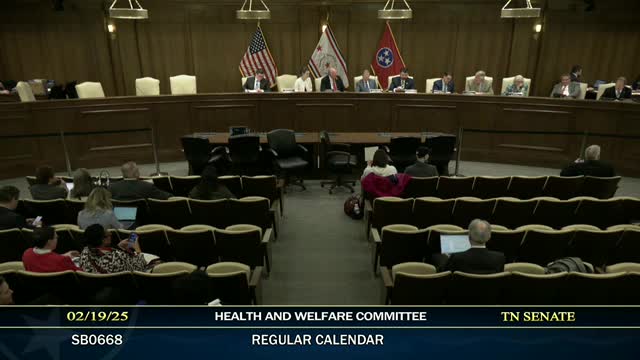
The Senate Health and Welfare Committee approved Senate Bill 668 to allow a registered nurse to pronounce a death in a hospital setting when the nurse has an agreement with an attending physician who will sign the death certificate. Sponsors said the measure aligns hospital practice with existing hospice procedures and removes the statutory requirement that a death must have been previously “anticipated.”
Senator Taylor, who presented the bill, told the committee the change is intended to streamline hospital procedures following a death and reduce delays that occur when an attending physician must be located to pronounce the death. Senator Hensley and others asked whether practice already exists in hospice or other settings; committee discussion clarified the bill as written applies only to hospitals and does not automatically extend to nursing homes or assisted‑living facilities unless the House later amends the language.
The bill requires a written agreement between the registered nurse and a physician who will ultimately certify the death certificate. Senator Watson and others noted the current statute contains several scenarios for nurse pronouncement and that this bill specifically addresses the hospital circumstance and removes the “anticipated death” limitation for that setting.
The committee moved the bill to the calendar on a recorded vote of nine ayes. No committee amendment was adopted during the discussion.