Get Full Government Meeting Transcripts, Videos, & Alerts Forever!
Get email alerts on the Collegiate Finance topic
No spam. Unsubscribe anytime.
Tennessee State University presents five-year financial sustainability plan; seeks flexibility to use capital appropriation for operations
Summary
Interim President Duane Tucker and TSU finance staff presented a five-year sustainability plan that would repurpose remaining capital appropriation to cover an estimated $95 million cumulative deficit and restore reserves; commissioners asked for accountability benchmarks and expressed support for the university's transparency.
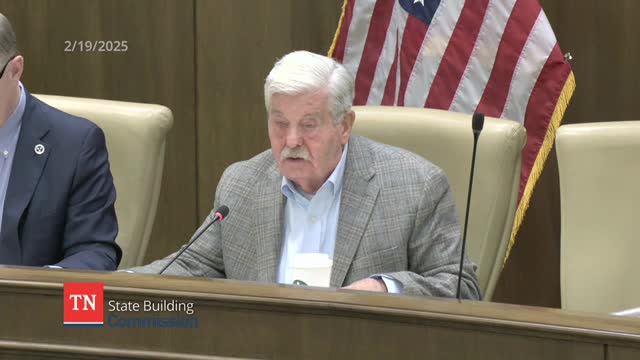
Interim President Duane Tucker and TSU officials presented a five-year financial plan to the State Building Commission outlining steps the university says would restore fiscal sustainability if the color of a remaining capital appropriation is broadened to allow limited operating use.
Tennessee State University said it has $250 million appropriated in a prior capital package, of which about $154.5 million remained uncommitted after existing projects. TSU's acting chief financial officer, Jim, presented projections showing the university would need roughly $95.7 million over five years to cover cumulative deficits while restoring $45 million to cash reserves. TSU proposed using a portion of the remaining capital appropriation to bridge the gap for operating needs over five years, not requesting new taxpayer funds, and to set aside roughly $13.8 million for capital contingencies.
Interim President Duane Tucker said TSU's spring enrollment is outperforming budget by about 600 students and that the university has trimmed incremental expenses by $7 million since his last report. Tucker described several internal reforms already underway: restructuring the cabinet, embedding finance staff from TBR to clear audit backlogs, imposing tighter scholarship discipline and planning a fundraising effort to raise private funds. "We've actually picked up a little time in the air and we feel comfortable that the cash flow looks good through May, June timeframe," Tucker said.
Acting CFO Jim outlined three categories of corrective actions: scholarship discipline (including a proposed cap for each incoming freshman cohort), personnel cost reductions and non-personnel cost reductions. Together, the university estimates $32–$35 million in savings over two fiscal years from these measures and additional long-term changes such as program sunsetting and faculty workload adjustments. Jim said the university can pursue those steps without declaring financial exigency and that filing for exigency would yield only an additional $2–$3 million while creating disruptive consequences.
Consultant Beau Briggs of Alvarez & Marsal (identified in the meeting as part of TSU's advisory team) explained that the recent spike in TSU's discounting rate stemmed from scholarship commitments initially funded with federal CARES/HEERF grants that later rolled onto the university's base budget.
Commissioners pressed on details: several members asked about the timing of an upcoming debt-service payment (TSU said it is covered in the most recent cash analysis), the makeup of in‑state versus out‑of‑state enrollment (TSU said roughly 50/50), and whether scholarship caps would affect HOPE or other state scholarships (TSU said state scholarships are outside the proposed cap and the cap would target institutional scholarship/discounting policy). Several commissioners recommended benchmarks and a staged draw process if the legislature or commission authorizes repurposing capital funds for operating needs.
No formal commission action was taken on the funding request during the meeting; the presentation was informational. Commissioners generally praised TSU leaders for transparency and urged the university to provide measurable benchmarks if future draws of capital funds for operating purposes are requested.
Ending: TSU pledged additional reporting and proposed benchmarks to accompany any legislative or commission requests; university leaders signaled they may remain in place to steward the plan if trustees and stakeholders agree.