Get Full Government Meeting Transcripts, Videos, & Alerts Forever!
Get email alerts on the Disability Services topic
No spam. Unsubscribe anytime.
Senate committee advances pilot for private campus to house adults with developmental disabilities
Summary
The Senate Health and Welfare Committee approved Senate Bill 110 to expand a private, church-affiliated residential pilot in Cleveland to serve adults with intellectual and developmental disabilities; proponents said the site will start small, be privately funded, and emphasize transitioning residents into community living.
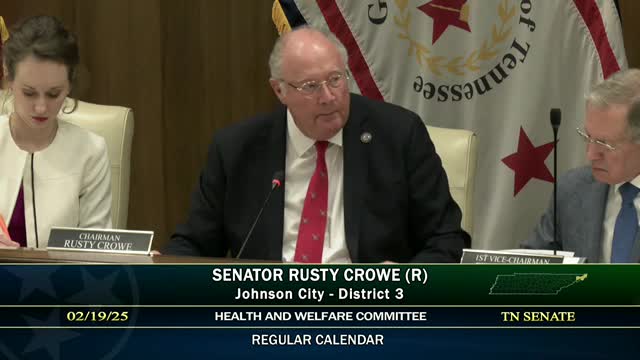
The Senate Health and Welfare Committee on Tuesday approved Senate Bill 110, a measure to expand a private residential pilot for adults with intellectual and developmental disabilities in the Cleveland area. The bill, sponsored by Senator Lowe, was moved, seconded by Senator Massey and passed on a roll call of 9–0 to go to the calendar.
Supporters told the committee the project — being developed by Real Life Village in partnership with Westmore Church and denominational leaders — would begin with smaller homes and phased services intended to prepare residents for independent, supported living. “Real people living real life,” Billy Worsham, an advocate formerly employed by The Arc of Tennessee and representing Real Life Village, told the committee in testimony.
The bill’s backers described a campus built on a former Rolling Hills golf course near Cleveland that would include cottages intended to house four adults apiece, duplex-style units, and partnerships with existing campus facilities for day programs. Pastor Mitch Maloney, president of Real Life Village, described a family-backed and church-supported plan intended to be privately financed and to provide life-skills training, vocational programs and long-term oversight for residents who might otherwise have limited housing options.
Committee members asked about federal rules on congregate settings that have guided deinstitutionalization. Worsham and Maloney said the pilot would be oriented toward integration and transition, and that residents would be encouraged to move into supported living where appropriate. Worsham said the sponsors welcome regulatory scrutiny and would place additional controls on top of those required by the pilot.
Committee discussion also covered capacity and funding: proponents said initial cottages would house four adults each, the campus could eventually host up to about 42 adults in the residential program, and the development would be privately funded rather than relying on state dollars or Medicaid waivers. Senator Massey and others asked how the model aligns with the federal Home and Community‑Based Services settings rule; witnesses said the project would emphasize community integration and use individualized, person‑centered support planning.
The committee recorded a formal motion by Senator Lowe to advance the bill, seconded by Senator Massey; the clerk recorded nine ayes and the bill was sent to the calendar.
The committee heard the testimony during a recessed portion of the hearing to accommodate in‑person witnesses. No amendment or formal condition was added in committee.