Get Full Government Meeting Transcripts, Videos, & Alerts Forever!
Get email alerts on the Criminal Justice Dna Policy topic
No spam. Unsubscribe anytime.
Experts and a survivor urge broader DNA collection, cite CODIS matches and deterrence benefits
Summary
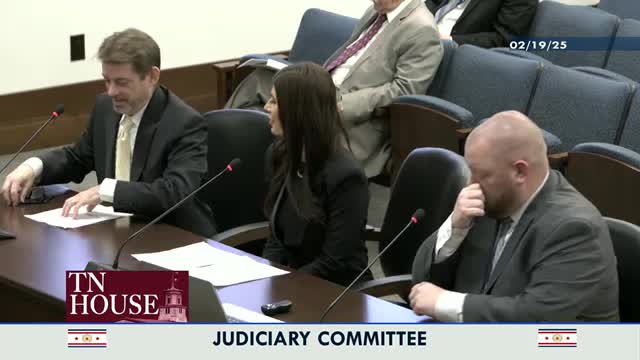
Researchers, a DNA‑justice advocate and a survivor testified to the Judiciary Committee on the public‑safety benefits of expanding DNA collection policies and routine biological evidence collection; witnesses cited increased clearance rates, a Supreme Court precedent and examples from other states.
John Roman, director of the Center on Public Safety and Justice at NORC (University of Chicago), told the committee that expansion of the Combined DNA Index System (CODIS) and more frequent biological evidence collection can increase identification of unknown suspects, raise clearance rates and serve as a general deterrent.
Roman described national trends: CODIS participation grew from nine states in 1998 to all 50 and a national profile count rising to about 22.5 million by the end of last year. He said evidence‑based analyses show collecting biological material in residential burglary cases significantly increases the probability of identifying a perpetrator and leads to higher arrest rates than fingerprint collection alone; he estimated an incremental cost of roughly $3,500 per otherwise unknown suspect identified using biological evidence.
Ashley Spence (identified in testimony as with the DNA Justice Project) and a survivor who described a long‑running case testified in favor of expanding arrestee DNA collection to include qualifying felony arrests. The survivor said a cheek‑swab match in California, where felony arrests trigger swabs in many cases, ultimately identified a serial predator and produced a conviction; she cited Maryland v. King (2013) to note the Supreme Court decision found qualifying arrest swabs lawful under the Fourth Amendment.
Spence and other witnesses pointed to state examples: the speaker described Texas adding arrestee collection and reporting over 1,000 cases solved in its first year; New Mexico’s expansion produced an 83 percent increase in database matches; and published studies show reductions in recidivism after registration in DNA databases. Speakers emphasized privacy safeguards: profiles uploaded to CODIS are coded DNA markers without health or disease data and the name‑identifying information is held separately by accredited labs and released to investigators only after a match and local confirmation.
Committee members sought technical and implementation details. Roman said the committee is running an experiment with Arnold Ventures in four Tennessee cities (Chattanooga, Knoxville, Nashville and Memphis) to assess whether they have capacity to collect biological evidence from residential burglaries and warned that many departments lack current capacity and laboratory turnaround time is a constraint. Patrick Powell, policy director at the Tennessee Bureau of Investigation (TBI), testified that TBI removes and destroys sample records upon dismissal or expungement and that access to CODIS is limited to approved, FBI‑accredited labs on secure terminals.
Vice Chair Davis and others asked for audits, breach history, capacity and cost‑benefit numbers; witnesses said CODIS itself has not had a reported breach since 1998 and that laboratory and process audits are performed by offices such as inspectors general. Roman offered to report back with site‑specific cost and capacity estimates from the four‑city study. No bill vote occurred during the presentation, although committee members discussed pending legislation (House Bill 473 was referenced by a member as related to arrestee collection).