Get Full Government Meeting Transcripts, Videos, & Alerts Forever!
Get email alerts on the University Capital Projects topic
No spam. Unsubscribe anytime.
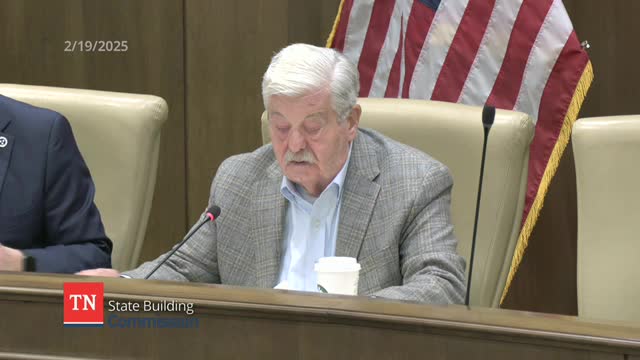
State Building Commission approves retroactive approvals for four University of Tennessee–Knoxville projects
Summary
The State Building Commission approved four retroactive project approvals for the University of Tennessee, Knoxville, including two chiller replacements, building controls upgrades and a Student Health Center budget revision after university officials apologized for procedural errors.
The State Building Commission on a voice vote approved four retroactive project requests from the University of Tennessee, Knoxville (UTK), items that university officials said were ordered or started before formal commission approval.
The university asked the commission to retroactively approve purchase and procurement steps, and to include total project costs, for two chiller replacement projects at UTK, a controls upgrade for the Walters Academic Building and a budget revision for the Walters Student Health Center. President Randy Boyd presented the items and said the purchases were made to address aging equipment and long lead times.
The request covered: retroactive approval to use campus consultants and campus resources for design review, procurement and construction of new chillers for the UTK conference center and the UTK humanities building; retroactive approval to proceed with a controls upgrade for the Walters Academic Building; and a retroactive revision in project budget and funding for the Walters Student Health Center office renovations to account for additional furniture and sound-masking equipment.
Paul Burns, senior vice chancellor for finance and administration at UTK, apologized to the commission for the procedural lapse and said staff ordered four chillers on an open purchase order last September because lead times for chillers were about nine months and the existing units were more than 30 years old. "One of my staff with the very best intentions ordered four chillers ... and back in September. Those chillers were about $400,000 each," Burns said. He told commissioners the staff believed the purchases were below threshold but were not.
Burns said the university will close open purchase orders in advance going forward and improve project controls to ensure materials, equipment and professional services are all captured in project planning. On the Walters Student Health Center budget revision, Burns said the project exceeded its budget by about $10,000 for AV equipment and furniture and that the university has funds to cover the overage but is tightening controls.
Commissioners asked follow-up questions about whether the other requests reflected the same procedural issue. Burns described the four items as related but distinct: the two chillers were a procurement-timing decision, the Walters controls work was pursued as a turnkey contract and the Student Health Center revision reflected an overrun in furniture and AV. The commission moved and approved the four items on a voice vote.
The commission recorded no requests for public comment at the start of the meeting, and the items appeared on the meeting agenda as late submissions from UTK. Commissioners encouraged the university to avoid repeating procedural oversights.
Votes at a glance: the four UTK items were approved by voice vote; no roll-call tallies were recorded in the transcript.
Ending: Commission members asked the university to report improved controls; UTK officials said they would join project meetings and tighten purchasing and project oversight.