Get Full Government Meeting Transcripts, Videos, & Alerts Forever!
Get email alerts on the School Safety Sros topic
No spam. Unsubscribe anytime.
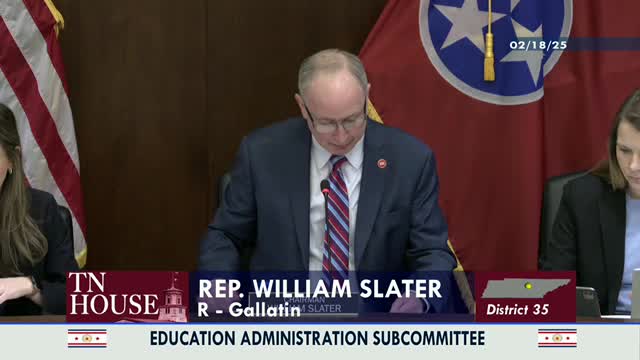
House bill to expand who may serve as school resource officers fails after hours of debate over training, grants and public expectations
Summary
Representative Rudd pushed House Bill 2 14 to let retired law enforcement and honorably discharged veterans serve in schools where sheriffs cannot find full‑time deputies, but the measure failed in subcommittee after testimony from the Department of Safety and the Tennessee Highway Patrol that the bill would not open existing SRO grant funds to those hires and could dilute the public meaning of a school resource officer.
Representative Rudd, sponsor of House Bill 2 14, urged the committee to allow retired law enforcement officers and honorably discharged veterans to serve in schools where sheriffs cannot hire full‑time deputies. Rudd said the measure would expand who could fill SRO roles in rural districts with limited budgets and argued the state has unused grant money that could be used: "It's our money. It's law enforcement. Veterans shouldn't have access to it," Rudd said, describing comments he said he received from Department of Safety staff during negotiations.
The Department of Safety and Tennessee Highway Patrol testified that the bill would not, as drafted, make those proposed hires eligible for existing SRO grant funding and that it would blur the definition of a school resource officer. Elizabeth Stroker, legislative liaison with the Department of Safety, told the committee that "the grant eligibility is only for full time post certified commissioned school resource officers that have a valid MOU with a local law enforcement agency and a local education agency." Deputy Commissioner Greg Mays said SROs are "police officers first" and that an individual must be a sworn law enforcement officer and then receive specialized SRO training; he said the bill would bypass the existing process for certifying SROs.
Colonel Matt Perry of the Tennessee Highway Patrol echoed that this is primarily a training and certification issue, describing that departments hire and post‑certify officers and then provide additional SRO training. He warned the committee that the bill, as written, risked sending people to schools with less training than parents expect and that liability and oversight questions could follow if individuals in schools are not employed by or overseen by a law enforcement agency.
Members asked whether there are alternatives. Safety officials and multiple members noted existing avenues: districts can hire school safety officers (SSOs) or security staff, and prior legislation allows certain retired officers or veterans to be brought in under specific terms. Several committee members, including Representative Glenn, said they wanted to quickly expand capacity in schools and asked whether modified, shortened training pathways could bridge the gap; safety witnesses said post certification and state law training requirements limit how short that path can be.
After debate and a procedural amendment vote to add Amendment 3,479, which was adopted, the committee voted on House Bill 2 14 on its merits. The clerk reported a tied committee result (three ayes, three nays) and the bill "failed" for lack of a majority. The transcript records the committee chair stating: "Not having received a majority, house bill, 2 14 fails." Representative Rudd said the bill could be clarified if necessary and offered to amend the language to ensure grant access when a sheriff cannot provide a full‑time deputy.
The committee’s discussion repeatedly distinguished three outcomes facing districts: hiring fully commissioned, full‑time sworn SROs (the status that current SRO grant rules target); hiring school safety officers or other non‑commissioned security (a route some districts already use); or creating a new hybrid category that some members argued would permit access to grant funding but others said would mislead the public about who is in schools. Several members urged reconciling the bill with existing SSO and SRO statutes if the sponsor wanted to pursue a compromise.
Ending: With the bill defeated in subcommittee, members noted the issue can be revisited and that sponsors might file clarifying language to link grant eligibility to cases where sheriffs cannot provide full‑time commissioned SROs. The Department of Safety offered to share SRO program reports with the committee showing county‑level coverage and existing program uptake.