Get Full Government Meeting Transcripts, Videos, & Alerts Forever!
Get email alerts on the Death Penalty topic
No spam. Unsubscribe anytime.
Committee backs constitutional change to allow firing squad; witnesses debate transparency and trauma for corrections officers
Summary
House Concurrent Resolution 2024, proposing a state-constitutional change to require the firing squad instead of lethal injection, received a due-pass recommendation after testimony that ranged from calls for greater transparency about execution practices to concerns about the emotional toll on correctional staff.
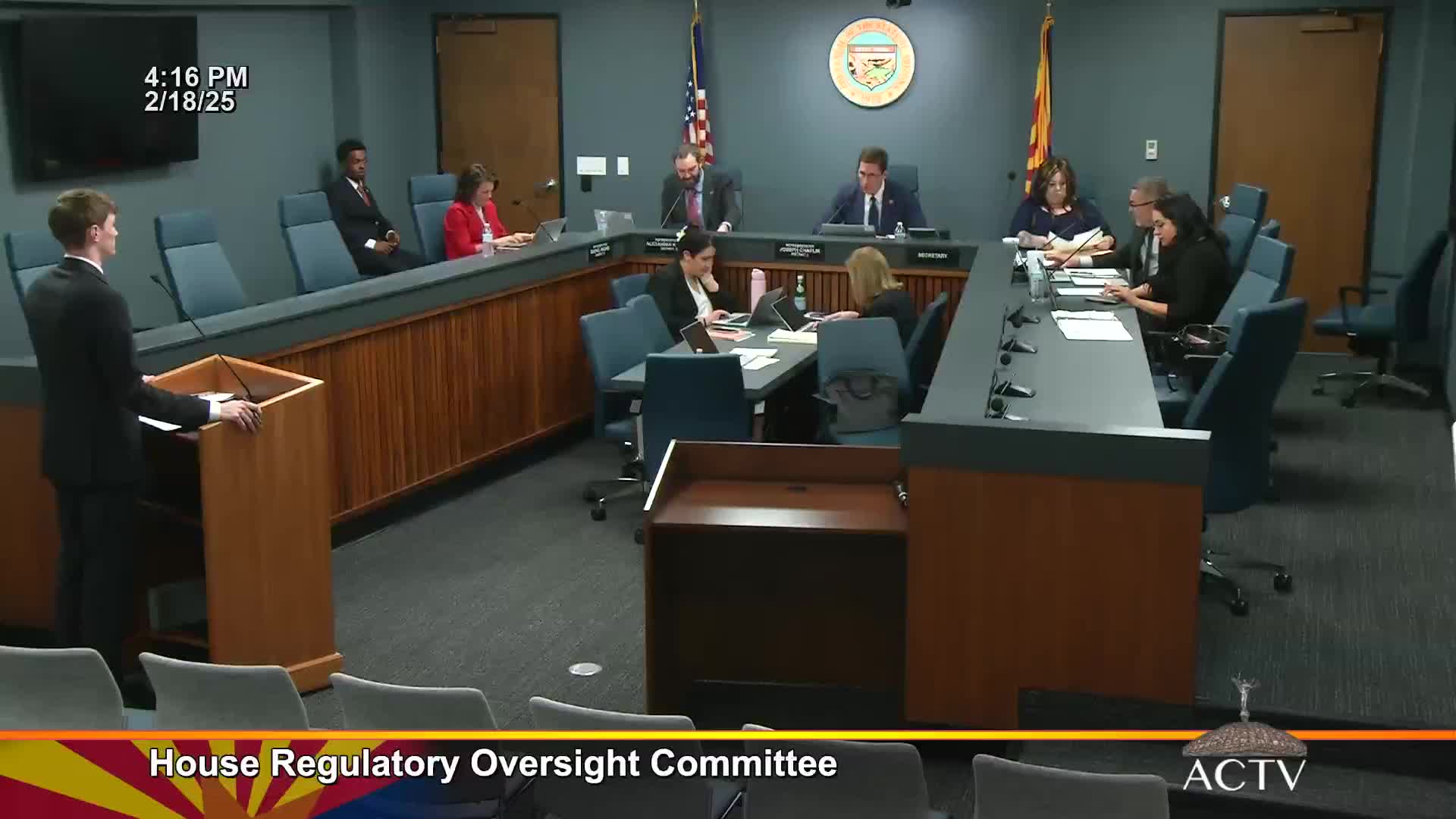
The Arizona House Committee on Regulatory Oversight on Feb. 14 approved a due-pass recommendation for House Concurrent Resolution 2024, a proposed constitutional amendment that would require executions to be carried out by firing squad rather than lethal injection if adopted by voters.
Representative Collin sponsored the resolution in committee and described the firing squad as a more reliable, "humane" alternative to the state’s lethal‑injection procedures. "What you should really do instead is have a firing squad because that's the most humane way of executing the condemned," he said during his explanation to the committee.
Nut graf: The hearing drew witnesses from conservative groups, civil-rights advocates and a former corrections officer. Opponents urged legislative attention to transparency and accountability around execution procedures and procurement of lethal‑injection drugs, while others warned of psychological harm to staff asked to carry out executions by firing squad.
Transparency and procurement concerns
Nicholas Cote, representing Conservatives Concerned, urged the committee to address what he described as a "real and immediate problem" with transparency in Arizona’s execution practices. "Changing the method of execution does not address the real and immediate problem that Arizona faces with its current and soon to be used method of execution: a lack of transparency and accountability," Cote said.
Cote and other witnesses referenced Executive Order 5, issued Jan. 20, 2023, which commissioned an independent review of Arizona’s execution protocols. Cote said the independent reviewer raised concerns, including alleged cash payments to members of the execution team during 2022. He told the committee the reviewer reported some team members were paid in cash, "$20,000 each, for 3 different executions," and that the administration cut short the independent review rather than produce records and full transparency.
Humaneness, law and precedent
Opponents to the resolution included the American Civil Liberties Union and other witnesses who argued that no method of execution is humane and raised constitutional and moral objections. Gene (Janine) Woodbury of the ACLU said the debate around methods does not change his fundamental objection to the death penalty: "No matter the method, the death penalty is cruel and inhumane. It robs people of the opportunity for redemption." He cited judicial opinions that have contrasted methods while underscoring the intrinsic violence of execution.
Corrections staff trauma
Courtney Quinones Machado, a disabled U.S. veteran and former corrections officer, told the committee that asking corrections staff to carry out executions risks long-term trauma. "I do not believe we need to traumatize corrections officers," she said, describing post‑traumatic symptoms she associated with taking a life and warning about recruitment and retention impacts for the corrections workforce.
Committee action and next steps
After testimony, the committee voted to give HCR 2024 a due-pass recommendation; the committee announced the vote as 3 ayes, 2 nays. If the resolution proceeds and is approved by both legislative chambers, it would place a constitutional amendment on the next general-election ballot for voter approval.
What the committee did not resolve
Witnesses urged different fixes: some called for legislative or statutory changes to require more public disclosure of drug procurement and execution‑protocol documents (one witness suggested amending Arizona Revised Statutes section 13‑757); others said the legislature should insist on a completed independent review before changing the state’s execution method. Committee action was procedural; the resolution will need subsequent House and Senate approval and, ultimately, voter approval to change the Arizona Constitution.
Ending: The committee’s recommendation moves HCR 2024 forward in the legislative process. The hearing highlighted competing priorities — accountability and transparency versus a push by some members to change execution method — and foreshadows further debate on whether the legislature should set execution method policy or prioritize process and oversight first.