Get Full Government Meeting Transcripts, Videos, & Alerts Forever!
Get email alerts on the Juvenile Corrections Mentors Fingerprinting topic
No spam. Unsubscribe anytime.
Committee approves ADJC fingerprinting bill to broaden background checks and allow vetted ‘credible messengers’
Summary
House Bill 2730, as amended, requires fingerprinting and criminal history checks for ADJC employees, contractors and volunteers who have contact with committed youth; the committee voted to adopt the Marshall amendment and returned the bill with a due‑pass recommendation.
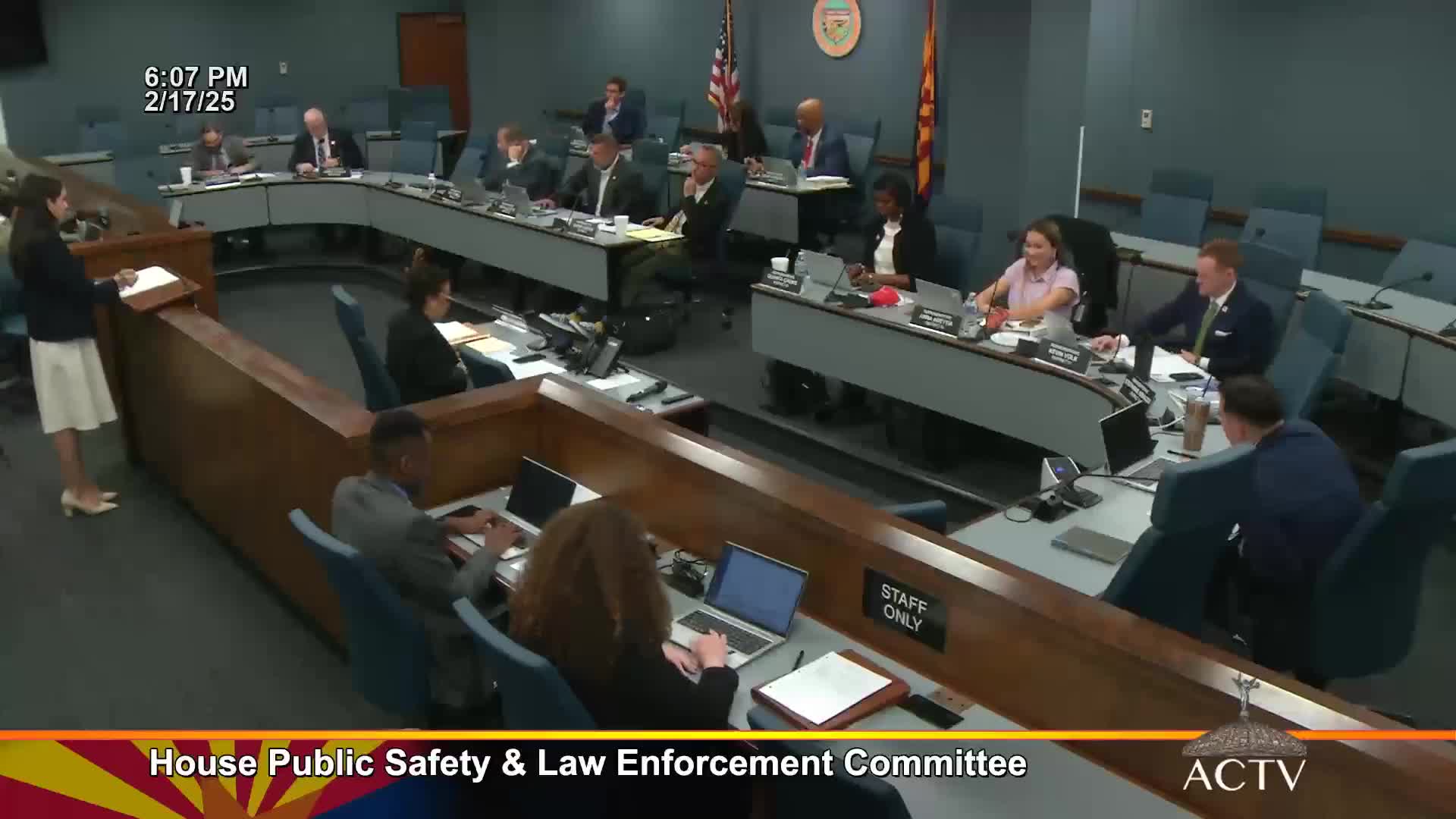
The House Public Safety Committee advanced House Bill 2730, which requires fingerprinting and criminal history checks for Arizona Department of Juvenile Corrections (ADJC) staff, contract service providers and volunteers who have contact with committed youth.
Staff described the measure and a Marshall amendment that conditions direct contact with committed youth outside a secure care facility on fingerprint results and requires submission of a criminal‑offense form to ADJC. The amendment also made technical changes to the bill.
ADJC Deputy/representative Caitlin M. Holt testified in support and described the department’s use of credible messengers — people with lived experience who mentor youth in secure care — and argued the bill would expand the director’s authority to allow more vetted individuals to serve as mentors in supervised settings. Holt said the department currently limits some people with certain criminal histories from mentoring but wants broader discretion, paired with fingerprinting and background checks, to bring vetted messengers into supervised programming.
Several witnesses with lived experience who work as mentors supported the bill; one speaker described moving from a life with multiple felonies to mentoring youth and urged the committee to permit qualified, vetted former offenders to serve as credible messengers.
The committee adopted the Marshall amendment dated 02/12/2025 and voted to return HB 2730 with a due‑pass recommendation. The committee recorded a roll‑call vote of 13 ayes, 0 nays and 2 absent.
What’s next: If enacted, ADJC would implement fingerprint checks and expand director discretion to approve vetted credible messengers under the conditions stated in the adopted amendment.