Get Full Government Meeting Transcripts, Videos, & Alerts Forever!
Get email alerts on the Public Works Standards topic
No spam. Unsubscribe anytime.
Ogden City adopts updated engineering standards; council approves ordinance 2025-7
Summary
The council voted unanimously to adopt proposed ordinance 2025-7, which updates the city's engineering standards, including a formal variance process, clarified sewer and stormwater testing, traffic-study thresholds, and directional bore/utility placement rules.
Ogden City Council voted unanimously on Feb. 18 to adopt proposed ordinance 2025-7, approving a multi-section update to the city’s engineering standards.
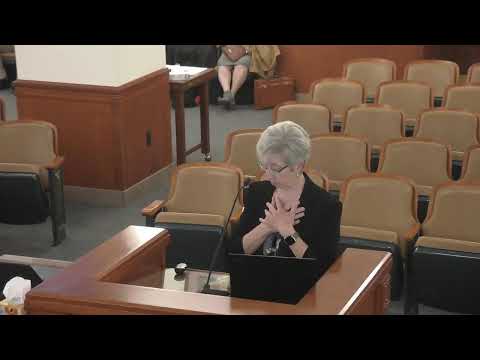
The council's action follows a presentation by City Engineer Taylor Nielsen summarizing technical changes that city staff and planning partners drafted to align with updated public-works practices and state requirements. Nielsen said the standards were revised to clarify when traffic-impact studies are required, to create a formal variance review with a 15-business-day review target, and to tighten testing and easement language for sewer and water mains.
“The importance of making sure that we are able to have discussions on some of those areas ... we tried to assign some criteria,” Nielsen told the council, describing the new variance process and the desire to avoid open-ended review timelines.
Key technical changes Nielsen outlined include: - A defined variance process with a 15-business-day review target and criteria to limit inappropriate or routine variance requests. - Traffic study thresholds (for example, projects that will generate 100 or more daily vehicle trips, additions of 50 or more dwelling units, or 30,000 square feet of new building) that generally trigger traffic-impact studies; waivers may be allowed. - New sewer air testing to reduce inflow and infiltration and clarified cleanout requirements for maintenance access. - Revised easement sizing tied to pipeline depth, and a stormwater design manual and LID (low-impact development) guidance for downtown public-realm zones. - Updated water main requirements, including a maximum excavation depth of 5.5 feet for accessibility and clarified pressure and bacteria testing thresholds (required where mainline work or connections exceed 20 feet).
Council Member Ritchie moved to adopt the ordinance; Council Member Graff seconded. The roll call vote recorded Aye from Council Members Blair, Cheburka, Graff, Meyers, Ritchie, Vice Chair Hyer and Chair White; the motion passed unanimously.
Why this matters: The updates codify technical standards that affect new development, utility work, and public-right-of-way restorations. Nielsen told the council the standards are intended to protect the city’s infrastructure long term — for example, by reserving space for storm, sewer and water utilities and by setting clearer requirements for broadband and directional boring plans so utilities and future city work do not conflict.
Public input on the item was limited at the meeting; one resident raised a water-quality question and staff directed that comment to the public-comment period and to follow up with public-works staff.
Ending: The ordinance takes effect according to the city's normal ordinance implementation dates and will be used in permitting, plan review and public-right-of-way work going forward.