Get email alerts on the Zoning Code Site Development topic
No spam. Unsubscribe anytime.
Council reviews draft site-development chapter to replace zoning code Appendix A; item returned for further public process
Summary
Staff described a draft replacement of zoning code Appendix A (Article 11) as a new site-development chapter to clarify application processes, exemptions and traffic impact analysis requirements; council agreed the item needs a public hearing and will return March 18 for action.
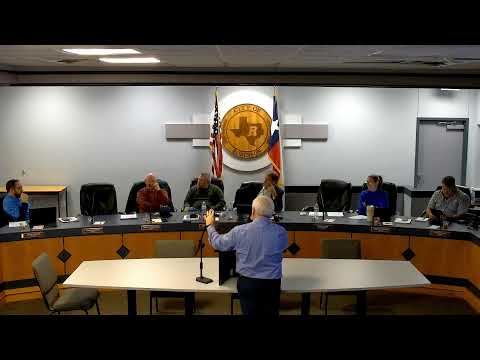
Council members discussed a lengthy rewrite of zoning code Article 11 (Appendix A) and a proposal to move supplementary district regulations and site-development procedures into a new code chapter (referred to as Chapter 26) during the March 3 meeting.
Staff explained the proposed change would delete Section 11 (supplementary district regulations) in its entirety and move the site-development process and related standards into a new, expanded chapter that more explicitly defines application procedures, exemptions, requirements for traffic impact analyses (TIAs), and items typically used by other cities in development review. Staff said single-family, duplex and agricultural uses on a lot were proposed as exemptions from the site-development process; all other uses would potentially go through the expanded site-development process.
Key elements staff described in the draft included: clearer application steps and exemptions; a requirement for traffic impact analyses for developments projected to generate threshold trip counts (staff referenced a screening threshold of 100 peak-period trips); better definition of required studies and submittals (for example traffic studies) and development-agreement options where applicants and the council could negotiate mitigation instead of conducting a full TIA. Staff said the draft brings Robinson’s process in line with standards used by other growing cities.
Council members asked for a short, plain-language summary of the proposed changes and discussed whether the item should be placed on consent or returned for discussion and public hearing. A councilmember noted that the change involves deletion and transfer of existing code language, and the group agreed the change requires a public hearing and additional review. Staff confirmed the item will be brought back at a future meeting for public consideration; no final action was taken at this meeting.
Ending: Staff will prepare a condensed summary of changes, confirm statutory notice requirements for a public hearing, and return the ordinance/amendment for council action on the next docketed public meeting date.
AI generated
The text on this page is AI generated. Summaries, highlights, analysis, and video transcripts are all produced from the original source material.
AI can make mistakes, so if you spot one, and we will fix it for everyone.
Note: the source content is unaltered by us. Any content source we link to, be it a video, an audio recording, or a document, is presented exactly as its publisher released it. That publisher is usually a government body, sometimes an individual official or another organisation.