Get Full Government Meeting Transcripts, Videos, & Alerts Forever!
Get email alerts on the Flooding Causation Tenaris topic
No spam. Unsubscribe anytime.
Supreme Court of Texas hears challenge over causation evidence in Tenaris flood case
Summary
At oral argument in Tenaris Bay City v. Elisor, lawyers debated whether plaintiffs presented legally sufficient expert evidence tying increased outflow from a Tenaris facility to flooding during Hurricane Harvey; the justices focused on technical hydrology, the scope of expert analysis and trial disposition if some claims survive.
The Supreme Court of Texas heard argument in Tenaris Bay City v. Elisor (No. 230808), a dispute over whether plaintiffs proved that increased outflow from a Tenaris industrial site caused flooding of nearby homes during Hurricane Harvey.
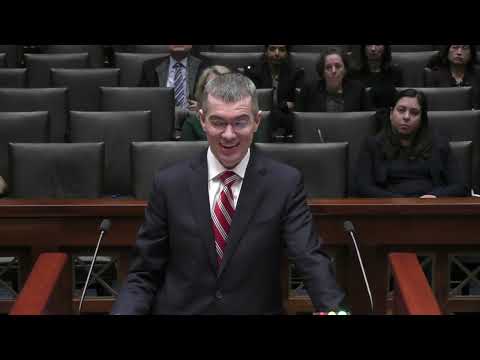
At the bench, counsel for the petitioner, Mr. Little, told the court that "plaintiff's case fails for the most basic of reasons" because plaintiffs did not offer expert evidence connecting Tenaris' increased outflow to flooding at particular properties. Little emphasized that plaintiffs' hydrological expert stopped his analysis at the Tenaris site boundary and "did not do a general flooding analysis," and that, in Little's view, the record showed only that outflow was higher at the site boundary, not that the company caused the neighborhood flooding.
The argument repeatedly turned on whether Hurricane Harvey — described by both sides' experts as an unusually long and heavy event in the area — required additional expert modeling to trace how water moved from Tenaris' site to plaintiffs' houses. Justice Lerman asked whether 24-hour rainfall measures captured a four-day event; Little responded that some experts examined 24-hour periods but that "for the entirety [of the] 4 day period, this was the heaviest rainfall event on record in Van Vleck and Bay City." Little cited Texas precedents on expert testimony and causation, arguing that where technical hydrology is at issue a jury requires expert proof of the "but for" link between the facility's outflow and property flooding.
Responding for the respondents, Mr. Hagan told the court "this is an unusually simple case," arguing that the record showed Tenaris altered the land so that water that historically soaked into turf now ran off toward the town. Hagan pointed to testimony from local witnesses and county engineers that Tenaris' outlets and a lack of maintenance on detention ponds sent water toward homes adjacent to the facility. "They aimed it at the town," Hagan said, using a metaphor to describe how the site's changes directed runoff. He noted that three of the four houses in the jury charge were adjacent and, he said, could be reached "you can stand on Tenaris' property and skip a stone to their house."
Counsel and justices also discussed how appellate disposition would proceed if the court found the evidence sufficient for some properties but not others. Little observed that the liability phase was bifurcated from damages and that the parties had a post-liability stipulation that total damages for the zones equaled $2,800,000; he warned that if liability were reversed for one zone the stipulation would no longer govern and the court could remand for additional proceedings. Little said remand could be necessary because damages were unliquidated and intertwined with the liability findings.
Both sides relied on technical sources and prior opinions to frame their positions. Little invoked this court's references to the need for expert proof in flooding and hydrology contexts; Hagan emphasized contemporaneous county warnings and witness testimony about site design, detention-pond maintenance and upstream blocking of historical drainage.
No decision was announced at argument; the court took the case under submission after questioning counsel. The justices' inquiries centered on the technical sufficiency of the experts' methodologies, the significance of the multi-day rainfall record, and the practical consequences for remedies and retrial if the court were to find partial sufficiency of the evidence.