Get Full Government Meeting Transcripts, Videos, & Alerts Forever!
Get email alerts on the Public Records topic
No spam. Unsubscribe anytime.
Texas Supreme Court hears argument on whether PIA allows mandamus against governor, attorney general
Summary
In oral argument in Paxton v. American Oversight, counsel debated whether the Texas Public Information Act permits a requester to bring a mandamus action against statewide constitutional officers or whether venue and exclusive jurisdiction provisions require district-court proceedings or limit judicial review.
May it please the court. The Texas Supreme Court heard oral argument in Paxton v. American Oversight on whether the Texas Public Information Act (PIA) permits a requester to seek a writ of mandamus against statewide constitutional officers — specifically the governor and the attorney general — or whether jurisdiction and venue provisions channel such suits to district courts or otherwise limit review.
The question matters because it determines which courts can review contested open-records claims involving the highest executive officers and what remedies requesters can obtain if an office refuses to produce records. Petitioners argued that the government code and existing jurisdictional rules reserve original mandamus against certain officials to this court and that the PIA’s venue provision did not displace that rule; respondents said the PIA’s plain language allows a requester to seek mandamus against a governmental body in district court, that naming an officer in official capacity is effectively a suit against the office, and that the statute should be construed to promote public access.
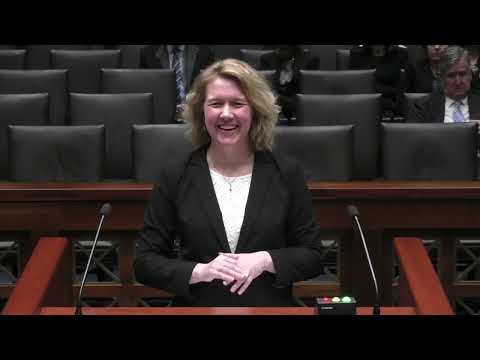
Miss Klusman, counsel for the petitioners, told the court that "American Oversight's mandamus petitions against the governor and the attorney general . . . That jurisdiction has been removed. The amendment to the PIA did not put it back." Klusman framed the dispute around harmonizing the PIA's enforcement provision with Government Code section 22.002(c), a long-standing provision that the petitioners say makes mandamus petitions against the six enumerated statewide officers an original- jurisdiction matter for the Supreme Court. She relied on Sharp (the court's earlier decision) to explain why the officer — not just the office — is the proper mandamus respondent in many PIA disputes and argued that 552.321(b) (the statutory venue provision added after Sharp) did not override or recreate jurisdiction for district courts to entertain mandamus against those constitutional officers.
Miss Robb, counsel for the respondents, countered that section 552.321 of the PIA permits a requester to bring a mandamus action "against a governmental body" in the district court where that body is located and that the statute's 1999 amendment (adding subsection (b)) answered the Sharp court's invitation to clarify the appropriate forum. Robb argued the PIA should be "liberally construed to effectuate the release of information," and said petitioners were effectively asking the court to "rewrite the Public Information Act to completely exclude the Governor and, we believe, the attorney general, from any sort of judicial review for their actions under the PIA." She noted administrative and remedial paths under the PIA, including complaint routes to local district or county attorneys and the possibility of challenging adverse Attorney General rulings under the statute.
Justices pressed both sides on several recurring points. They asked whether the PIA’s reference to "governmental body" should be read as distinct from naming an officer in an official capacity, and whether the statute's procedural provisions (venue in district court) are merely venue rules or whether they displace the Supreme Court's exclusive original jurisdiction over mandamus aimed at certain constitutional officers. Bench questions also raised separation-of-powers concerns about allowing district courts (or private requesters) to command action from the governor and whether the legislature has authority to subject the governor to this form of mandamus in any court.
Both parties acknowledged practical consequences and limits. Petitioners conceded some circumstances would permit Supreme Court review — for example, legal questions about existence of documents or whether privilege claims raised by the Attorney General present questions of law that the court could resolve without resolving disputed facts (the Sharp framework). Respondents emphasized the PIA's internal routes: asking the Attorney General for a ruling, bringing a complaint to a local district attorney under the statute's enforcement provisions, and the statute's fee-shifting and remedies provisions that assume district-court review is available in many cases.
Counsel also debated related statutory provisions and doctrines: Government Code section 22.002(c) (exclusive original mandamus jurisdiction vis-à-vis certain statewide officers); the PIA provisions often cited as 552.321 (mandamus for refusal to provide public information) and 552.323 (attorney's fees and the effect of reliance on an AG opinion); and the Texas Constitution's grant of original jurisdiction to the Supreme Court for writs of mandamus and quo warranto. Counsel for respondents read the PIA's 1999 amendment as an answer to Sharp and urged the court to give the statutory text its ordinary effect; petitioners urged the court to reconcile the provisions in favor of the longstanding jurisdictional rule for the six listed officers. During argument the bench repeatedly returned to whether a requester who believed an office withheld responsive nonprivileged records had a practicable judicial remedy beyond political avenues or a complaint to a local prosecutor.
The case was submitted after roughly an hour of argument. The court did not rule from the bench at argument's close; it will issue an opinion in due course that resolves whether and when mandamus under the PIA may be brought against the governor, the attorney general, or other enumerated statewide officers and which forum(s) are proper for that relief.