Get Full Government Meeting Transcripts, Videos, & Alerts Forever!
Get email alerts on the Utility Regulation Winter Storm Uri topic
No spam. Unsubscribe anytime.
Supreme Court hears whether utilities owe common-law duty over Winter Storm Uri blackouts
Summary
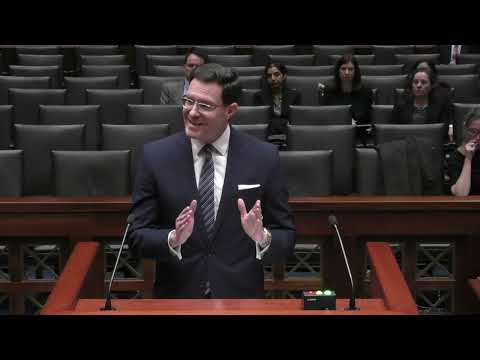
The Supreme Court of Texas heard arguments over whether transmission and distribution utilities can be held liable in common law for gross negligence arising from ERCOT-directed load shedding during Winter Storm Uri.
The Supreme Court of Texas heard arguments over whether transmission and distribution utilities (TDUs) can be sued in state court for common-law gross negligence for decisions made during Winter Storm Uri, when ERCOT-directed load shedding interrupted electricity service across Texas.
Relator counsel argued the question for the TDUs is a duty question governed by the courts’ Mission Petroleum framework and by the Public Utility Commission (PUC) regulatory scheme. Relator counsel said, "Throughout the entire load shed event, our load shedding decisions were constrained by ERCOT protocols," and described regulatory limits including under-frequency load-shedding (UFLS) relays that the TDUs must keep energized during an EEA 3 event. Counsel explained those protocols require reserving circuits carrying at least 25% of ERCOT system load and prioritizing service to "nuclear plants, to prioritize military, law enforcement, public health, communications facilities," and that ERCOT orders must be complied with "in a time not to exceed 30 minutes." Relator counsel argued that where a comprehensive regulatory system addresses the same harms and provides administrative remedies and penalties, courts should decline to impose a parallel common-law duty.
Counsel for the real parties in interest (plaintiffs) told the court earlier appellate rulings involving the same defendants support a different result. Real parties' counsel said the 2021 decisions involving Encore and CenterPoint recognize that regulation "does not substitute a legislatively imposed standard of conduct for common law duties" and argued the pleadings identify eight categories of gross negligence that survive an early dismissal. Counsel emphasized factual allegations that TDUs made deliberate choices about who lost power and for how long, saying the pleadings allege the utilities "decided who to cut power to and for how long" and that ERCOT "didn't tell them who to cut power to." Counsel also pointed to contemporaneous reporting and federal reviews, noting the complaint cites the Texas Tribune, the Wall Street Journal and a 2021 FERC/NERC report to support claims that TDUs' actions were unreasonable or unnecessary.
The justices questioned both sides on the scope of Mission Petroleum analysis, the relevance of tariff provisions that preserve liability for gross negligence, and whether the PUC has exclusive jurisdiction over the sorts of complaints plaintiffs raise. One justice asked how the Phillips factors are applied to gross-negligence duties and whether the court should treat the issue as preemption or as a Mission Petroleum regulatory-system inquiry. Another asked whether the pleadings sufficiently allege the requisite "conscious indifference" for gross negligence rather than ordinary negligence.
On technical points, relator counsel explained why some neighborhoods may have remained energized during the manual load-shedding phase: UFLS-equipped circuits are excluded from manual rotation and thus can remain powered, so as manual load shedding reduces total system load the reserved circuits become a larger percentage of the remaining system. Relator counsel said the PUC and ERCOT have since changed protocols to give TDUs more flexibility.
Plaintiffs' counsel disputed that tabs of ERCOT/PUC guidance in the record demonstrate legal compulsion that would have prevented rolling outages; counsel argued those materials are guidelines that do not by themselves justify leaving some customers without power for days and that the pleadings allege conduct rising to conscious indifference with factual allegations and independent reports cited in support. Plaintiffs' counsel also contested the relators' invocation of force majeure and tariff carve-outs, arguing force majeure does not apply where defendants reasonably anticipated or failed to act in good faith.
The justices pressed both sides on factual versus legal lines: whether specific factual allegations about how TDUs selected circuits, how long outages lasted, and admissions reported in media and federal reports are sufficient to plead gross negligence, and whether a court should decide, as a question of law, whether the regulatory system displaces a common-law duty. The court also discussed foreseeability: relator counsel pointed out ERCOT's seasonal planning scenarios predicted substantially smaller generation outages than actually occurred in Uri (plaintiffs' petition alleges ERCOT's extreme planning scenario forecast about 13,953 megawatts of outages while actual outages exceeded 50,000 megawatts).
After extended questioning, the court took the case under submission. The clerk announced, "The case is submitted," and the court adjourned.
Votes at a glance: none (this is an oral-argument session; no court decision was announced).