Get Full Government Meeting Transcripts, Videos, & Alerts Forever!
Get email alerts on the Utilities Uri Liability topic
No spam. Unsubscribe anytime.
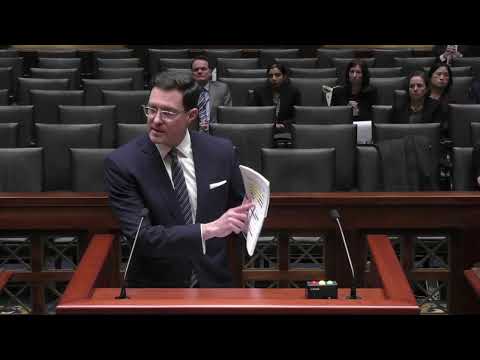
Justices hear dispute over utilities’ liability for deaths and outages stemming from Winter Storm Uri
Summary
In argument over ENRAE/Encore and related transmission and distribution utility (TDU) claims arising from Winter Storm Uri, the court debated whether the utilities’ conduct during ERCOT‑ordered EEA‑3 load shedding gives rise to a common‑law duty supporting gross‑negligence claims, or whether the regulatory scheme displaces such duties.
The Supreme Court of Texas heard argument in 240424 (INRAE / Encore Electric Delivery Company and related utility petitions) on whether transmission and distribution utilities owe common‑law tort duties to customers for decisions made under ERCOT’s EEA‑3 load‑shedding protocols during Winter Storm Uri.
Relators argued a regulatory regime — the utilities code, PUC regulations, tariffs and ERCOT protocols — heavily constrains TDUs and supplies administrative remedies; under Mission Petroleum and related Phillips‑factor analysis, they urged, courts should not impose new common‑law duties that conflict with an intricate regulatory system. Relator counsel emphasized that ERCOT’s load‑shedding protocols constrained TDUs’ conduct (including minimum 30‑minute compliance windows and restrictions on using certain under‑frequency load‑shed (UFLS) circuits), and that many operational choices must be made to protect the grid.
Real parties (plaintiffs) argued they pleaded multiple categories of gross negligence and that the pleadings — drawing on contemporaneous reporting and the 2021 FERC/NERC review of the event — allege TDUs intentionally and recklessly prioritized some circuits and customers while leaving others without power for prolonged periods, causing deaths and property harms. Real parties said the 14th Court of Appeals recognized eight categories of gross negligence in the pleadings and that factual disputes about what the protocols required — and about each utility’s actual conduct — are for the factfinder.
Technical topics drew extended questioning. Counsel and justices discussed UFLS relay circuits (TDUs are required to equip circuits carrying at least 25% of ERCOT system load), the effect of manual load shedding on the percentage of protected circuits, and how those constraints could make rotating outages infeasible during extreme shortfalls. Relators pointed to post‑Uri changes by the PUC and ERCOT to increase manual‑shedding flexibility, arguing that the record shows regulation and administrative enforcement (PUC orders and penalties) are the appropriate remedies rather than a new judicial common‑law duty.
Other contested issues included whether the plaintiffs’ force‑majeure and tariff defenses bar claims, whether PUC exclusive jurisdiction applies to later phases of litigation, and whether pleading facts alleging conscious indifference (gross negligence) survive a Rule 91(a) challenge. The court took the case under submission with no immediate ruling.