Get Full Government Meeting Transcripts, Videos, & Alerts Forever!
Get email alerts on the Pia Mandamus Jurisdiction topic
No spam. Unsubscribe anytime.
High court weighs whether Public Information Act mandamus suits can target governor and attorney general
Summary
In Paxton v. American Oversight the justices debated whether section 552.321 of the Public Information Act and Government Code limits mean mandamus petitions must be filed in district court and whether constitutional officers (governor, attorney general) are excluded from that district‑court remedy.
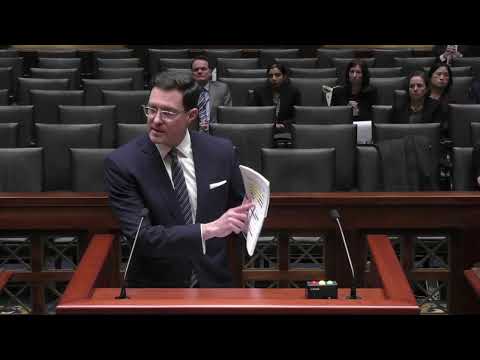
The Supreme Court of Texas heard argument in 240162, Paxton v. American Oversight, over whether requesters can seek writs of mandamus under the Public Information Act (PIA) against the governor and the attorney general in district court, or whether the statutory and constitutional framework limits such writs to the Texas Supreme Court for certain officers.
Petitioners argued the mandamus petitions should be dismissed because, they said, Sharp and related law show district courts lack jurisdiction to entertain mandamus petitions against the six constitutional officers and the PIA’s 552.321(b) does not restore district court jurisdiction for those officers. "American Oversight's mandamus petitions should be dismissed for two reasons," petitioner counsel told the court, urging a narrow reading that preserves the special original‑jurisdiction carve‑outs.
Respondents (American Oversight) urged the court to read the PIA’s 552.321(b) as a grant of process and venue for requester mandamus actions against governmental bodies, and to construe the Act liberally to effectuate public access. Respondent counsel told the court petitioners “come here today asking this court to ignore the plain language of the Texas Public Information Act,” arguing the statute’s text, policy and related procedural provisions allow or require district‑court mandamus in ordinary cases involving governmental bodies.
Argument covered a layered statutory conflict: the definition of “governmental body” in the PIA; Government Code 22.002(c) (an historical carve‑out making mandamus against certain constitutional officers an original matter in this court); the 1999 PIA amendment that added 552.321(b) (designating district court venue for mandamus against governmental bodies); and procedural alternatives such as 552.3215’s declaratory/injunctive path via a local district or county attorney. Justices questioned whether the 1999 amendment unambiguously reversed Sharp and whether separation‑of‑powers concerns arise if district courts were given mandamus authority over the governor.
The court also discussed practical remedies: petitioners and respondents debated whether a requester can challenge an adverse AG ruling, whether a local district attorney can bring a declaratory or injunctive suit under the statute, and whether the PIA’s internal fee/attorney‑fees provisions presuppose judicial review of AG rulings.