
North Penn proposes larger 2025—26 technology budget to refresh devices, strengthen cybersecurity and add off-site backups
Get AI-powered insights, summaries, and transcripts
Sign Up Free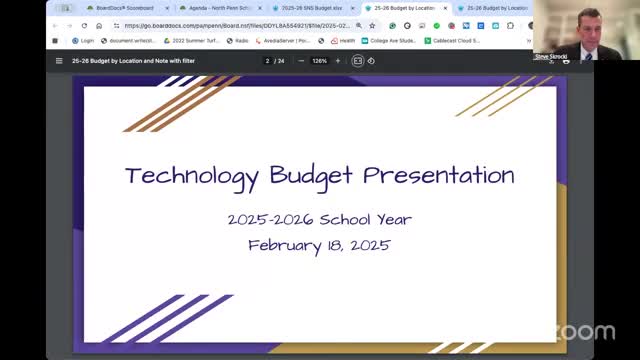
Summary
Dr. Kristen Landis presented the district—s technology budget, saying the 2025—26 request reflects a near-term device refresh cycle and higher infrastructure spending.
Dr. Kristen Landis presented the district—s technology budget, saying the 2025—26 request reflects a near-term device refresh cycle and higher infrastructure spending.
Landis said this year's budget is roughly a 50 percent increase from last year. She said a large part of the change reflects the return of Chromebook refresh purchases (the district received 7,000 Chromebooks through an ECF grant in 2023—24 that reduced the normal refresh burden) and a planned network switch replacement line of about $649,000, with the expectation the district will receive partial reimbursement from E-rate funding.
Landis described three priorities: digital learning device refresh, backbone/network infrastructure and cybersecurity. She said the district typically budgets to replace roughly 3,500 student Chromebooks per multi-year cycle but will scale the number in 2025—26 because some devices were provided by the ECF grant and have no warranty or ruggedized cases and are breaking at higher rates. Landis described a proposed pilot to refresh teacher devices toward a "Chromebook Plus" model for about 300 teachers to give educators Google Gemini licensing and more AI-capable tools; pilot selection and professional development would be phased with teacher leadership input.
On cybersecurity and backups, Landis said the district is implementing double off-site backups through a Chester County intermediate unit arrangement and a cloud backup provider (Rubrik), with daily backups scheduled and a planned start by April. She said the district continues to budget for endpoint protection, multifactor authentication and outside engineering contracts. Landis said the district applied for a cybersecurity pilot grant but was not selected; she stressed the district has a functioning modern firewall and vendor support.
Board members asked about ongoing E-rate and ECF funding risks and whether the district will seek new grant sources for home internet; Landis said the district received a T-Mobile grant (named in the presentation) to support up to about 700 in-home connections and had used roughly 400, leaving about 300 available. The board discussed options to buy Chromebooks early if a positive variance appears in this fiscal year and to reuse or refurbish older devices where feasible.
Ending: Landis said the budget intends to preserve instruction and services while addressing security and replacement cycles. Board members and staff agreed to continue monitoring E-rate, ECF and other grants and to consider front-loading purchases where fiscal variances permit.