Get Full Government Meeting Transcripts, Videos, & Alerts Forever!
Get email alerts on the High Acuity Juvenile Mental Health Facility topic
No spam. Unsubscribe anytime.
DJJ seeks $5 million design funding for high‑acuity juvenile mental‑health facility in Senate Bill 111
Summary
Commissioner Randy White told the House subcommittee the department needs a secure, state‑run high‑acuity mental health facility for violent or severely ill youth; Senate Bill 111 requests $5 million for design work and DJJ estimates a roughly $30 million construction cost for a 24‑bed facility.
The Department of Juvenile Justice told the House Budget Review Subcommittee that Kentucky lacks a secure, state‑run high‑acuity mental health facility for justice‑involved youth with severe psychiatric needs and violent behaviors.
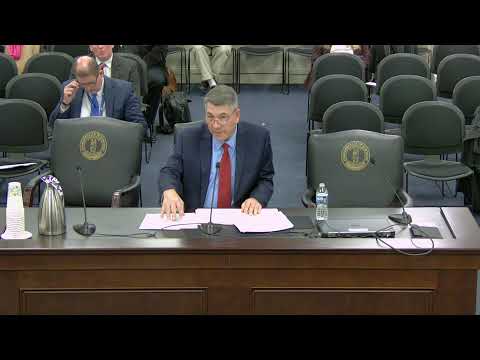
Randy White, commissioner for DJJ, described cases in which youth were repeatedly refused admission to private psychiatric hospitals because of assaultive and self‑harm behaviors and therefore remained in detention where clinical treatment was limited. White said the department has sent some youth out of state for placements and described one case in which a youth was admitted to a state psychiatric hospital only after turning 18 and after an involuntary commitment petition. "Placing a severely mentally ill child in detention is not appropriate placement for the child," White said, arguing a dedicated facility would provide access to behavioral and psychiatric care and reduce delays in treatment caused by lack of beds.
Legislation and funding: White said Governor Andy Beshear proposed a similar facility in the 2024 session and that Senate Bill 111, sponsored by Senator Danny Carroll, requests $5,000,000 for design work in the current session. The department estimates preliminary construction costs at roughly $30,000,000 and proposes 24 beds to cover male and female high‑acuity youth with separate wings for assessment, treatment and stabilization. "At this time, what we would anticipate our needs would be ... 24 beds," White said.
Timing and operations: Committee members asked how long construction and staffing would take. DJJ estimated delivery of a designed, constructed and operational facility would likely be completed in the 2027 timeframe if fully funded (design and construction appropriated), and that construction of comparable 28‑bed female facilities has been estimated at 18–24 months once construction begins. White said the department has not yet compiled a staffing cost estimate and would work on those numbers if design funding is appropriated.
Why this matters: DJJ witnesses said the small number of youth who require such a secure treatment setting nevertheless place disproportionate demands on staff and resources and can disrupt other youth's access to programs and schooling while in detention. A state facility would reduce out‑of‑state placements and delays in access to psychiatric care.
Ending: White asked lawmakers to consider the design appropriation in SB111 and said the department would supply more detailed cost and placement data, including examples of recent out‑of‑state placements, at lawmakers' request.