Get Full Government Meeting Transcripts, Videos, & Alerts Forever!
Get email alerts on the Medical Services Contracting topic
No spam. Unsubscribe anytime.
DJJ reviews medical services contracting, uses Emeritus staffing as procurement proceeds
Summary
DJJ officials told the House subcommittee they are reviewing the department's medical services model, currently staffed through a statewide PON‑3 agreement with Emeritus, and are negotiating potential contractual proposals; procurement conversations will continue amid public reports of Wellpath's bankruptcy filing.
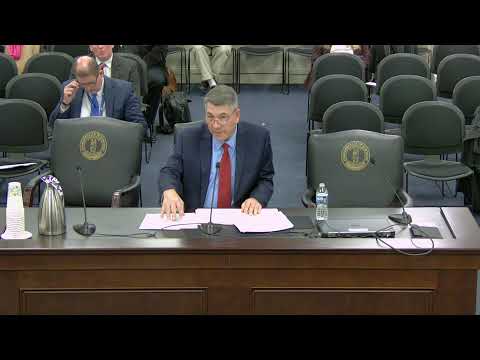
The House budget subcommittee heard from Department of Juvenile Justice leadership about the department's medical services model and an ongoing procurement process.
Randy White, commissioner of the Department of Juvenile Justice, said DJJ is reviewing whether to continue to use the current state contract provider or to request proposals through an RFP. "DJJ is continuing to conduct site visits and assessments to ensure medical and mental health coverage for all of our facilities," White said. He told the committee that the department would retain current merit staff unless a merit employee left and the department decided that role should be moved into a contractual provider.
Elze Berger, executive director with DJJ who oversees the medical branch, told members the department currently uses a staffing service called Emeritus under a state PON‑3 master agreement to supply RNs, LPNs, APRNs and a chief medical officer. "We use a staffing service known as Emeritus. It's a PON3 master agreement through the state," Berger said. He added Emeritus is also used to retain qualified mental health professionals for DJJ programs.
White and Berger told legislators DJJ currently employs roughly 82 RNs and LPNs statewide, three APRNs who provide statewide coverage, and a chief medical officer available by call. For FY2025, the department identified a contract amount under recent approval of approximately $20,000,000 for the current year and a similar amount for the next budget year for medical services used across detention and youth development centers, group homes and other covered hours of care.
Procurement and Wellpath: committee members asked about Wellpath after public filings reported a bankruptcy. White said DJJ reached out to Wellpath and pursued detailed follow‑up questions with the vendor and procurement staff; after those inquiries department officials "were satisfied" that negotiations could continue and that the filing did not, in their assessment, jeopardize the Kentucky contract. White said the department expects to be able to consider a contractual proposal in about 30 to 60 days.
Medicaid provider work and federal changes: White said DJJ is working with the Kentucky Cabinet for Health and Family Services to begin the process of becoming a Medicaid provider and to implement requirements coming from the Medicaid 1115 demonstration and the 2023 Consolidated Appropriations Act. He said any DJJ contractual partner would be required to be a Medicaid provider for services it would provide under that implementation.
Why this matters: the medical services model affects continuity of care for youth in detention and youth development centers, procurement risk and potential fiscal exposure. Lawmakers asked for additional procurement and bankruptcy documentation; department staff offered to provide procurement‑level answers through the cabinet's experts.
Ending: White and Berger said all merit staff would remain unaffected by a contractual provider unless an individual position was later evaluated for potential inclusion in a contract and that the department will return with more procurement detail and documentation on vendor status if requested.