Get Full Government Meeting Transcripts, Videos, & Alerts Forever!
Get email alerts on the Juvenile Detention Facilities topic
No spam. Unsubscribe anytime.
Kentucky DJJ outlines detention center capacities and updates on Louisville, Linden projects
Summary
Department of Juvenile Justice Commissioner Randy White gave the House subcommittee a county-by-county overview of juvenile detention capacity, described staffing challenges in higher‑risk facilities, and provided timelines and budget notes for two Jefferson County projects: the downtown Louisville detention renovation and the Linden facility.
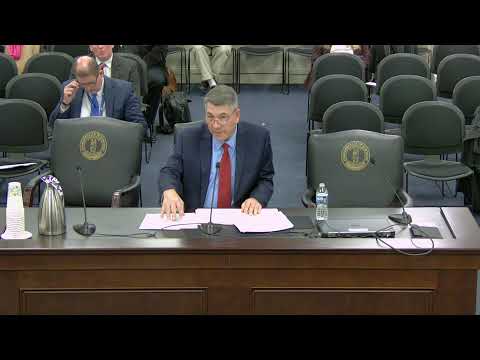
The House Budget Review Subcommittee on Justice, Public Safety and Judiciary convened and heard a statewide overview of juvenile detention capacity and two ongoing facility projects from Randy White, commissioner of the Department of Juvenile Justice.
White told the subcommittee that the state's detention network currently includes a single female detention facility in Boyd County (capacity 33), low‑risk male facilities in Breathitt County and McCracken County (each with a 43 bed capacity), and high‑risk male facilities in Fayette County, Adair County (60 beds), Warren County (43 beds) and a low‑risk male facility in Campbell County that is being used to accept low‑risk youth from Jefferson County. "We can house 33 individuals in that facility. We tend to stay close to capacity," White said of Boyd County. He added that population levels fluctuate and some facilities have exceeded capacity at times.
The commissioner told lawmakers staffing is most difficult in higher‑risk facilities and in metropolitan areas because of local labor markets and housing costs. "In the higher risk facilities, it's more difficult to staff those high risk facilities," White said, citing wages and the cost of housing as contributors to recruitment and retention challenges.
Why this matters: several of Kentucky's detention centers operate near capacity and some jurisdictions are used to house youth from Jefferson County. The subcommittee is considering capital and operating needs tied to both renovation projects and broader service capacity.
Downtown Louisville renovation: White clarified the downtown Louisville project is a renovation of an existing vacant facility (separate from the Linden project). He said schematic and design‑development phases are complete, construction documents began in November 2024, and documents were expected to be ready to advertise by late February or early March 2025. The department anticipates a bid opening and construction contract issuance in April 2025, with an approximate 22‑month construction schedule and final completion projected for March 2027. The renovation is designed for a minimum of 64 beds intended for high‑risk male youth. "The project includes a minimum of 64 beds," White said. He warned the project has been complex because of required upgrades to mechanical, electrical and plumbing systems, roof, perimeter and electronic security, and to meet building code, American Correctional Association and Prison Rape Elimination Act obligations. White said the department expects to renovate the basement and the first and second floors within the allocated budget; the top floor is likely to be deferred to a later phase.
Linden facility: White said work at the Linden site is active and that the construction contract was issued November 21, 2024. Interior demolition is underway and final completion of the Linden renovation is anticipated June 14, 2026. The renovated Linden facility is expected to provide about 34 beds in four pods and will be used for low‑risk youth. White said the $4.5 million previously authorized for Linden appears to be on target to cover the current scope and schedule.
Other details: White said high‑risk youth from Jefferson County are currently housed in Adair County and low‑risk youth from Jefferson County are sent to Campbell County. He noted that alternatives to detention for females exist at the youth development center in Warfield.
Action taken: the subcommittee approved minutes at the start of the meeting by voice vote; no roll call of individual votes was recorded in the transcript.
Looking ahead: White opened the session for questions on both projects and then moved to other agenda items including medical services, a proposed high‑acuity mental health facility and telework arrangements.
Ending: Lawmakers pressed for additional budget and operational details during follow‑up questions; White said staff could provide more granular cost and capacity figures on request.