Get Full Government Meeting Transcripts, Videos, & Alerts Forever!
Get email alerts on the Employee Benefits topic
No spam. Unsubscribe anytime.
American Fidelity outlines benefits administration, proposes employer-funded HRA amid rising PEIA costs
Summary
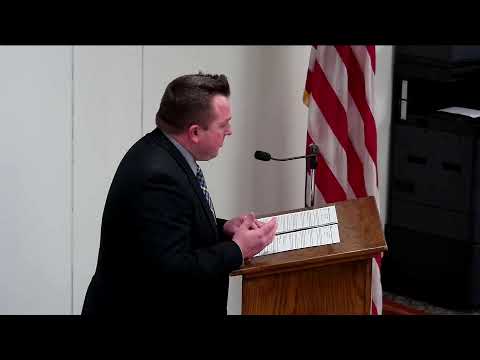
Eric Bauer, state manager for American Fidelity in West Virginia, briefed the board on the company’s Section 125 plan administration for Harrison County Schools, reported enrollment and savings figures, and proposed the board consider a health reimbursement arrangement (HRA) to offset anticipated PEIA cost increases.
Eric Bauer, state manager for American Fidelity in West Virginia, briefed the Harrison County Board of Education on Feb. 18 about the district’s Section 125 (cafeteria) plan administration and recommended the board consider implementing a Health Reimbursement Arrangement (HRA) for the upcoming fiscal year to soften anticipated insurance cost increases.
Bauer said American Fidelity has served Harrison County Schools’ benefits needs for decades and described Section 125 plans as employer-maintained cafeteria plans that let employees use pretax money for qualified benefits such as medical, dental and vision premiums. He told the board American Fidelity met with roughly 92% of district staff last fall and handles plan compliance and employee education without charging the district or employees fees for those services.
Bauer reported last year’s qualified premiums administered through district plans totaled about $5,200,000, which he said produced roughly $400,000 in payroll-tax savings for the district and about $1,500,000 in tax savings for individual employees on their paychecks. He also said American Fidelity assumes the risk for flexible spending account reimbursements when employees leave before claiming elected funds.
Citing a published anticipated rate increase from PEIA (the West Virginia Public Employees Insurance Agency) starting with the July enrollment, Bauer proposed the board consider an HRA to offset rising out-of-pocket costs. He described an HRA as “an account that the employer sets up to reimburse employees for eligible medical expenses,” and said HRAs are funded entirely by the employer and have no tax consequences for employer or employee under federal tax rules.
Bauer also summarized why the company serves districts: local representative presence, salaried representatives rather than commission-based sales, annual background checks and high participation rates during employee enrollment. He did not present a formal proposal with pricing or budget implications at the meeting and did not request an immediate board vote.
No formal action or vote was recorded on an HRA or related benefit-change resolution; Bauer’s presentation was informational and advisory, and he invited the board to consider the HRA if the fiscal-year budget allows.