Get Full Government Meeting Transcripts, Videos, & Alerts Forever!
Get email alerts on the Local Food Systems topic
No spam. Unsubscribe anytime.
Montana Senate committee hears broad support for study of farmers markets and local food systems
Summary
Senate Joint Resolution 11 (SJ 11) would convene experts to review Montana law and operations for farmers markets and regional food systems; proponents told the Senate Agriculture, Livestock and Irrigation Committee the study could clarify regulation, improve food security and strengthen local economies.
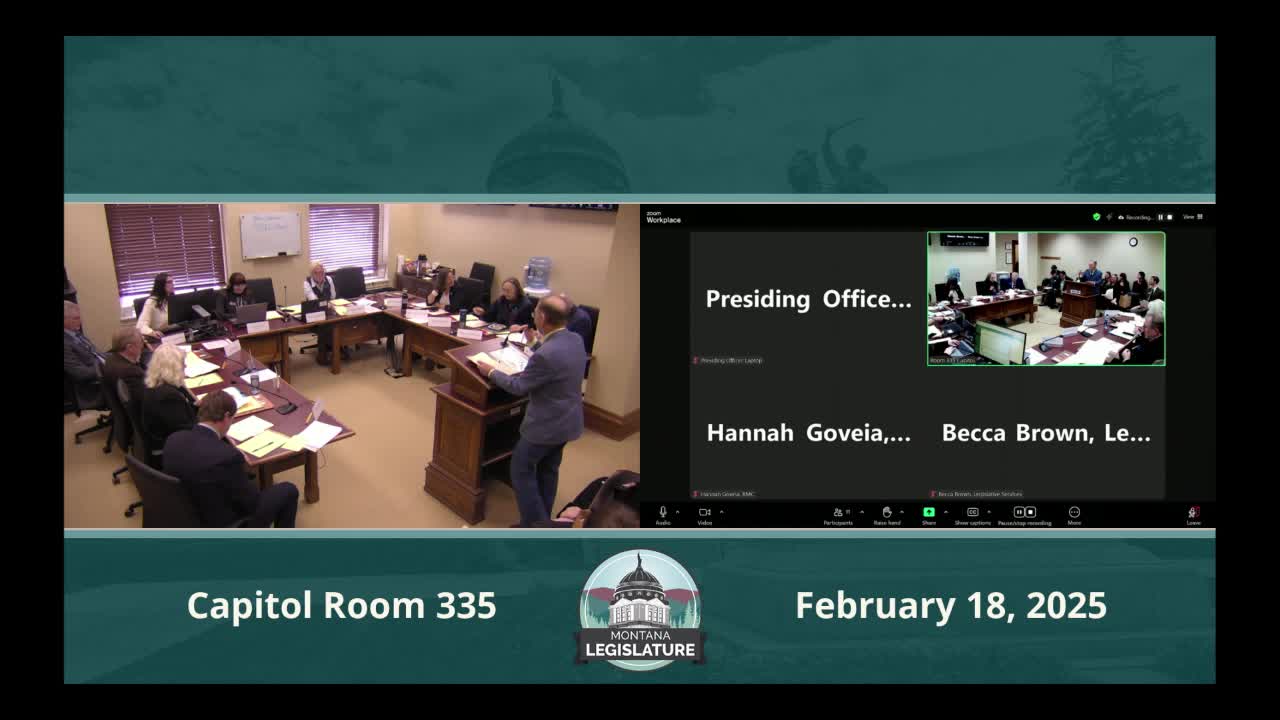
Senate Joint Resolution 11, a study request to examine Montana’s farmers markets and local food systems, drew near-unanimous support from proponents during a hearing before the Senate Agriculture, Livestock and Irrigation Committee.
Senator Bruce “Butch” Gillespie, chair of the committee and the sponsor of SJ 11, introduced the measure as an effort to “bring that gap together” between producers and consumers and to better understand the role of local food venues such as farmers markets and food co‑ops. Gillespie told the committee the study could strengthen connections between urban buyers and rural producers.
Kaly Wicks, policy director for Grow Montana, told the committee that the Local Food Choice Act (passed in 2021 and amended in 2023) and Montana’s cottage food rules have created opportunities but also confusion at farmers markets. “Farmers markets are legitimate businesses that play a vital role in our communities,” Wicks said, and SJ 11 would allow “a collaborative group of subject matter experts to take a deeper dive into our existing law and … make potential recommendations to clarify and change and improve existing frameworks.”
Witnesses representing tribal food programs, statewide producer groups, food‑access organizations and local market managers described recurring questions about how markets are defined in statute, who may set rules for a particular market, and how consumer protections and liability should be handled. Pam Walzer, an artisan baker and Missoula Farmers Market board member, said the Montana Code Annotated contains an antiquated definition of a farmers market and that today many markets operate as nonprofit or private organizations. “Not being able to enforce this rule creates a very troubling liability risk for me as a volunteer on their board of directors,” Walzer said, citing a desire for clarity about issues such as temperature control for raw milk or other perishable products.
Program directors and nonprofit leaders urged the study include review of how markets participate in federal and state food‑access programs. Ian Finch of Farm Connect Montana said benefit programs at markets have expanded reach: “These programs have connected almost 11,000 Montanans to farmers and markets who collectively redeemed just under a million dollars in benefits,” he said, adding that some vendors reported sales increases of up to 25 percent when markets participate in food assistance programs.
Officials from the Department of Public Health and Human Services provided informational testimony on health and food‑safety requirements and acknowledged that their office receives many questions about implementation. Mercedes Overlie, lead sanitarian for the department’s environmental health and food safety section, told the committee there is confusion that the study could help address.
Proponents also offered economic and environmental rationales: testimony cited a 2021 estimate that Montana farmers markets generated $7.3 million in revenue and $10.4 million in additional local spending, and witnesses described opportunities to keep more food dollars in state and to strengthen supply‑chain resilience after pandemic disruptions.
Committee members asked about who would be included in the study’s stakeholder group and whether municipal downtown associations, tribal producers, the Montana Department of Agriculture, and other local organizers would be consulted. Wicks and other proponents said the draft resolution contemplates a broad set of collaborators, including market managers, tribal representatives, food‑security experts and market advocates.
The hearing closed with Senator Gillespie recommending a green vote to move SJ 11 forward to the Senate floor; the transcript does not show a formal committee vote during the hearing.
The study, as described by proponents, would not itself change law but would produce recommendations and possible draft legislation for a future session to clarify definitions, regulatory roles, consumer protections and opportunities to expand market access.