Get Full Government Meeting Transcripts, Videos, & Alerts Forever!
Get email alerts on the Parking Requirements topic
No spam. Unsubscribe anytime.
Montana committee hears bill to cap local parking mandates as tool to lower housing costs
Summary
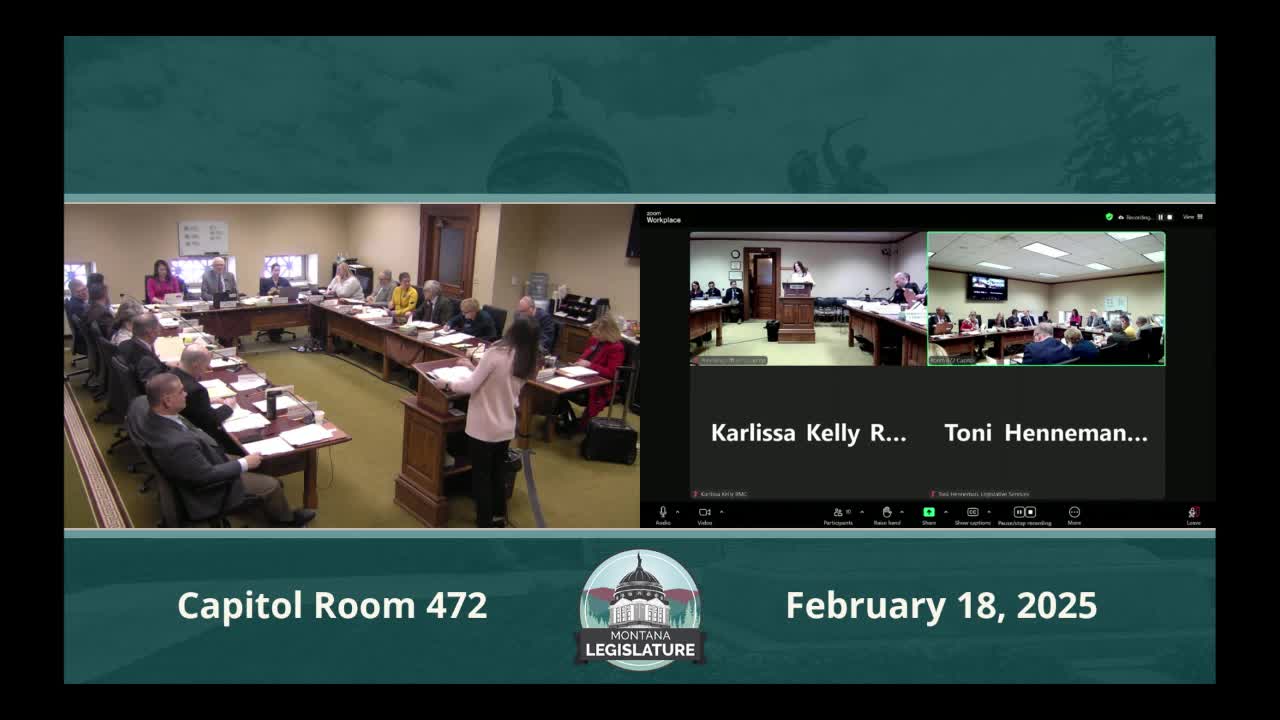
Representative Katie Zolokov, sponsor of House Bill 492, told the House Local Government Committee the bill would limit municipal parking mandates for new development to reduce the cost of housing and require local governments to reimburse developers if they impose additional parking beyond the bill's cap.
Representative Katie Zolokov, sponsor of House Bill 492, told the House Local Government Committee the bill aims to lower the cost of development by capping local parking requirements and forcing municipalities to reimburse developers if they mandate additional parking.
The bill would limit mandatory parking for new developments to one space per residential dwelling unit and one space per 5,000 square feet of commercial space, exempt some uses (for example small commercial spaces under 15,000 square feet and childcare and assisted-living uses), and preserve parking required by the Americans with Disabilities Act, Zolokov said.
"Parking spaces are incredibly expensive, costing anywhere from $9,000 to $50,000 per spot," Representative Katie Zolokov, bill sponsor, said. "Those costs get baked into rent prices. This bill provides developers flexibility, and if a locality wants more parking it must compensate the developer for the real cost of construction."
Why it matters: Supporters said changing parking mandates is a practical, evidence-based way to reduce housing costs and free land for housing. Opponents, including the Montana League of Cities and Towns and several municipal planners, warned the bill would preempt local zoning decisions and undercut the Montana Land Use and Planning Act (SB 382), which requires local governments to study and choose zoning reforms with public engagement.
Proponents included affordable-housing and planning groups, business organizations and developers. Jake Brown of Shelter Whitefish told the committee reducing parking mandates can materially lower the cost of multifamily housing and allow more units to be built. "The bill caps the number of parking spots a city can mandate at one per residential unit and one per 5,000 square feet for commercial developments," Brown said.
Tanner Avery, policy director for the Montana Frontier Institute, and other witnesses cited academic and municipal examples where fewer mandated parking spaces coincided with increased housing production. "Reducing excessive parking requirements can free up land for more housing," Avery said. Several witnesses argued the bill preserves local authority by allowing municipalities to require more parking if they reimburse property owners for the extra construction cost.
Opponents included the Montana League of Cities and Towns, the Montana Environmental Information Center and city planning officials. Kelly Lynch, executive director of the Montana League of Cities and Towns, said the bill would force communities that are already working through the Montana Land Use and Planning Act (SB 382, sometimes called "Maloopa") to reopen processes they are midstream on and could require costly rework and public engagement.
"This body told communities they could choose reforms that fit their local circumstances," Lynch said. "This bill changes the rules midstream and will require them to redo analyses and public processes." Laura Collins of the Montana Environmental Information Center said she supports parking reform in principle but opposed the bill's approach because it could impose financial burdens or disrupt local reform processes.
Committee members raised concerns about how the bill would play in neighborhoods with tight on-street parking and in cities without transit. Vice Chair Staffman and Representative Overstreet asked whether the one-space standard reflects rural Montana conditions; the sponsor said the proposal sets a minimum floor and developers still have market reasons to provide additional parking where needed. Representative Sprunger and others asked for rural examples of jurisdictions that face "arbitrary" parking mandates; the sponsor said she would provide additional research to the committee.
The hearing included detailed exchanges on the bill's carve-outs. Several proponents and the sponsor pointed to examples in Buffalo and Minneapolis where removing or reducing minimum parking requirements coincided with increased housing production and redevelopment of older commercial buildings. Opponents countered that local conditions vary widely; the Montana Association of Planners gave hypothetical illustrations of a large grocery store on the urban fringe that would not function with only one required space per 5,000 square feet.
The bill also contains a provision that exempts ADA-required accessible parking, and it allows municipalities to mandate additional spaces only if they reimburse developers for construction costs. Witnesses offered different estimates of per-space construction costs during testimony: Zolokov and several proponents cited a range of roughly $9,000 to $50,000 per space; other witnesses referenced higher estimates (up to $60,000) depending on site constraints and structured parking needs.
The committee closed the hearing on HB 492 after receiving several hours of testimony and questions. No executive action on HB 492 was recorded in this transcript.
Ending: Supporters asked the committee to treat the bill as a tool to reduce housing costs and spur redevelopment; municipal and planning witnesses asked for more targeted, locally driven reforms or amendments to protect ongoing local planning efforts under SB 382.