Get Full Government Meeting Transcripts, Videos, & Alerts Forever!
Get email alerts on the Tcpadeadline topic
No spam. Unsubscribe anytime.
Texas Supreme Court hears challenge over whether judges can revive late TCPA rulings
Summary
The Supreme Court of Texas heard argument in First Sabre Capital Management v. Farmland Partners over whether trial courts may reconsider TCPA motions that were "denied by operation of law" after the 30‑day statutory deadline and whether a Colorado federal court’s jurisdictional findings preclude Texas claims.
The Supreme Court of Texas heard argument in First Sabre Capital Management v. Farmland Partners (No. 230634) over whether Texas trial courts have authority to reconsider motions under the Texas Citizens Participation Act (TCPA) after those motions are “denied by operation of law” for missing the statute’s 30‑day deadline, and over the preclusive effect of findings by a Colorado federal court.
Why it matters: The court’s decision could change when defendants can seek early dismissal, whether trial judges may later revive belated rulings, and which fees or appeals rights follow — issues that shape litigation strategy and exposure to attorney’s fees in defamation and related suits.
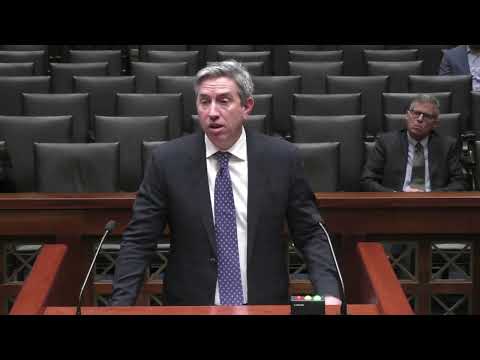
Petitioners’ counsel argued that district courts should be able to revisit earlier rulings and correct errors, and that narrow timing rules should not force parties to pursue appellate relief when a court intended the same result a few days after the statutory deadline. “I think at bottom, this case boils down to a couple of very intuitive and basic principles with some big implications for Texas jurisprudence,” petitioners’ counsel told the court, arguing judges must be able to correct errors and that the 30‑day deadline should not put the statute’s entire burden on the party the TCPA is meant to protect.
Respondent’s counsel countered that the TCPA’s timing provisions and their statutory consequences are mandatory and that the courts of appeals have correctly treated a failure to rule within 30 days as a denial by operation of law with appellate consequences. “Sabre Point’s atextual and strained reading of the TCPA, and its vast expansion of the collateral estoppel doctrine cannot support the trial court’s judgment,” respondent’s counsel said, urging the court to affirm the court of appeals’ reversal and remand for a trial on the merits.
Justices pressed both sides on practical and doctrinal questions. One justice asked whether allowing reconsideration months or years later would leave a “big hammer” of attorney’s fees hanging over litigants, since the TCPA authorizes fee awards; another proposed a narrower rule that would permit trial‑court reconsideration only during the period in which an interlocutory appeal could be perfected. Petitioners’ counsel indicated they had not fully briefed latches principles but suggested a short grace period (a few days) would be reasonable when reconsideration falls within the time needed to perfect an appeal.
The argument also turned on collateral estoppel. Petitioners relied on a Colorado federal‑court proceeding whose findings they say support preclusion in Texas; respondents argued those findings were limited to personal‑jurisdiction questions in Colorado and were not fully and fairly litigated on the merits in a way that would bar Texas claims. Respondent’s counsel said the Colorado order addressed jurisdiction, not the merits, and that a federal court’s decision about jurisdiction does not necessarily resolve factual issues that belong to a Texas trier of fact.
The record before the court shows both a motion for summary judgment and a TCPA motion that at different times invoked collateral estoppel; counsel acknowledged the TCPA briefing included multiple grounds (initially a no‑evidence style TCPA challenge, later supplemented to add collateral estoppel) and that the trial court ultimately entered an order granting relief after the 30‑day period had passed. Counsel acknowledged there was no prepared data on how often judges miss the 30‑day deadline and no appeal is filed.
Several statutory and precedential touchpoints came up in argument. Counsel discussed provisions of chapter 27 of the Texas Civil Practice and Remedies Code, including section 27.009(a)(1) (attorney’s‑fee awards) and section 27.005 (timing and other procedures), and cited earlier Texas decisions addressing deadlines and consequences for missed time limits. The parties also debated how doctrines such as laches, mandamus relief, and standard Texas preclusion law should affect the result.
After roughly an hour of argument and questioning, the court took a short recess and announced the case submitted.
Background: The TCPA provides a route for early dismissal of certain claims and, when its requirements are met, authorizes reasonable attorney’s fees for the prevailing party. It also contains timing rules that treat a trial court’s failure to rule within specified periods as a denial by operation of law; litigants may seek interlocutory review in those circumstances. The present dispute asks whether, once a TCPA motion is denied by operation of law, a trial court can later revive or grant the motion without running afoul of the statute’s mandatory consequences, and separately whether collateral‑estoppel findings from a federal personal‑jurisdiction ruling in Colorado preclude the Texas litigation.
The court’s decision will determine whether trial judges retain plenary authority to reconsider TCPA orders after the TCPA’s time periods run, or whether the legislature’s 30‑day deadline creates a more rigid bar to later reconsideration and the attendant consequences tied to interlocutory appeals and fee awards.
The case was submitted and the court announced it would take a brief recess.