Get Full Government Meeting Transcripts, Videos, & Alerts Forever!
Get email alerts on the Civil Procedure topic
No spam. Unsubscribe anytime.
Supreme Court of Texas hears dispute over Rule 166a attachment requirement in no‑evidence summary judgments
Summary
At oral argument the court debated whether a respondent opposing a no‑evidence motion must attach affidavits to its response or may rely on evidence already on file and cited in the response; justices pressed counsel on specificity requirements and trial‑court fact‑finding.
The Supreme Court of Texas heard argument on whether a respondent opposing a no‑evidence motion for summary judgment must attach affidavits to its response, or whether citing evidence already on file and identifying the relevant portions is sufficient.
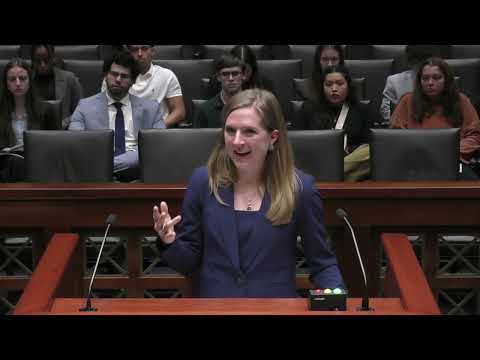
The question arose during oral argument in Cause No. 2058, in which petitioner counsel argued that Rule 166a(i) requires a nonmovant to “produce evidence, which just means bringing evidence that's already in the trial court's file to the court's attention.” Miss Baumgartner, counsel for the petitioner, told the court she had specifically cited Officer Bacon's affidavit in the response and said the court of appeals erred by imposing an attachment requirement.
Why it matters: The court's guidance would affect routine civil practice in Texas trial courts — in particular how litigants opposing no‑evidence summary judgment show the existence of a genuine fact issue when the disputed material already appears elsewhere in the trial‑court record. Counsel and the justices debated where the line should fall between acceptable citation and an obligation to attach documents for the court's convenience.
Petitioner argument and record details Miss Baumgartner emphasized the 1997 interpretive comment to Rule 166a, saying the rule requires a nonmovant to “point out evidence, not marshal our proof.” She argued that when evidence is already on file the nonmovant satisfies the rule by directing the trial court to that evidence rather than re‑attaching it. She told the court that parts of Officer Bacon's affidavit were expressly cited in the response and that the trial court had indicated in an email that it intended to deny summary judgment on May 1 (the submission date was May 26), adding that parts of the evidence also appeared in the clerk's record (she cited pages she said were in the clerk's record).
Respondent argument and limits on pleadings as proof Mister Eisser, counsel for the respondent, urged a different approach. He argued that a nonmovant must do more than “passively refer to other items on file. It must necessarily commit an affirmative act of presenting evidence to the trial court for consideration with the response.” He cited cases and longstanding statements of the court that pleadings themselves are not summary‑judgment evidence and emphasized the practical burden on trial judges who handle multiple matters in a day.
Points of judicial inquiry Chief Justice Blacklock asked whether, if a document is on file, a party may simply point to a 50‑page affidavit or whether some specificity is required: “So let's say that you're right that, you don't have to attach it if you point to it and it's on file. But is there is there any specificity requirements?” Justices repeatedly pressed counsel on how much guidance to the trial court would be required for large records, with discussion of a reported 43‑page affidavit in the record and whether a trial judge may properly decline to search a lengthy, unindexed narrative.
Cases, rules and procedural tensions discussed Counsel on both sides referred to Rule 166a and to interpretive materials and cases the parties have cited in briefing. Petitioner counsel relied on Lance (as discussed at argument) for the proposition that evidence already in the trial court file need not be reattached. Respondent counsel pointed to authorities holding that affidavits attached only to pleadings are not, by themselves, summary‑judgment proof and argued that the burden shift in no‑evidence motions makes producing evidence a meaningful requirement.
Record posture and practical consequences raised Counsel debated whether the trial court here actually considered the affidavit before granting summary judgment — petitioner counsel said the trial judge had at one point indicated she intended to deny summary judgment, while respondent counsel said the affidavit was not presented to the court in a way that required consideration and that the court did not abuse its discretion in granting judgment. The justices asked whether a district court must or should ask a party to provide pinpoint citations if a record is bulky, and whether local rules or case law should prescribe how much guidance is required.
Disposition at argument The court heard final rebuttal and, after questions, submitted the case. As counsel and the justices acknowledged during argument, the issue turns on how the court interprets Rule 166a(i) and related rule provisions and case law — whether “produced” or “on file” can be satisfied by citation alone and, if so, how much specificity a trial court may reasonably require.
The case was submitted.