Get Full Government Meeting Transcripts, Videos, & Alerts Forever!
Get email alerts on the Workers Compensation Responsible Third Party topic
No spam. Unsubscribe anytime.
Texas Supreme Court hears dispute over responsible-third-party rule in non‑subscriber workplace‑injury suit
Summary
The Supreme Court of Texas heard argument over whether Chapter 33's responsible‑third‑party designation applies when an injured worker sues a non‑subscribing employer and whether the relator provided sufficient expert evidence to keep proposed responsible third parties on the jury charge.
The Supreme Court of Texas heard argument over whether Chapter 33 of the Civil Practice and Remedies Code's responsible-third-party designation applies in a lawsuit against a non‑subscribing employer and whether the relator produced enough expert evidence to support naming emergency‑medical personnel as responsible third parties.
Mr. Walsh, counsel for the relator, told the court that the court of appeals was incorrect to allow Chapter 33 to apply because, he said, the plaintiffs claims are for damages rather than statutory workers' compensation benefits. "To be excluded under Chapter 33, the claim or the action must be for benefits under the workers' compensation laws," Walsh argued, and he told the justices the statutory definition of "benefits" is limited to "medical benefits, income benefits, death benefits, or burial benefits." Walsh said the non‑subscriber theory is a common‑law negligence claim seeking damages such as past and future lost earnings, medical expenses, pain and mental anguish, and disfigurement rather than the regimented benefits set out in the workers' compensation scheme.
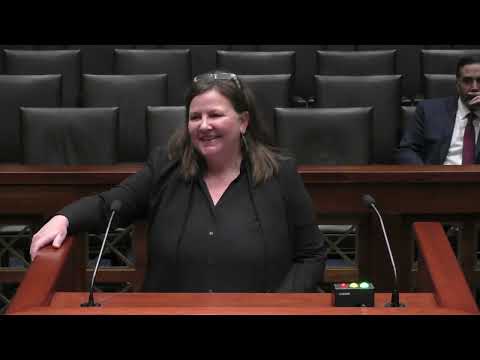
Ms. Hobbs, counsel for the real party in interest, responded that the procedural record independently supports the trial court's decision to strike the relator's responsible‑third‑party designation because the relator did not present competent expert evidence showing the standard of care and breach for the emergency‑medical services personnel they sought to designate. "No evidence is no evidence is no evidence," Hobbs told the court, arguing the only expert report the relator relied on was by Timothy Hawkins, whom she described as a nonphysician administrator whose report merely recited facts and concluded that East Texas Medical Center and its EMS were responsible without describing the applicable standard of care or how it was breached.
Justices pressed both sides on related procedural and remedial questions. Justice Busby asked whether some aspects of the alleged negligence could be evaluated by a layperson, saying, "So is this something that a layperson would know—you don't push a stretcher into somebody's back?" Counsel responded that a prior Tyler Court of Appeals decision treating the claim as a health‑care‑liability matter had required expert testimony on the standard of care. The court also discussed how Chapter 33 and section 406.033 (as cited in argument) interact with third‑party recovery provisions (discussed in argument as "Chapter 417"), and whether the statutory language should be read narrowly (benefits as the enumerated workers' compensation benefits) or more broadly (as the phrase "workers' compensation benefits" used through the code).
Counsel and several justices also explored practical consequences the parties described: Walsh warned that applying Chapter 33 to non‑subscriber cases would force non‑subscribing employers' insurers to underwrite all third‑party conduct and change premium calculations; Hobbs and others argued the statutory structure and prior decisions protect the compromise of the workers' compensation scheme and that third‑party provisions in the code already limit or shape recoveries in subscribing cases.
The arguments also explored procedural posture: the relator asked the court to grant mandamus relief from a court of appeals decision that, in the relator's view, misapplied Chapter 33; Hobbs urged that the trial court did not abuse its discretion in striking the responsible‑third‑party designation and that the court of appeals bypassed the evidentiary question. Several justices suggested possible dispositions that would preserve the parties' ability to develop an evidentiary record (for example, remanding for the trial court or court of appeals to address the sufficiency of the expert evidence).
No opinion was issued from the bench. At the close of argument the court took the case and the cause was submitted for decision.
The case concerns plaintiff "Miss Dunn," former or current employee; the relator seeks to keep as responsible third parties an EMT identified in argument as Wolverton (spelled variously in the record) and his employer, ETMC EMS/East Texas Medical Center EMS. The trial court struck the relator's responsible‑third‑party designation; the parties briefed mandamus relief to the Tyler Court of Appeals and to the Supreme Court of Texas on statutory interpretation and on whether the relator met the evidentiary standard to designate responsible third parties.
The Supreme Court of Texas will decide (1) whether Chapter 33's responsible‑third‑party procedures apply in suits against employers who did not subscribe to workers' compensation and (2) whether the relator's expert evidence was legally sufficient to support the designation of Wolverton and ETMC EMS as responsible third parties. The court's decision will determine whether the responsible‑third‑party claims proceed to jury consideration or whether they remain stricken for lack of evidentiary support.