Get Full Government Meeting Transcripts, Videos, & Alerts Forever!
Get email alerts on the Workers Compensation Healthcare Liability topic
No spam. Unsubscribe anytime.
Court weighs whether on-the-job tort claims by non-subscriber employees are subject to responsible-third-party rules
Summary
The Supreme Court considered whether claims against a non-subscribing employer are governed by the responsible-third-party procedures in chapter 33 of the Texas Civil Practice & Remedies Code, and whether a trial court properly struck RTP designations for lack of expert evidence.
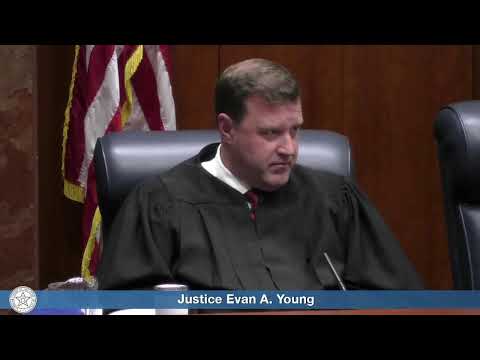
The Supreme Court of Texas heard argument in 231039, INRee, East Texas Medical Center, a case arising from a patient injury and the parties disputes over the interplay of the workers compensation regime, non-subscriber liability, and the responsible-third-party (chapter 33) designation procedure. Relators argued chapter 33s procedural protections and allocation mechanics should not apply to common-law negligence suits against non-subscribing employers; the real party in interest and the trial court answered that the designation at issue was properly stricken because the relators failed to present admissible expert evidence establishing the standard of care and breach by the designated third parties.
Relator counsel (Mr. Walsh) told the court that claims by employees of non-subscribing employers are fundamentally common-law negligence actions, not suits to "collect benefits under the workers' compensation laws," and thus chapter 33s limits on contributory negligence and fault apportionment should not be read to preclude designating and allocating responsibility among third parties. He argued that excluding non-subscriber cases from chapter 33 would force employers who elected not to subscribe to shoulder disproportionate liability for conduct by third parties.
Opposing counsel (Ms. Hobbs), representing the real party in interest, said the trial court did not abuse its discretion in striking the responsible-third-party designation because relators did not present an adequate expert report or evidence that would permit a jury to find that the identified third parties breached an applicable standard of care. She emphasized that the responsible-third-party statute requires a prima facie showing supported by expert evidence in cases involving health-care standards and contested standards of care.
The justices asked about consequences across three practical scenarios: if the responsible third party is tried, settles, or was dismissed on procedural grounds. Counsel disagreed about settlement credits, allocation, and whether a plaintiff might receive a worse outcome solely because the employer chose not to subscribe to workers compensation.
The court took argument and submitted the issue. No opinion was announced from the bench.