Get Full Government Meeting Transcripts, Videos, & Alerts Forever!
Get email alerts on the Juvenile Justice topic
No spam. Unsubscribe anytime.
House advances bill updating youth-court transfer rules and adding sight-and-sound separation requirement
Summary
House Bill 332 revises which juvenile offenses may be transferred to district court, clarifies prosecutorial discretion, and adds federal-required sight-and-sound separation standards for detained youth. Sponsors called it a technical modernization; supporters and opponents debated scope and discretion.
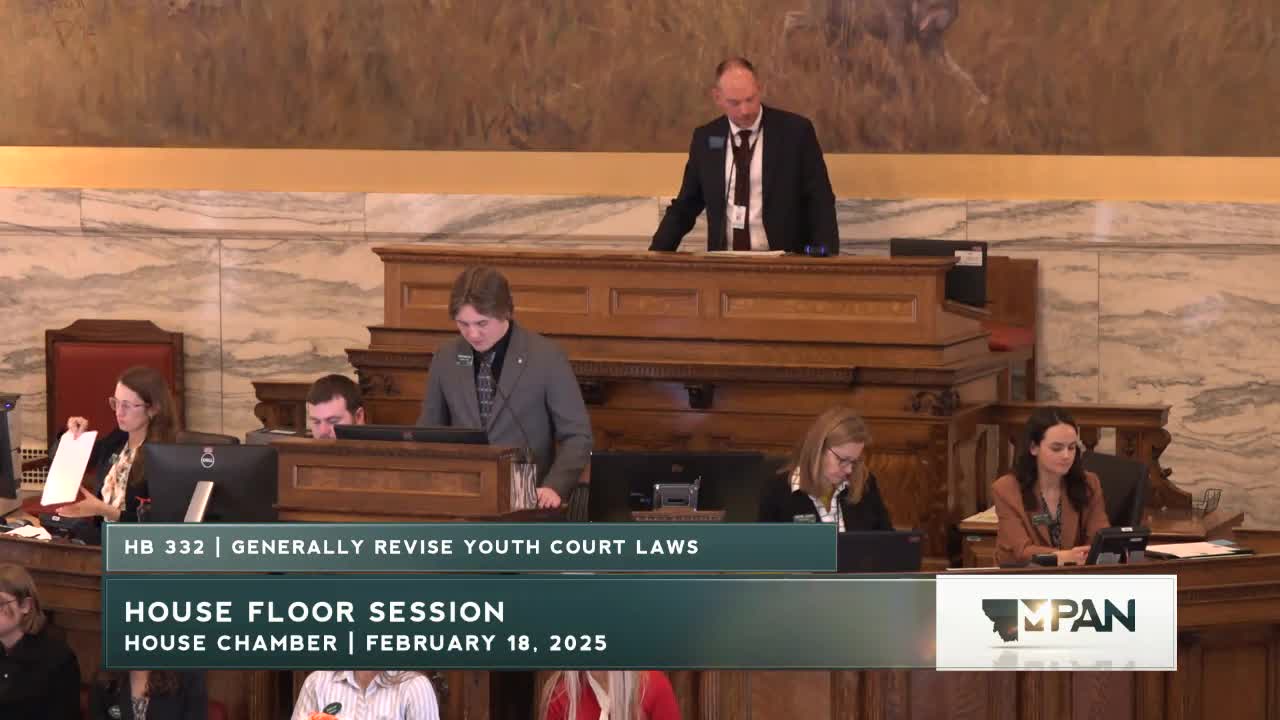
House Bill 332, sponsored by Representative Mercer, passed its second‑reading committee vote after a floor presentation that described the measure as a technical update to existing juvenile transfer statutes.
Representative Mercer said the bill “is existing statutory authority” and explained it updates the list of offenses that may be filed in district court, adds certain crimes to the transfer statute, removes a few offenses county attorneys view as no longer appropriate for transfer, and clarifies mandatory transfer language for 17‑year‑olds. The sponsor emphasized prosecutorial discretion for younger defendants and said, “you elect county attorneys to exercise prosecutorial discretion and to do what makes sense in the community.”
Mercer also pointed members’ attention to a federal requirement: the bill adds “sight and sound separation” language so detention facilities comply with federal standards for separating youth from adults.
There was no extended floor opposition recorded; the committee reported the bill do pass on a vote of 74 in favor and 26 opposed. Supporters said the changes help modernize statute language and address county attorneys’ operational concerns.